
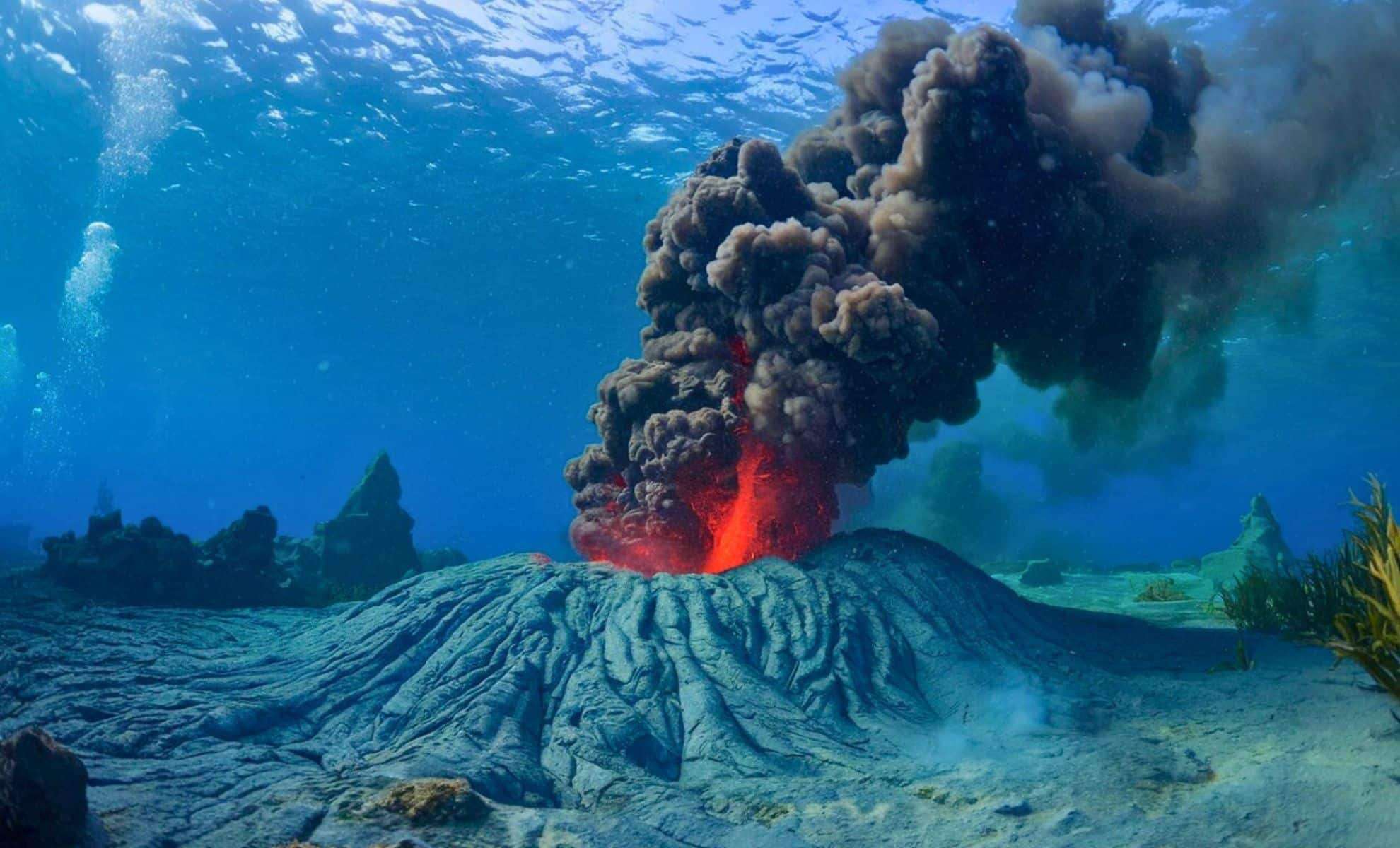
Located roughly 470 kilometers from the Oregon shoreline, deep under the Pacific Ocean surface, sits Axial Seamount, an active submarine volcano at the forefront of marine geoscience. Extensive long-term observation has empowered researchers to forecast that Axial Seamount will likely erupt in 2025. This exceptional early warning, grounded in meticulous data tracking over many years, represents a significant advance in predicting volcanic activity. By analyzing swelling of the seafloor, seismic signals, and other indicators, scientists seek not only to anticipate eruptions but also to uncover the dynamics driving volcanic phenomena beneath the ocean.
Axial Seamount: an underwater volcano research hub
The distinct geological characteristics of Axial Seamount, together with its frequent volcanic events and sophisticated monitoring infrastructure, make it a vital natural lab for studying submarine volcanic activity. Its eruption cycles provide critical information that enhances forecasting accuracy and our comprehension of submarine volcanic mechanics.
Real-time volcano observation
Axial Seamount stands as the most comprehensively instrumented underwater volcano globally. A series of sensors on the ocean floor continuously track its behavior, sending data through an underwater cable to surface analysts. This advanced system has offered unprecedented insights into the volcano’s activity patterns.

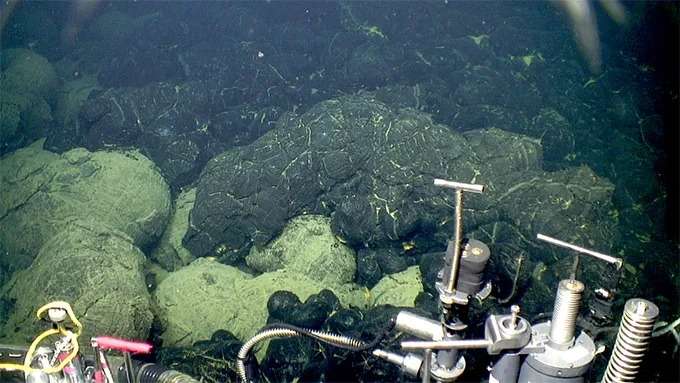
This technology proved instrumental in 2015 when swelling of Axial’s surface signaled rising magma beneath the seafloor. The subsequent eruption validated forecasts made by geophysicist William Chadwick and his colleagues. Current observations of similar swelling and heightened seismic tremors indicate that Axial could erupt again in 2025.
Signs pointing to an upcoming eruption
Researchers base their 2025 eruption forecast on several key indicators:
- Seafloor deformation: The volcano's surface has swollen to levels matching those before the 2015 event.
- Seismic patterns: Clusters of earthquakes suggest magma movement beneath the crust.
- Behavioral parallels: Current activity closely resembles patterns recorded prior to previous eruptions.
These observations have helped scientists narrow down the likely eruption timeframe, providing a unique chance to test and improve predictive models.
Advancing eruption prediction methods
Leveraging machine learning techniques
To enhance the accuracy of eruption predictions, scientists are utilizing artificial intelligence. By examining seismic data from Axial’s 2015 eruption, researchers have pinpointed specific earthquake signatures that may signal imminent volcanic activity ahead of future eruptions. This AI-based approach holds promise to transform volcanic forecasting with increased precision.
A template for forecasting volcanoes worldwide
Due to its frequent eruptions and consistent behavior, Axial Seamount serves as an excellent test site for emerging forecasting technologies. Insights gained here could be applied to less predictable volcanoes globally. Nonetheless, scientists recognize that overreliance on historical eruption patterns may limit accuracy; integrating physical and chemical models of magma systems could create more reliable forecasts moving forward.
Scientific and societal impacts
Observing an eruption as it unfolds offers a rare chance to study effects on the adjacent marine environment. Experts like Rebecca Carey emphasize the opportunity to monitor changes in hydrothermal vents and oceanic ecosystems around Axial, which could enhance knowledge of how volcanic activity influences ocean chemistry and biology.
Considering risks to people
Although submarine volcanoes such as Axial generally pose little direct threat to coastal populations, extraordinary events can have far-reaching consequences. For instance, the 2022 eruption of Hunga Tonga-Hunga Ha’apai generated a tsunami that inflicted widespread damage across the Pacific. Improved eruption warning systems could help protect vulnerable communities by providing earlier alerts.
Study source: W.W. Chadwick et al. Axial Seamount has suddenly woken up! An update on the latest inflation and seismic data and a new eruption forecast. Presented at the American Geophysical Union meeting, Washington, D.C., December 10, 2024.








0 comments
Sign in to Comment