
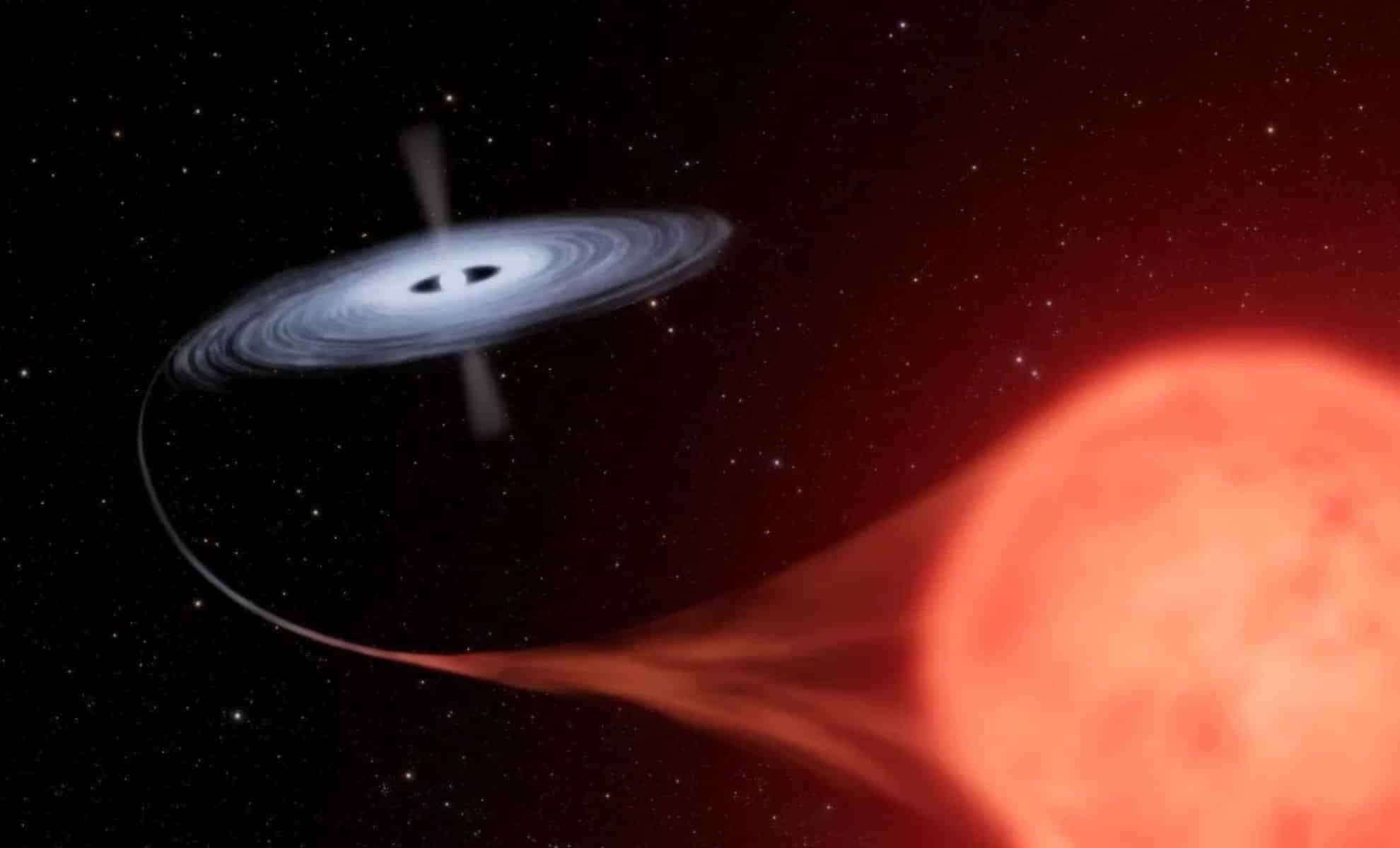
Scientists have revisited the enigmatic binary star system known as HM Sagittae (HM Sge), utilizing fresh observations from NASA’s Hubble Space Telescope and the recently retired SOFIA (Stratospheric Observatory for Infrared Astronomy).
This remarkable star system made headlines 40 years ago following an intense and unusually prolonged nova outburst. Recent studies have uncovered surprising developments in its behavior and features, offering deeper understanding of how stars evolve in binary relationships.
What Makes HM Sagittae Exceptional
HM Sge belongs to a class called symbiotic stars, where a dense white dwarf and a distended giant star emitting significant dust revolve in an elliptical orbit. The white dwarf steadily accretes gas from its companion, forming a searingly hot disk around itself.

This disk can suddenly ignite in a thermonuclear explosion when enough hydrogen accumulates on the white dwarf’s surface, resulting in dramatic stellar phenomena. These interactions help illuminate the complex processes that govern binary star evolution. Ravi Sankrit, an astronomer at the Space Telescope Science Institute (STScI), shared, “When I first saw the new data, I went – ‘wow this is what Hubble UV spectroscopy can do!’ – I mean it’s spectacular, really spectacular.”
Tracking Changes Through the Years
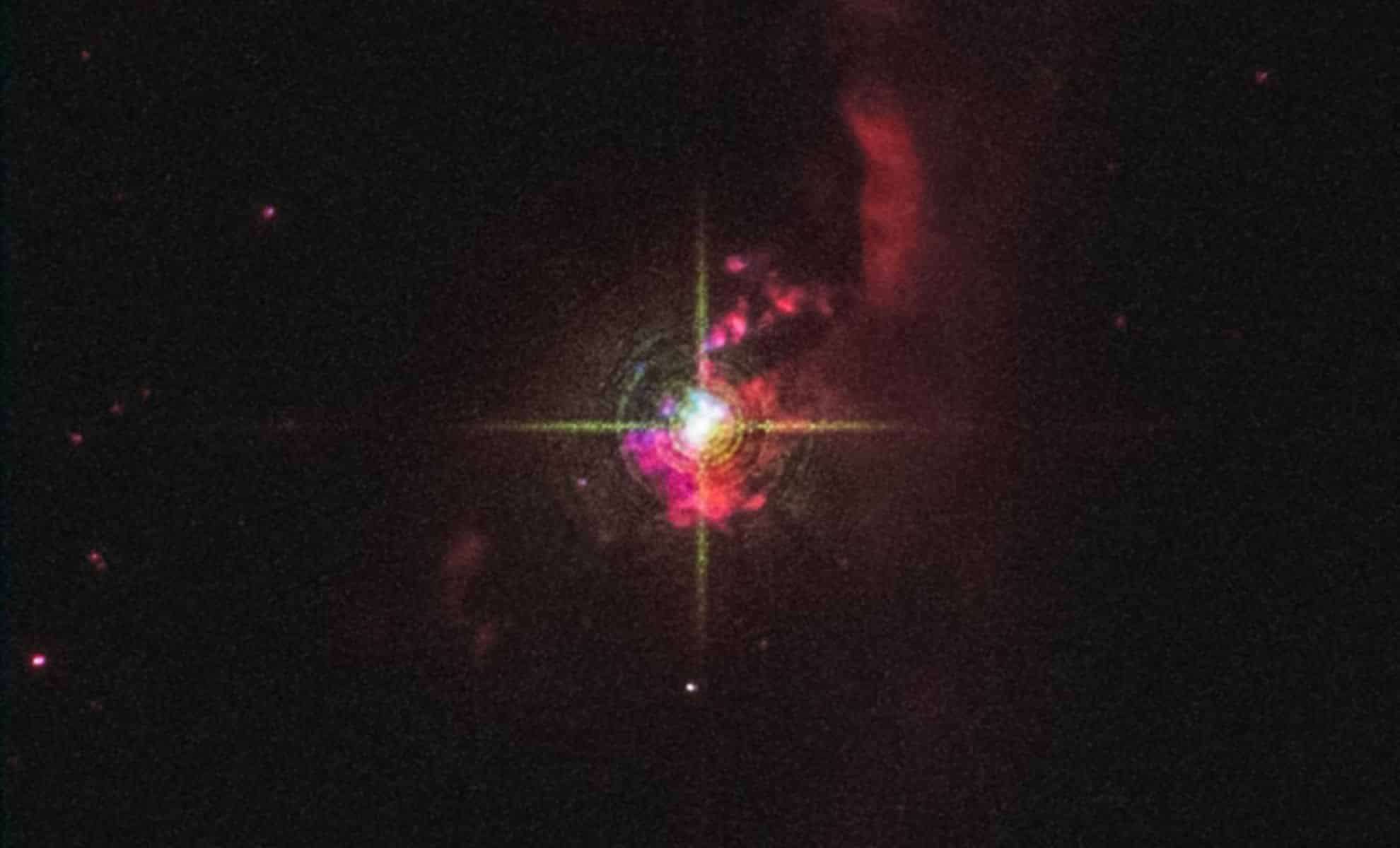
During the period from April to September 1975, HM Sagittae’s brightness surged by a factor of 250. Unlike common novae that swiftly fade, this system has kept its brightness over the decades. In 2021, a team including Steven Goldman and Ravi Sankrit at STScI applied Hubble and SOFIA’s instruments to examine how HM Sge evolved over the past 30 years.
Ultraviolet observations from NASA’s Hubble revealed a pronounced emission line from highly ionized magnesium, suggesting that the temperature of the white dwarf and its accretion disk increased from under 400,000 degrees Fahrenheit in 1989 to over 450,000 degrees Fahrenheit today.
SOFIA’s Infrared Findings
Data collected by the now-retired SOFIA observatory offered further perspectives on the system. Researchers identified water, gas, and dust flowing in the vicinity of HM Sge. Infrared spectral analysis indicated that the giant star, which produces substantial dust, reverted to its usual state within a few years after the explosion.
Yet, recent observations revealed a gradual dimming, presenting an additional mystery. SOFIA also detected water moving at speeds close to 18 miles per second, probably matching the speed of the white dwarf’s accretion disk. The gaseous bridge between the giant star and the white dwarf extends roughly 2 billion miles.
Ongoing Surveillance and Upcoming Studies
To monitor this unique star system, the research team partnered with the AAVSO (American Association of Variable Star Observers) to involve amateur astronomers around the globe. Their long-term measurements have captured new variations unseen since the original outburst four decades ago. Steven Goldman remarked, “Symbiotic stars like HM Sge are scarce within our galaxy, and witnessing a nova-like explosion is even more exceptional. This rare event is invaluable for astrophysical research stretching across decades.”
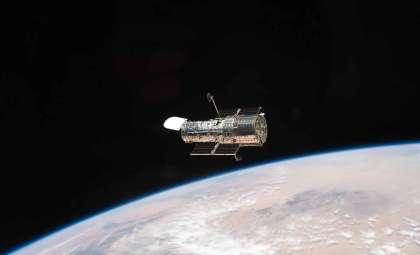
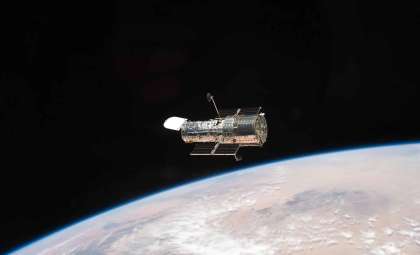
The team’s initial findings appeared in the Astrophysical Journal, with more detailed results slated for presentation at the 244th meeting of the American Astronomical Society in Madison, Wisconsin. For over 30 years, the Hubble Space Telescope has remained at the frontier of astronomical discoveries, continuously deepening our cosmic comprehension.
Hubble represents a global collaboration between NASA and the ESA (European Space Agency). NASA’s Goddard Space Flight Center in Greenbelt, Maryland oversees mission management, supported by Lockheed Martin Space and the Space Telescope Science Institute in Baltimore, Maryland, which conducts scientific operations for NASA.
- Categories:
- Astronomy ,
- News ,
- Space ,
- Nasa






0 comments
Sign in to Comment