

Stargazers and researchers alike are looking forward to an extraordinary astronomical occurrence anticipated in the near future. The T Coronae Borealis star system is set to experience a nova, a dramatic stellar outburst visible from Earth, presenting a unique sighting opportunity that may not repeat soon.
Predictions for the Upcoming Nova
The nova is likely to erupt before the close of 2024, with experts assigning a 70% likelihood by September and nearly a 95% chance by year's end. This event should produce an extraordinary brightness, making it detectable even in city skies affected by light interference.
T Coronae Borealis, nestled within the “Northern Crown” constellation of Corona Borealis, lies approximately 800 light-years from our planet. This binary system undergoes nova events roughly every 80 years, with the previous significant outburst occurring in 1946.

The Mechanism Behind a Nova
A nova is triggered by a thermonuclear eruption on the surface of a white dwarf star, an event tied to the particular evolutionary stages of stars. Delving deeper into this process reveals how stellar life cycles set the stage for such bursts.
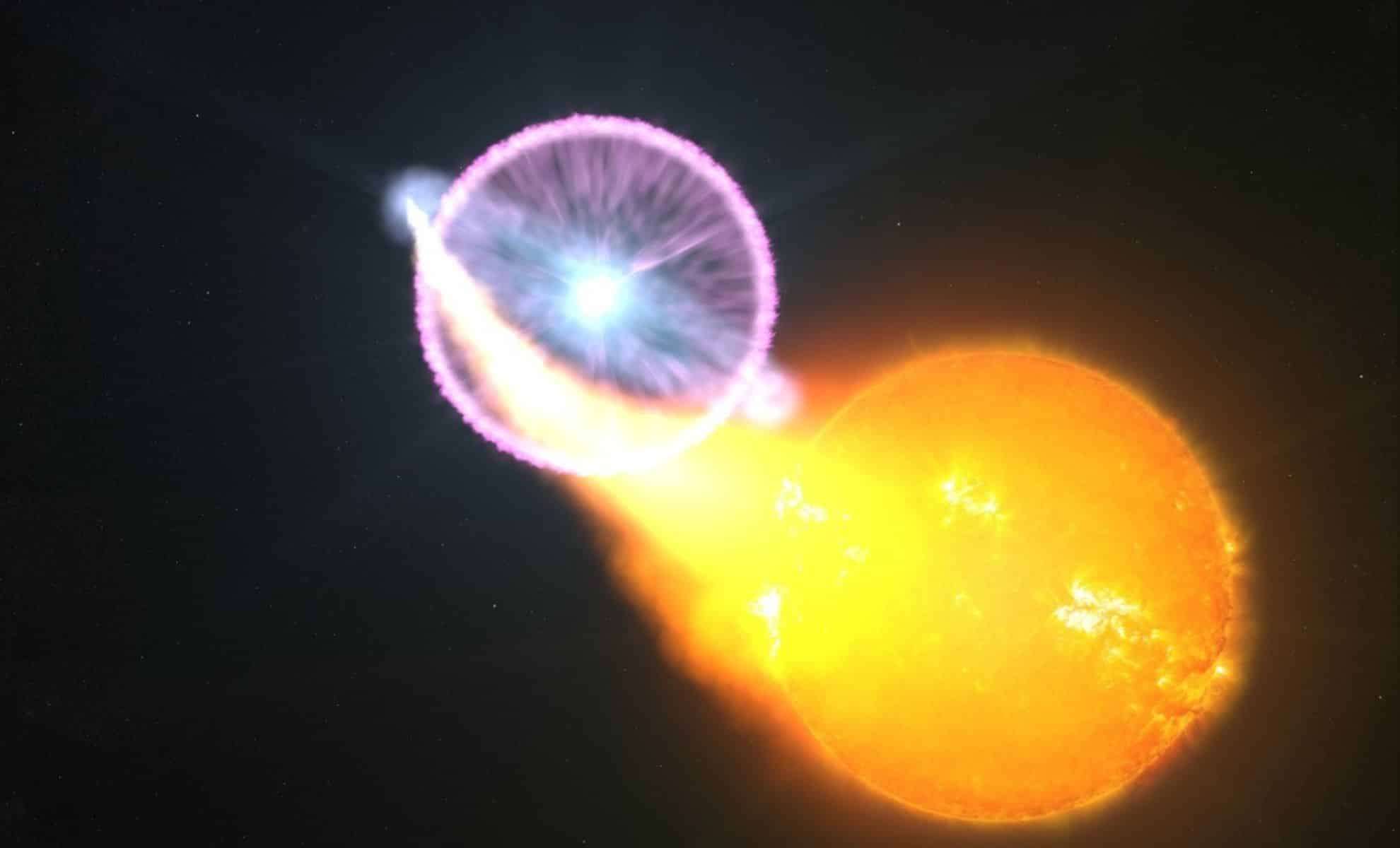
Stars similar to our Sun fuse hydrogen atoms into helium in their cores, releasing vast amounts of energy that counterbalances gravitational collapse. Over extensive periods, hydrogen fuel diminishes. Lower-mass stars then contract and heat up internally after shedding outer layers, leaving behind a dense core known as a white dwarf.
A white dwarf is the dense stellar remnant of a star that has burned through its fuel, possessing a mass comparable to the Sun but compressed into a volume akin to Earth’s size. Its structure is maintained by electron degeneracy pressure—a quantum effect preventing further collapse despite intense gravity.
For a nova to occur, the white dwarf must belong to a binary system where it shares an orbital relationship with a companion star. If this companion is still in its hydrogen-fusing phase or has evolved into a giant, it may have an expanded outer atmosphere. The white dwarf’s gravity can draw hydrogen gas from this companion, gradually collecting it on its surface.
This hydrogen accumulates in a dense layer on the white dwarf until the pressure and temperature at its base reach critical points. Then, nuclear fusion ignites explosively in a runaway reaction. Unlike normal matter, degenerate matter does not expand and cool under heat, accelerating the fusion process dramatically and releasing an immense burst of energy — the nova.
The detonation emits more energy in a few days than the Sun does annually, shining brightly across the spectrum. This outburst propels outer hydrogen layers into space at high speeds, yet the white dwarf and its partner remain intact, ready for future cycles.
Viewing the Nova Event
When T Coronae Borealis erupts, its brightness could rival that of Polaris, the North Star, placing it among the 50 brightest stars visible at night. The nova should be visible to the unaided eye, especially under clear skies away from city lights.
The ideal time to observe will be immediately after the nova's appearance, as its luminous intensity tends to fade quickly within days. Located between the constellations Hercules and Boötes, Corona Borealis is fairly accessible for observers in the Northern Hemisphere.
Stay informed through updates from trusted astronomy organizations such as NASA, ESA, and major observatories. Using binoculars or amateur telescopes and choosing viewing spots with minimal light pollution will enrich the experience of this rare cosmic display.
The forthcoming nova of T Coronae Borealis represents one of 2024’s most significant night sky phenomena, providing not only a breathtaking spectacle but also invaluable data for astronomers to further unlock the mysteries of the cosmos.
- Categories:
- Astronomy ,
- News ,
- Space ,
- Nasa







0 comments
Sign in to Comment