
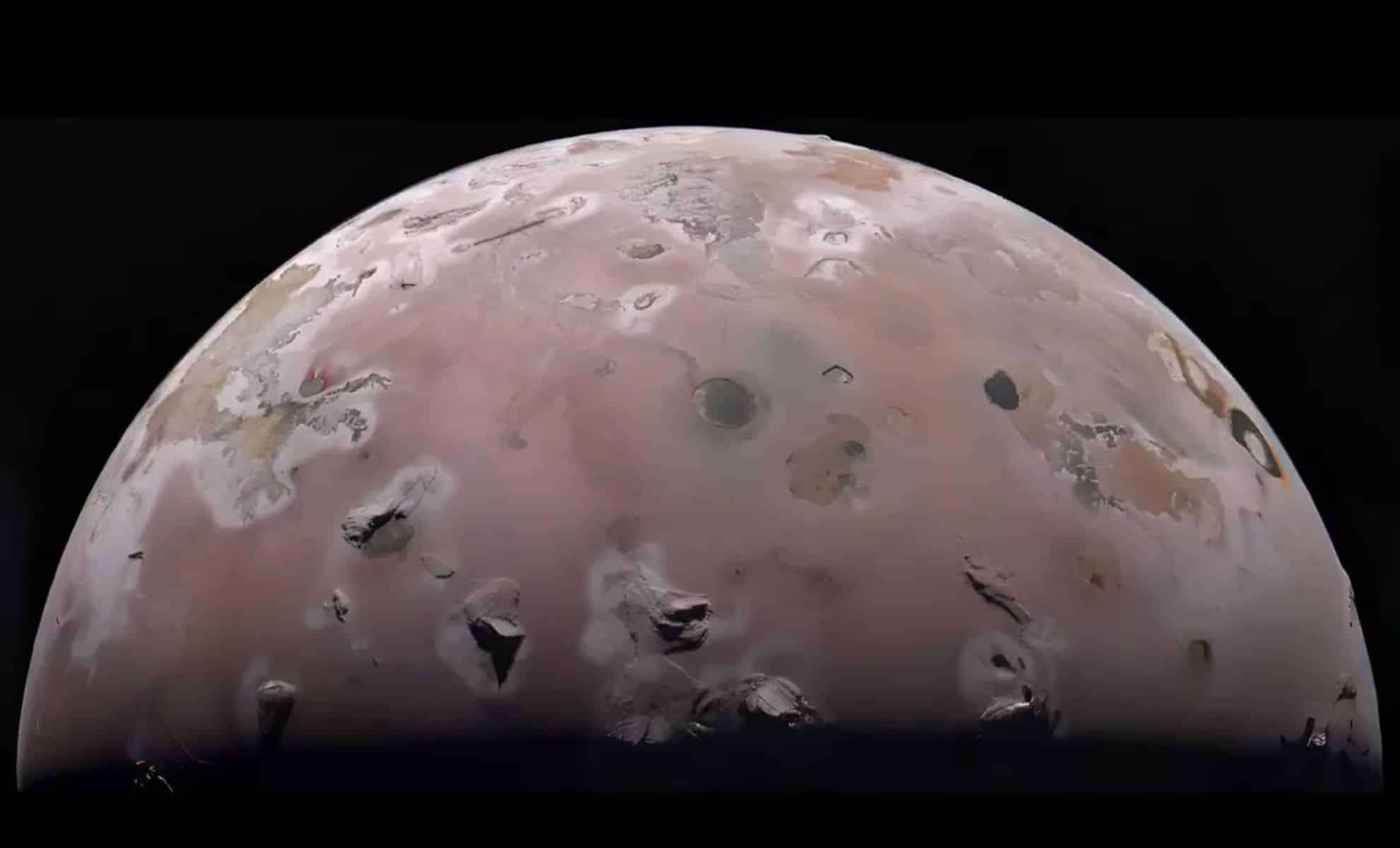
NASA’s Juno spacecraft has revealed a remarkable insight into Io, the solar system’s most volcanically active moon. Contrary to earlier beliefs that a global magma ocean lay beneath its surface, Io’s volcanic eruptions are now shown to originate from distinct magma pockets. This discovery transforms how scientists view Io’s geology as well as similar phenomena on other worlds.
Io: The Solar System’s Volcanic Dynamo
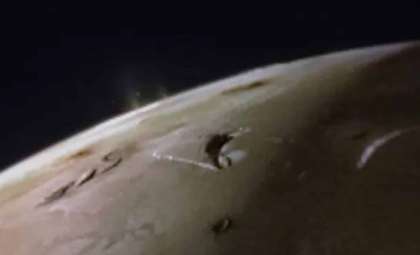
Among Jupiter’s four major moons, Io stands out as a geological enigma. Slightly larger than Earth’s Moon, it boasts more than 400 active volcanoes, making it the most eruptively intense object in our cosmic neighborhood. Its volcanoes erupt lava and sulfur dioxide gas continuously, sending plumes soaring up to 310 miles (500 kilometers) above its surface. Io’s landscape is a volatile mix of molten lava flows, volcanic pits, and vivid sulfur deposits.
Scientists have been fascinated by Io’s extraordinary volcanic activity since Linda Morabito’s landmark 1979 volcanic plume discovery. The central debate has focused on whether a vast magma ocean drives this energy or if smaller, localized heat sources beneath the surface are responsible.

Juno’s Close Encounters Illuminate Io’s Interior
The mystery began to unravel through Juno’s remarkably close flybys of Io across late 2023 and early 2024. Skimming within 930 miles (1,500 kilometers) of the surface, Juno gathered detailed data using dual-frequency Doppler techniques supplemented by NASA’s Deep Space Network.
Scott Bolton, the mission’s principal investigator from the Southwest Research Institute, emphasized: “Following Morabito’s discovery, the question remained: Do Io’s volcanoes draw from a global magma ocean or discrete subsurface sources? Juno’s close approach provided the precise measurements to answer this.”
The Role of Tidal Forces in Heating Io
Io’s volcanic fury is fueled by a process called tidal flexing, a consequence of Jupiter’s immense gravity. As Io travels around Jupiter, the moon experiences cyclical stretching and squeezing, generating intense internal heat. This heat melts parts of its interior, triggering volcanic activity on the surface.
Bolton elaborated: “This rhythmic squeezing of Io produces so much heat that molten rock forms beneath the surface and erupts continuously. It’s a relentless torrent of volcanic activity.”
Further tidal interactions involving Io, Jupiter, and neighboring moons—Europa and Ganymede—amplify this heating, maintaining Io’s intense volcanic output.
Discovery of Distinct Magma Reservoirs Below the Surface
Data from Juno has overturned the long-held belief that Io harbors a singular magma ocean. Instead, evidence points to discrete magma chambers scattered beneath the surface, which supply volcanic eruptions localized at specific sites.
This conclusion came from detailed analysis of Juno’s gravity field readings and comparisons with tidal deformation models. A global magma ocean would have exhibited a much stronger tidal signal, but findings instead indicate a mostly solid interior punctuated by isolated molten regions.
Broader Impact on Planetary Science
The revelation has profound consequences beyond Io. Ryan Park, lead author and Juno co-investigator at NASA’s Jet Propulsion Laboratory, highlighted: “These insights reshape our understanding of other icy moons like Enceladus and Europa, and extend to exoplanets and super-Earths. It urges a reassessment of planetary geodynamics.”
Moons thought to harbor subsurface oceans, including Europa and Enceladus, might also experience localized, rather than global, geological phenomena. Likewise, the tidal heating and magma chamber model could enhance our knowledge of rocky exoplanets orbiting close to their stars, where gravitational forces generate dynamic environments.
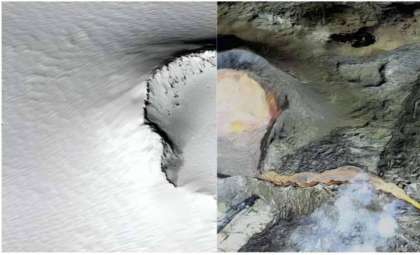
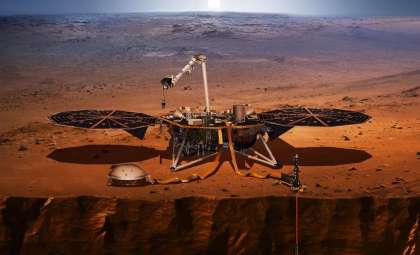
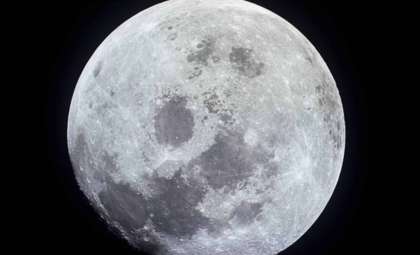
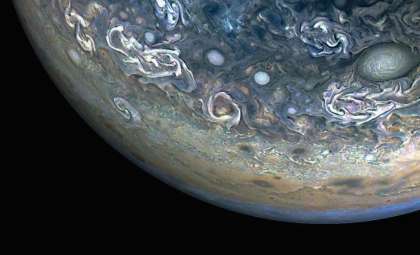
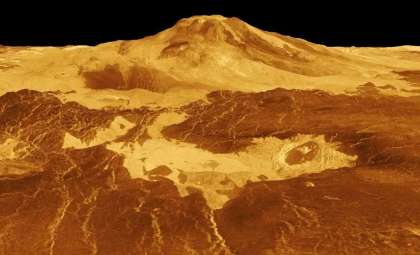
Geological Features of Selected Celestial Bodies:
Guiding Future Missions and Exploration
These findings signify a major advance in studying volcanically active worlds. Insights into Io’s localized magma pockets offer a blueprint for upcoming missions to geologically active moons and planets. Missions like Europa Clipper and Dragonfly to Titan can leverage this understanding.
As Juno’s mission continues, its expanding dataset will refine planetary models related to formation, tidal heating, and volcanism, enhancing the search for habitable conditions on distant planets.
The persistent eruptions on Io underscore the powerful internal dynamics shaping our solar system. Juno’s pioneering observations are gradually unlocking the mysteries of volcanic worlds, eruption by eruption.
- Categories:
- News



0 comments
Sign in to Comment