
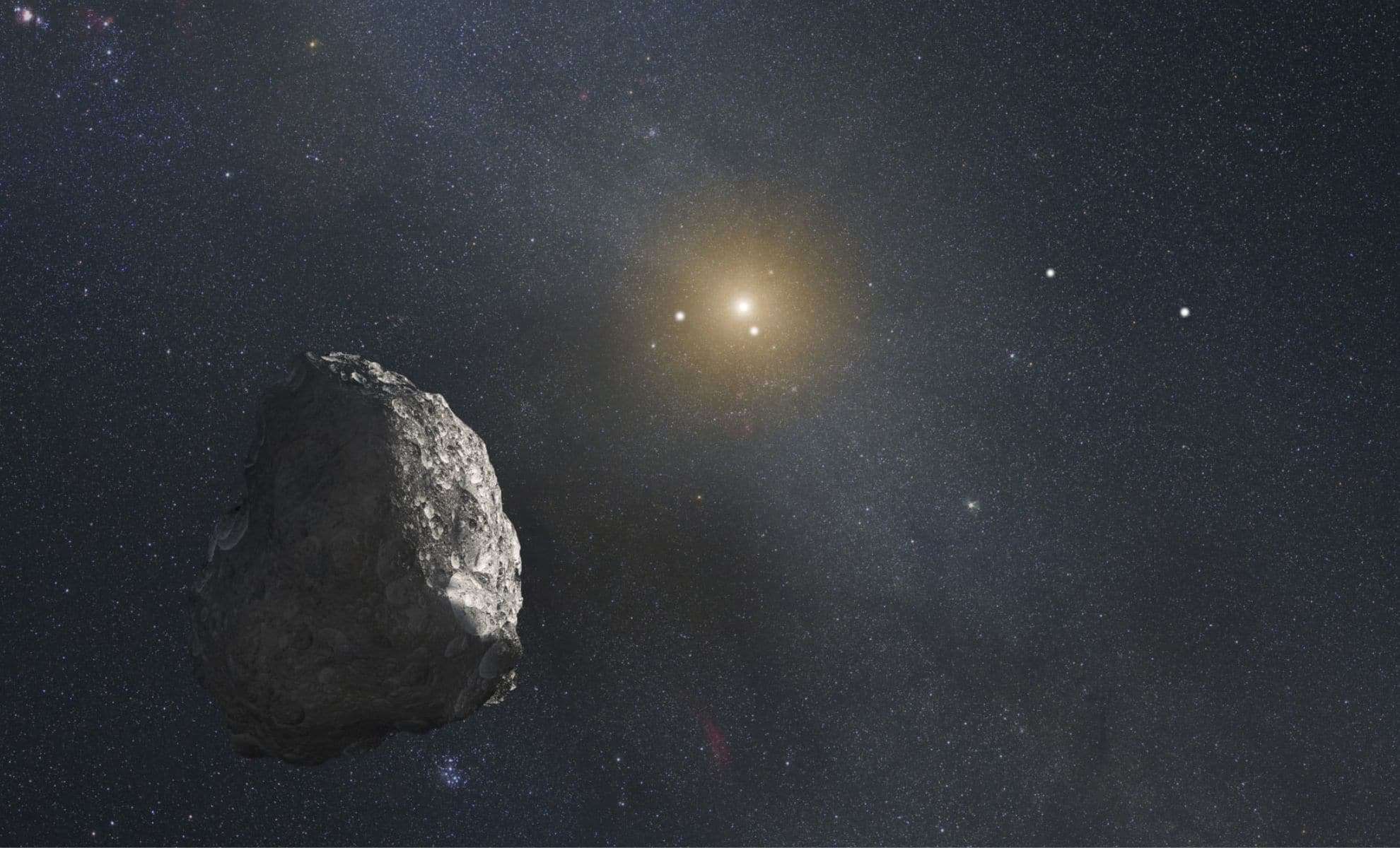
The James Webb Space Telescope (JWST) is revealing new insights into enigmatic bodies residing at the far reaches of our solar system. Leveraging JWST’s advanced instruments, a recent investigation has targeted Trans-Neptunian Objects (TNOs), primordial remnants that existed before the formation of Earth and neighboring planets. This research, featured in the Astrophysical Journal, illuminates chemical clues that could deepen our understanding of life's beginnings.
Examining the Chemical Composition of Primitive Solar System Bodies
Originating as frozen vestiges from over four billion years ago, TNOs provide an unparalleled window into the early chemical and physical environments predating Earth’s birth. Researchers have long suspected these icy objects might harbor answers to humanity’s fundamental question of how life emerged.
By detecting methanol — an organic molecule simple in structure yet vital to chemical evolution — on TNO surfaces, the team uncovered essential information. “Methanol, a basic alcohol found on comets and distant TNOs, suggests it is an ancient compound inherited from the nascent solar system or perhaps earlier interstellar sources,” stated Noemí Pinilla-Alonso, Research Professor at the University of Central Florida and project co-leader. The research indicates that upon solar irradiation, methanol transforms into more complex substances, effectively acting as a chemical record preserving the history of these remote objects.

Revealing Surprising Patterns on the Solar System’s Icy Frontier
Detailed JWST observations exposed unexpected trends in methanol distribution. TNOs situated nearer to the Sun showed depleted surface methanol, likely due to destructive solar radiation, while subsurface reservoirs remained rich in the molecule. In contrast, those farther out demonstrated generally weaker methanol signals. “The most thrilling aspect was connecting these variations to methanol’s behavior — a molecule that had long eluded Earth-based detection on TNOs,” Pinilla-Alonso remarked.
This finding underscores the significant influence of solar radiation in modifying TNO chemistry over time, advancing our comprehension of the dynamic process shaping the outer solar system. “Our data suggests that while methanol is broken down on the surface by irradiation, it remains preserved beneath, shielded from such effects,” added Pinilla-Alonso.
Exploring the Solar System’s Earliest Era
Special attention was given to the “cliff group,” a subset of cold-classical TNOs thought to have remained largely unchanged since their formation. “This group is crucial for understanding the outer solar system because it houses cold-classical TNOs,” explained Ana Carolina de Souza-Feliciano, Associate Professor at UCF’s Florida Space Institute. “They represent the sole dynamic class likely remaining where they originally formed since the solar system’s birth.”
By analyzing these untouched relics, scientists aim to piece together a more detailed reconstruction of the early solar system’s architecture and chemistry, setting foundational benchmarks for future missions.
Inspiring Future Exploration and the Quest for Life’s Origins
The implications of this study reach well beyond the Kuiper Belt. According to Rosario Brunetto, astronomer at Université Paris-Saclay and co-leader of this project, these results establish an essential framework for interpreting JWST’s data on other remote populations like Neptune Trojans, Centaurs, and asteroids. “This discovery not only redefines our view of TNOs but also sets a vital standard for analyzing JWST’s observations of other distant solar system bodies and guiding future outer solar system exploration,” Brunetto said.
More than its scientific impact, investigating methanol’s presence ignites human curiosity and motivates new generations to delve into cosmic chemical processes. “Beyond science, the search for methanol inspires curiosity and encourages exploration of the cosmos’ chemical evolution,” Brunetto emphasized.
As the study of these icy distant worlds progresses with JWST’s unmatched precision, each breakthrough adds crucial insight into the puzzle of our origins — a profound mystery fueling scientists and dreamers alike.
- Categories:
- News











0 comments
Sign in to Comment