
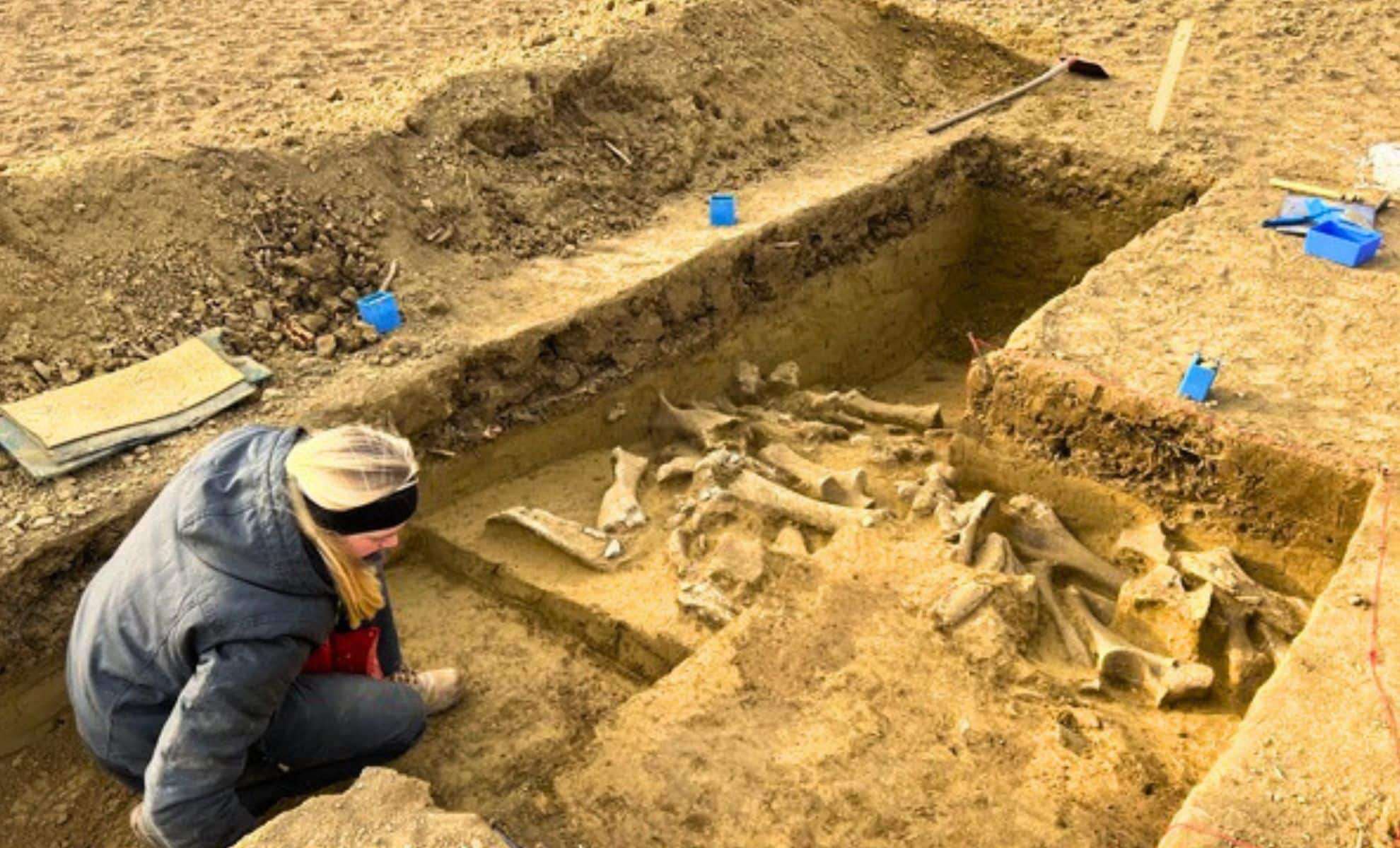
A remarkable discovery of a 25,000-year-old mammoth bone site in Langmannersdorf an der Perschling, Lower Austria, has illuminated a sophisticated prehistoric hunting and ivory crafting base. Archaeologists uncovered the remains of at least five mammoths, stone implements, and clear evidence of detailed butchering within the confined area of the Perschling Valley.
This excavation, led by Marc Händel from the Austrian Archaeological Institute (ÖAI) and executed by the Austrian Academy of Sciences (ÖAW), is part of the European initiative MAMBA (Exploring Mammoth Bone Accumulations in Central Europe). Their findings provide new perspectives on late Pleistocene human hunting techniques and mammoth resource use.
A Concentrated Mammoth Hunting Locale
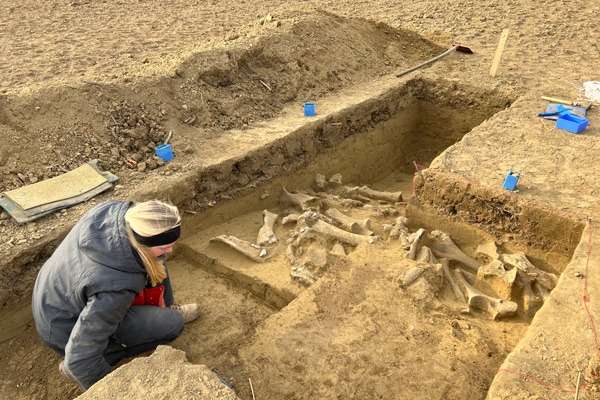
Archaeologists identified two separate clusters of mammoth bones located only 15 meters apart, each divulging distinct insights. The first cluster demonstrated signs of detailed butchering, linked to the processing of at least two mammoths. The second contained both partial and whole tusks along with remains from at least three additional mammoths.

Händel commented, “Discovering not isolated bones but intensely utilized sites of several animal dissections has surpassed all our initial hopes.”
Artifacts, Ivory Work, and Resourcefulness
Aside from skeletal remnants, the team found stone implements and debris from tool-making activities, indicating this was more than a hunting site alone. Traces of ivory craftsmanship were uncovered, likely used to create spear tips or other hunting tools—typical of the era.
These discoveries illustrate how Ice Age hunters carefully exploited their quarry, efficiently utilizing nearly every part of the mammoths they hunted.
Mammoth Migration Corridor
During the late glacial period, the Perschling Valley functioned as both a migration path and grazing zone for mammoth herds traversing Central Europe. The position of the Langmannersdorf discovery supports the hypothesis that early humans had a strategic understanding of these migratory routes and exploited them for hunting.
Local significance of this area dates back over a century, with mammoth bones surfacing in trade between 1904 and 1907. Notably, a soap factory purchased bones from a resident, prompting initial studies by the Natural History Museum in Vienna.
More systematic excavations took place in 1919 and 1920, uncovering what were initially termed two mammoth hunter camps.
Modern Scientific Techniques Reveal Ancient Lives
Contemporary researchers are employing cutting-edge methods such as genetic sequencing, stable isotope analysis, radiometric dating, and paleodemographic models to reconstruct the environment inhabited by these mammoths and humans.
These advanced scientific approaches make it possible to deduce climatic scenarios, track human interactions with animals, and delineate the population dynamics of both species.
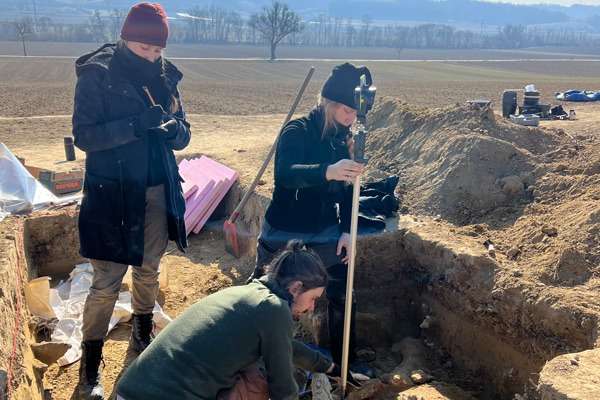
The collected bones are currently being analyzed at the ÖAI’s Krems branch. Upon completion of studies, fossils will be transferred to Vienna’s Natural History Museum, with some artifacts exhibited at the Perschling Museum of Local History.
The Langmannersdorf site offers not just fossils but a vivid glimpse into prehistoric lifestyles, revealing a community adept at hunting and deeply attuned to their Ice Age world.
- Categories:
- Science










0 comments
Sign in to Comment