
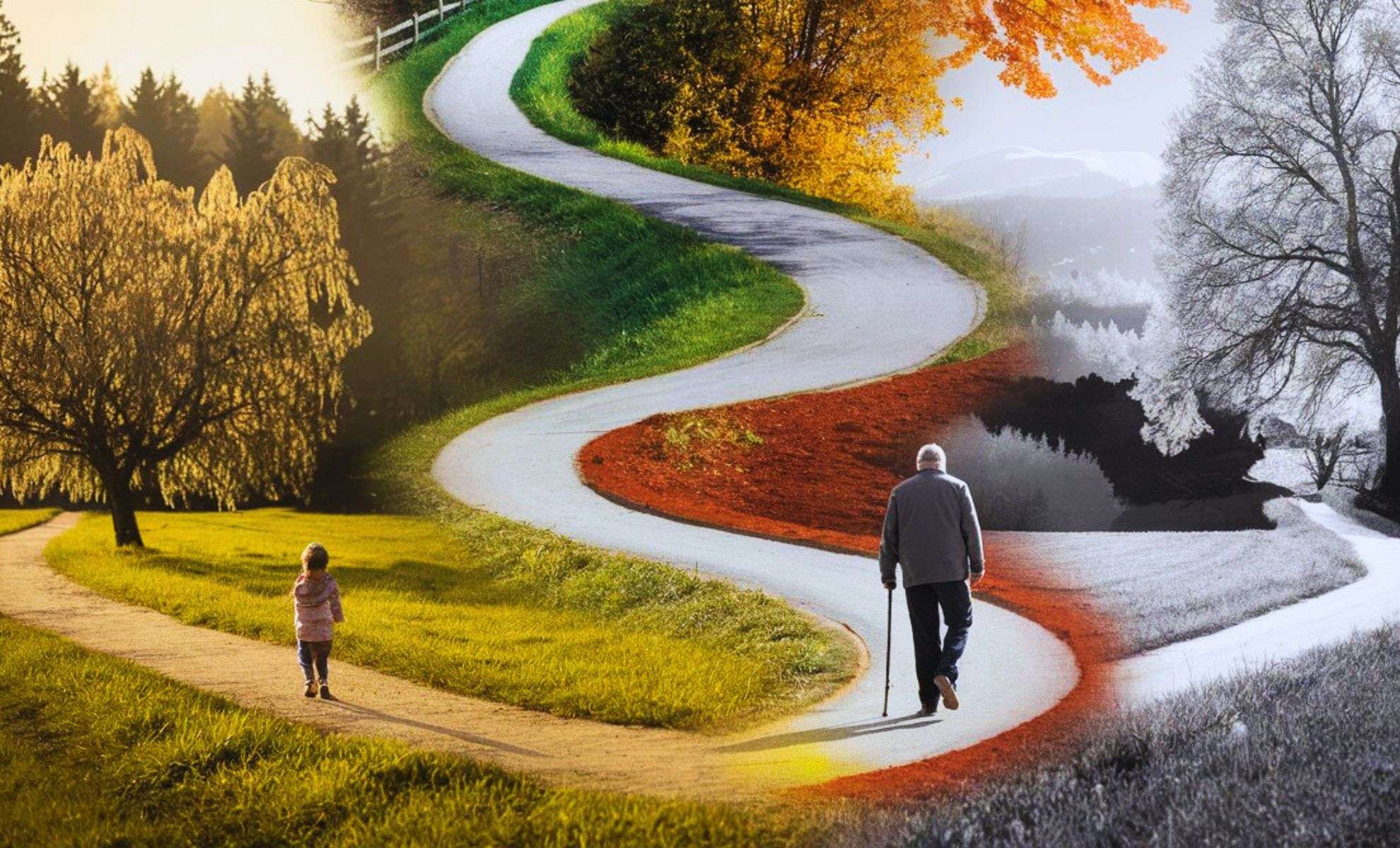
As we grow older, many notice that time seems to slip away more quickly than it did during childhood. Those lengthy summer days feel like a distant memory, replaced by rapidly passing years. This sensation isn’t just a trick of memory—there is scientific insight explaining why our perception of time accelerates as we age, along with suggestions to help decelerate this experience.
How Our Sense of Time Evolves Over the Years
The way we perceive time often diverges from actual clock time. For example, an hour filled with boredom can feel interminable, while time spent with loved ones may seem to fly by. This divide between objective time and subjective experience becomes more marked with age.
The Role of Brain Processing Speed
Adrian Bejan, a mechanical engineering professor, points to the brain’s speed of processing as a key factor. Children’s brains quickly absorb numerous "mental frames," which leads to a rich perception of time. As we age, this neural processing slows, resulting in fewer details recorded and a blending of days.

Bejan remarks, “Many recall how the days felt much longer when they were young. It isn’t that their moments carried more weight, but that their brains worked faster to capture them.”
Impact of Habit and Declining Novelty
The repetition of daily routines also makes time feel faster. In youth, frequent novel stimuli stretch our time perception. Adults tend to settle into routines, reducing fresh experiences. Biologically, dopamine—which plays a role in excitement and novelty—diminishes after early adulthood, decreasing the motivation to seek new activities and further speeding perceived time.
Quantifying Time Perception
Christian Yates, a specialist in mathematical biology, explains that our perception of a year depends on our age proportionally. For a child of five, a single year equals 20% of their life, while for someone aged 50, it’s only 2%. This shrinking fraction is a significant reason why years start seeming to pass more swiftly.
Techniques for Extending the Feeling of Time
While aging is unavoidable, we can influence how we experience time’s flow. Bejan recommends deliberately introducing new experiences to disrupt routine. Trying fresh hobbies, exploring new environments, or even changing a daily route can stimulate the brain’s activity, enriching our mental snapshots and expanding the subjective duration of time.
Enhancing Presence through Mindfulness
Engaging fully with the present moment through mindfulness practices can also help slow time’s passage. Paying close attention to our experiences roots us more deeply in 'now,' making time feel more substantial.
Changing How We View Time
Gaining insight into the workings of time perception gives us tools to combat the speeding effect of monotony and familiarity by seeking engaging challenges and nurturing meaningful relationships.
Embracing Time’s Flow with Intention
Though we cannot stop time from moving forward, we hold power over how we perceive it. By welcoming new adventures, staying mentally active, and appreciating life’s surprises, we can soften the sensation of time rushing by and cultivate moments as vivid and memorable as those cherished from our youth.
- Categories:
- Science








0 comments
Sign in to Comment