
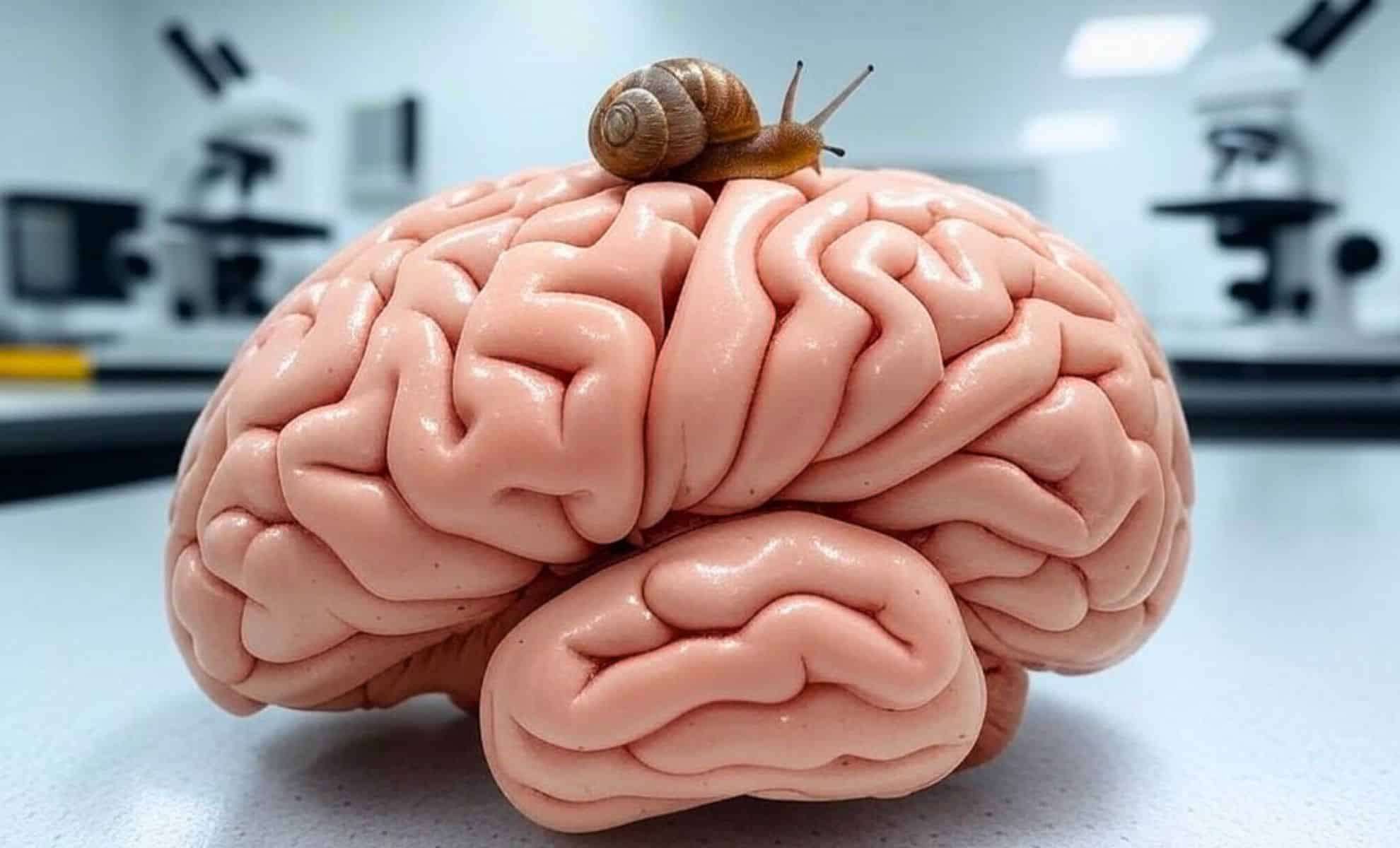
Scientists at Caltech have identified a remarkable limitation in how our brains handle conscious information, demonstrating that conscious thought operates at approximately 10 bits per second. Meanwhile, our sensory organs absorb data at an astonishing rate of one billion bits per second, which is about 100 million times faster than what reaches conscious awareness. This insightful discovery, published in Neuron, challenges existing beliefs about the brain's processing capabilities.
Understanding the 10-Bit-per-Second Limit
Using concepts from information theory, researchers Markus Meister and Jieyu Zheng analyzed activities like reading, gaming, and complex problem-solving. They revealed that although neurons in the brain can potentially process vast data, conscious cognition is limited to handling only 10 bits per second.
- The human brain consists of roughly 85 billion neurons, with about a third involved in advanced thinking processes.
- Despite this vast network, conscious thought speed remains much slower than everyday technology, such as a common Wi-Fi signal transmitting at 50 million bits per second.
“At any given instant, our minds consciously extract just 10 bits from the immense quantity absorbed by our senses,” Meister explained, highlighting the striking discrepancy between sensory input and conscious perception.

The Evolutionary Roots of Limited Cognitive Speed
This research suggests that the brain's limited processing rate is a product of evolutionary development. Early life forms relied on their nervous systems primarily for survival, such as locating resources and avoiding danger. Over millions of years, the brain evolved into a mechanism specialized for deep, sequential reasoning rather than rapid multitasking.
Illustrations of this include:
- A chess player considering one move sequence at a time during gameplay.
- Concentration-driven tasks that highlight the brain’s tendency toward linear processing.
Such constraints likely emerged as advantageous adaptations when nature favored accuracy over speed. As Zheng and Meister noted, “Our predecessors lived in environments where slow, deliberate thought was sufficient for survival.”
Implications for Brain-Computer Interface Development
This finding also impacts the potential of brain-machine interfaces. While such technologies aim to facilitate rapid communication between humans and computers, the study indicates they will remain bounded by the brain’s intrinsic speed limit of 10 bits per second, tempering expectations for instantaneous neural data exchange.
- Advanced neural interfaces cannot exceed the brain’s fundamental processing constraints.
- This challenge presents a significant barrier to surpassing natural cognitive performance through technology.
Directions for Ongoing Research
The investigation opens new avenues into understanding how the brain prioritizes and filters the tiny fraction of sensory input that reaches conscious awareness. Decoding this selective process is essential for a comprehensive theory of cognition.
Upcoming research might explore:
- Mechanisms behind sensory data filtration and focus within the brain.
- The role of billions of neurons in enabling selective attention.
- Possibilities for expanding conscious processing capacity without overwhelming neural systems.
A New Perspective on Intelligence
Although conscious thought speed appears slow, it reflects the brain's exceptional efficiency in managing finite resources. This research invites a reinterpretation of intelligence as an optimized balance of precision and economy rather than raw processing speed.
Funded by the Simons Collaboration on the Global Brain and the National Institutes of Health, the study encourages fresh perspectives on human cognition. The paradox of the brain’s vast complexity paired with its measured pace offers rich potential for future discoveries.
In a culture that equates speed with success, these insights prompt us to appreciate the deliberate and focused nature of human thought, a core aspect of our humanity.
The full study, titled “The Unbearable Slowness of Being: Why do we live at 10 bits/s?”, is authored by Markus Meister, who is part of the Tianqiao and Chrissy Chen Institute for Neuroscience at Caltech.
- Categories:
- Science













0 comments
Sign in to Comment