
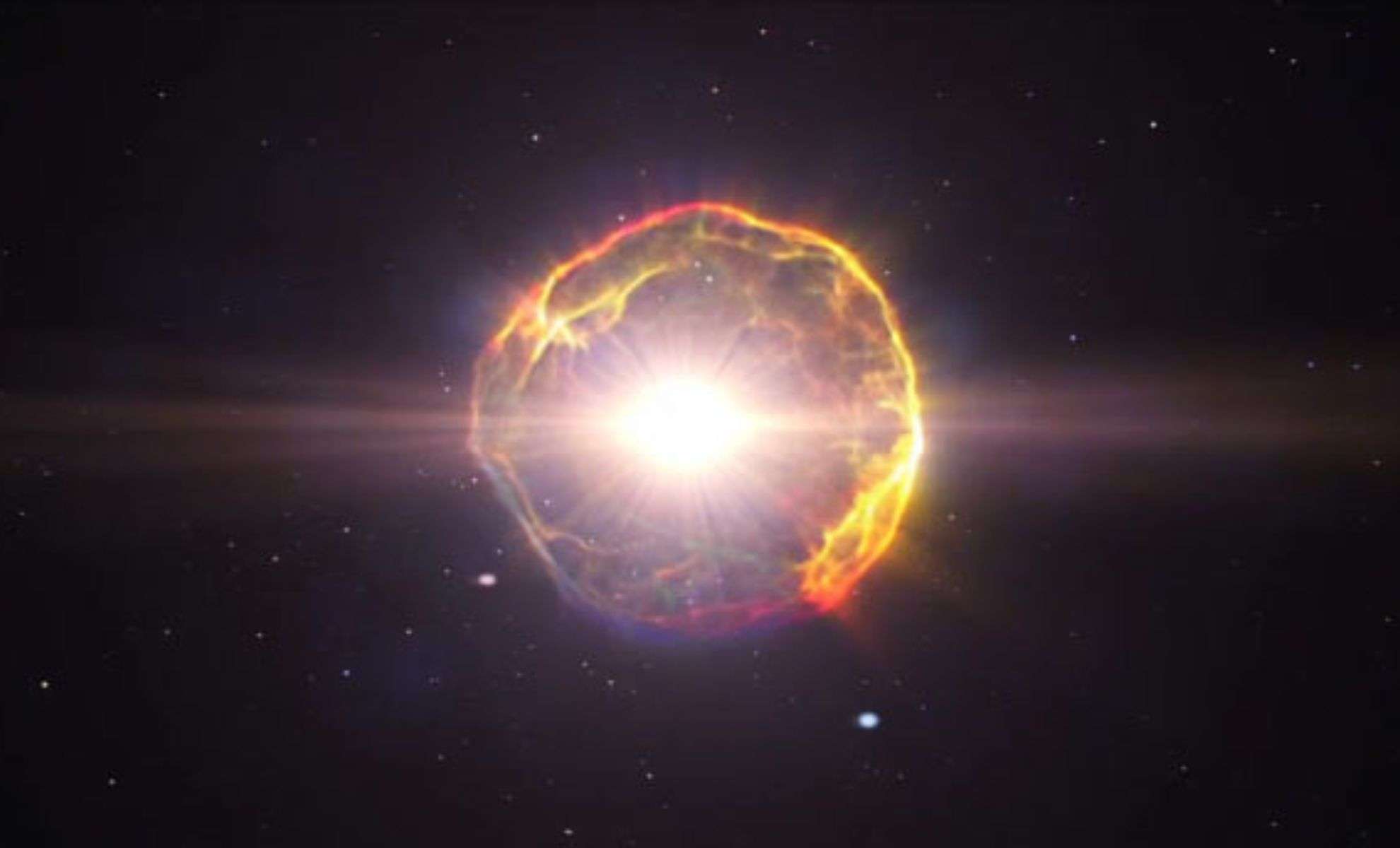
Recent research opens up fascinating perspectives on how supernova explosions could have influenced the course of life on our planet. A team from UC Santa Cruz, led by Caitlyn Nojiri, has unearthed evidence of supernova remnants in the form of iron isotope Fe60 deposits embedded in ocean floor sediments.
These findings indicate that stellar explosions occurred within close proximity to Earth around two to three million years ago, and again five to six million years ago. Published in the Astrophysical Journal Letters, this study proposes that the radiation emitted from these supernovae may have played a major role in influencing Earth’s biodiversity.
Impact of Supernovae and Cosmic Radiation on Our Planet
Supernovae represent some of the universe's most intense explosive events, unleashing enormous energy waves through interstellar space. When one occurs nearby, it releases high-velocity particles and ionizing radiation that permeate the cosmic medium. The research suggests that exposure of Earth to such radiation can alter environmental conditions and affect biological systems. The authors emphasize that “life on Earth is constantly evolving under continuous exposure to ionizing radiation from both terrestrial and cosmic origin.” Though Earth's internal radiation has consistently waned over millennia, cosmic radiation levels vary widely, driven largely by the solar system’s trajectory through galactic regions.

The study specifically examines how supernovae could have amplified radiation survivability at Earth's surface. They estimate that nearby explosions sent substantial bursts of energetic particles toward Earth, thereby increasing radiation doses capable of inflicting genetic damage. This includes double-stranded DNA breaks, a severe form of genetic injury that may induce mutations, chromosomal abnormalities, or cellular death. The investigators propose that such radiation events might have sparked “mutations and a surge in species diversification,” implying that cosmic phenomena like supernovae could have accelerated evolutionary shifts and shaped modern biodiversity.
Detecting Iron Isotope Fe60 in Seafloor Layers
A key piece of evidence for supernova influence comes from identifying deposits of the iron isotope Fe60 within Earth’s seabed sediments. This rare isotope indicates supernova presence since Fe60 is chiefly produced during massive star explosions and usually absent on Earth. The younger deposit, approximately two to three million years old, aligns with a supernova event that likely occurred relatively close to our planet. This coincided with the solar system traversing a galactic zone characterized by elevated cosmic radiation exposure.
The older Fe60 layer, dating to five to six million years ago, appears linked to Earth's passage through the Local Bubble, a 1,000-light-year-wide cavity of hot, ionized gas within the interstellar medium. This bubble probably formed from the collective force of multiple supernovae—at least nine having detonated within or near this space over the past six million years. The presence of Fe60 in ocean sediments thus may represent the residue of such ancient explosions, indicating the solar system’s exposure to heightened cosmic radiation while moving through this region.
Supernova Radiation’s Role in Biodiversity Shifts
The study's implications are especially profound regarding how supernova-derived radiation might have influenced Earth’s living organisms. As the planet navigated areas impacted by supernova remnants, elevated cosmic radiation could have directly affected genetic material. The authors suggest that radiation-induced DNA damage, especially double-strand breaks, potentially triggered genetic mutations across various species. These mutations may have expedited rapid evolutionary diversification, helping to explain spikes in biodiversity recorded in the fossil history during high-radiation epochs.
This idea linking supernova activity to biological evolution provokes new debates by proposing a cosmic driver behind life’s diversity beyond atmospheric and terrestrial factors. While climate, geological processes, and ecological pressures are well-known influencers of evolution, the research advances the notion that “supernova radiation might induce DNA changes prompting sudden increases in species diversification.” Though still hypothetical, it offers an inspiring framework for further exploring how cosmic events interact with life’s progression over millions of years.
Next Steps: Exploring Cosmic Influences on Biological Evolution
These groundbreaking results highlight the need for continued examination of how supernovae and related cosmic phenomena may have molded Earth's biological trajectory. The discovery of Fe60 deposits provides concrete linkage between distant stellar explosions and terrestrial radiation exposure. However, many mysteries remain, such as the exact pathways through which elevated cosmic radiation affected evolutionary mechanisms and the detailed timing of these occurrences. Upcoming investigations will likely delve deeper into these cosmic-biosphere connections to unravel their full impact on Earth’s history.
Deciphering how supernovae influence life offers a unique window into biological responses to severe environmental stress. As our solar system continues its galactic journey, it may encounter new regions with variable radiation levels, suggesting that supernova-induced evolutionary pressures could persist into the future. In the words of the study, “the role of supernova radiation in shaping life on Earth is a largely unexplored field, with exciting possibilities for understanding the interplay between astronomical events and biological evolution.” This pioneering research path may reveal transformative insights into how life adapts not only on Earth but across the cosmos.
In conclusion, the proposition that nearby supernovae contributed to Earth’s biodiversity is compelling yet provisional. While Fe60 evidence supports a connection, further studies are essential to clarify the extent supernova events influenced life’s development. Nevertheless, the study offers a thought-provoking perspective on how events beyond our atmosphere might have guided biological evolution across millions of years.
- Categories:
- Astronomy ,
- News ,
- Science




0 comments
Sign in to Comment