
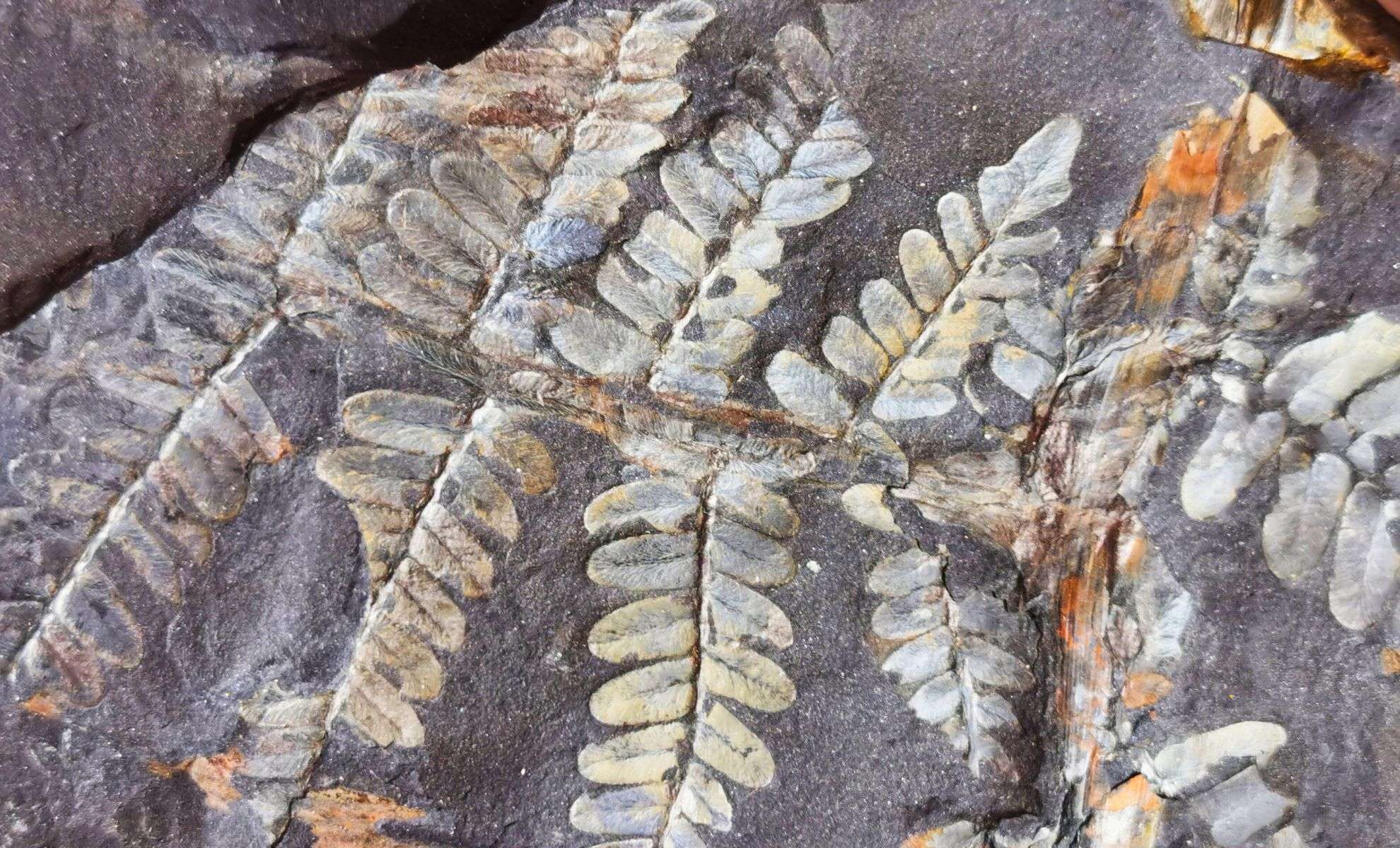
A freshly restored fossil is prompting researchers to rethink one of nature’s most familiar geometrical designs. The 407-million-year-old specimen, Asteroxylon mackiei, breaks away from the classic Fibonacci spiral.
Discovered in the Rhynie Chert deposits of Scotland, this fossil represents an extinct type of clubmoss. These primitive vascular plants, which reproduced through spores, share closer ties to ferns than to modern mosses. For many years, scientists believed that the Fibonacci sequence was an inherent pattern from the earliest stages of leaf development in plants. However, as Popular Mechanics reveals, this ancient species did not display such a pattern.
Unraveling an Unconventional Spiral Arrangement
The majority of contemporary plants grow following the Fibonacci sequence, a mathematical pattern where each number results from adding the two preceding numbers. This sequence is observable in structures like pine cones, sunflower seed arrangements, and aloe leaves, which led scientists to think it was a fundamental rule of botanical growth.

“Lots of things you’re familiar with, if you look at them in detail, you’ll actually find evidence of Fibonacci spirals,” says Sandy Hetherington at the University of Edinburgh in the UK.
However, this view is now being challenged. Research reported by Interesting Engineering indicates that A. mackiei displayed a unique phyllotaxis, or leaf arrangement, that did not conform to Fibonacci numbers. Instead, its leaf spirals followed an n:(n+1) ratio — a mathematically valid but rarely seen pattern in current plant species.
Some fossil specimens display leaves arranged in whorls, while others show irregular spiral patterns without a fixed arrangement. Interestingly, some spirals altered their pattern along the stem, indicating a far more complex and varied evolutionary background than the previous notion of a uniform spiral blueprint.
Coordinated Growth of Leaves and Spore Structures
Aside from its unusual spirals, A. mackiei also demonstrated that its leaves and sporangia—the structures responsible for releasing spores—developed following the same growth pattern. This observation suggests a common developmental origin rather than independent processes shaping these organs.
Research described in a Science publication shows that both reproductive and vegetative parts were systematically organized along the stem. This finding contradicts the earlier belief that leaves and sporangia evolved separately in early vascular plants.
As Popular Mechanics highlights, this discovery adds valuable insight to the century-long discussion about the origin of leaves. It points toward leaves and sporangia emerging together, influenced by a shared developmental blueprint.
Advanced 3D Imaging Illuminates an Ancient Enigma
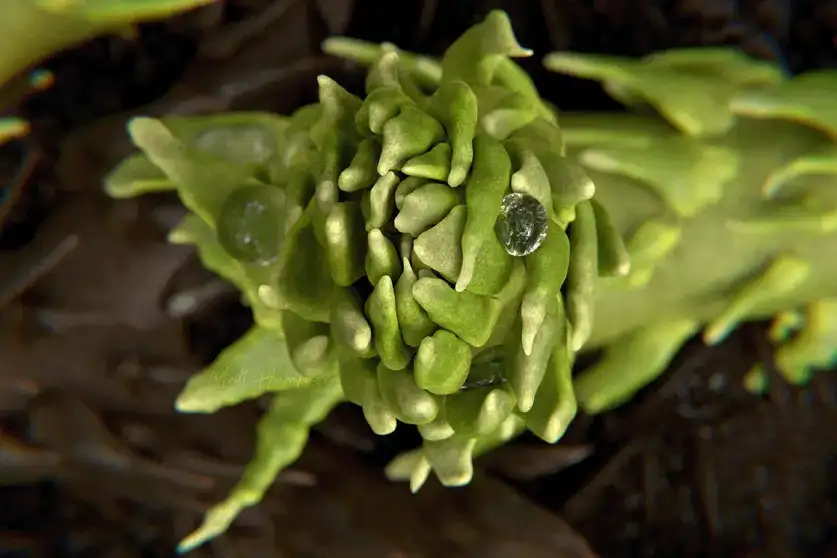
The key to this discovery lay not in where the fossil was found but in how scientists examined it. Employing 3D reconstruction technology and digital cross-sectional imaging, the research team unveiled internal details that had never been analyzed before. With assistance from digital artist Matt Humpage, they generated an intricate model that exposed the fossil’s leaf arrangement patterns with remarkable accuracy.
Interesting Engineering remarked that this represents the first time such detailed analysis was applied to a plant dating back several hundred million years. The investigation confirmed that the spirals were deliberate and consistent, not the result of random development or damage. Fascinatingly, the study also observed variation within individual branches, a phenomenon rarely seen in living plants. This fossil had remained obscured in museum collections for decades until modern techniques revived its significance.
- Categories:
- Science









0 comments
Sign in to Comment