
Thrinaxodon, a small carnivorous cynodont from the Early Triassic era, has fascinated scientists for years because its anatomy bridges reptiles and mammals. This blend of features positions it as a pivotal species for exploring the evolution of mammalian characteristics, particularly hearing. However, definitive biomechanical proof linking it to mammalian auditory development has remained elusive—until now.
Researchers at the University of Chicago, publishing in the Proceedings of the National Academy of Sciences, revisited long-standing theories about how cynodonts detected sound. Employing high-resolution CT scans combined with advanced simulation software, they analyzed the skull and jaw structure of Thrinaxodon to understand its hearing capabilities.
Uncovering Hearing Clues in the Jaw of an Early Triassic Predator
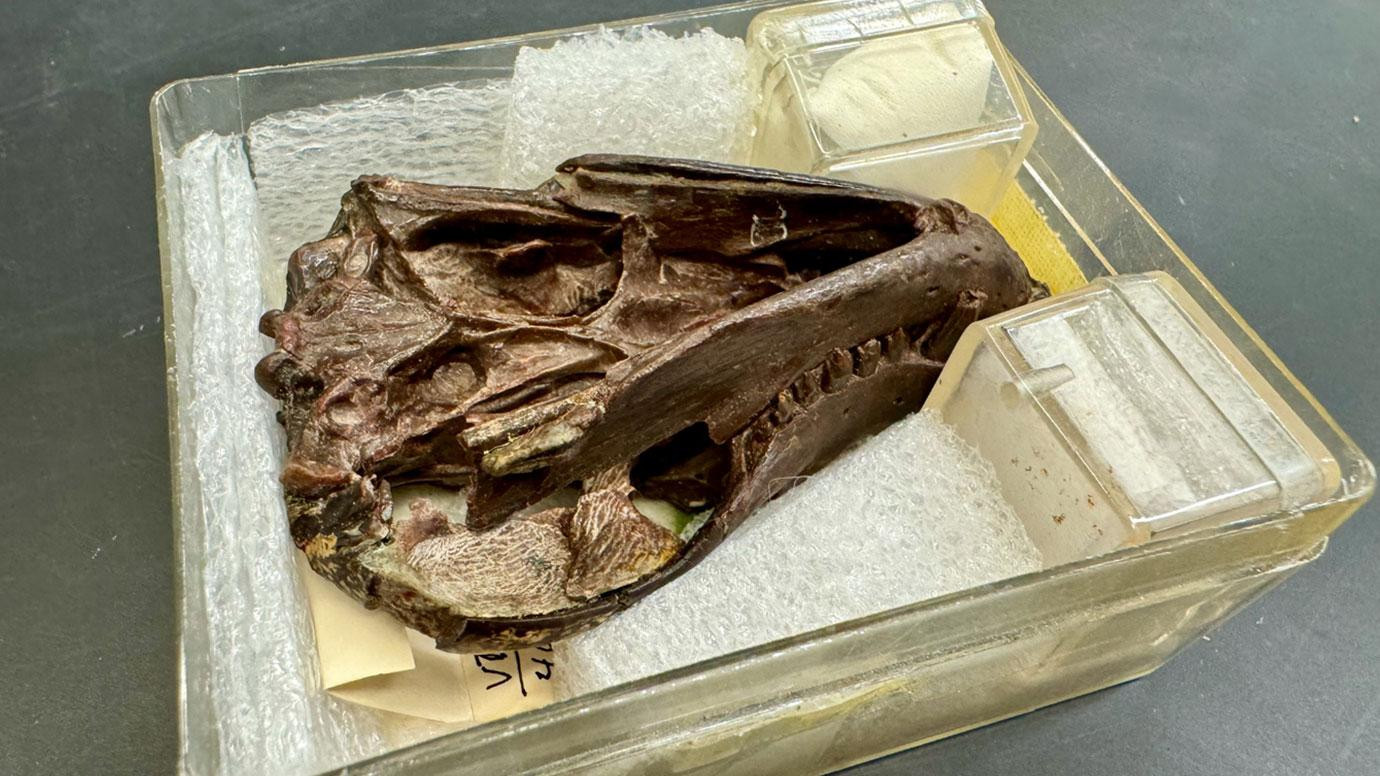
Focusing on the remarkably preserved fossilized skull and jawbones of Thrinaxodon, the research team generated accurate 3D models to simulate bone vibrations under different sound frequencies. The specimen’s distinctive jawbone arrangement, including a hooked formation, aligns with Edgar Allin’s 1975 hypothesis that it might have supported a primitive eardrum, giving this ancient predator a potential auditory advantage.

Utilizing simulation tools typically seen in engineering disciplines like aerospace, the team traced how sound vibrations would have traveled through the head. Alec Wilken, an evolutionary scientist involved in the study, remarked:
they “took a high-concept problem—how do ear bones wiggle in a 250-million-year-old fossil?—and tested a simple hypothesis using these sophisticated tools.”
Hearing Beyond Simple Bone Vibrations
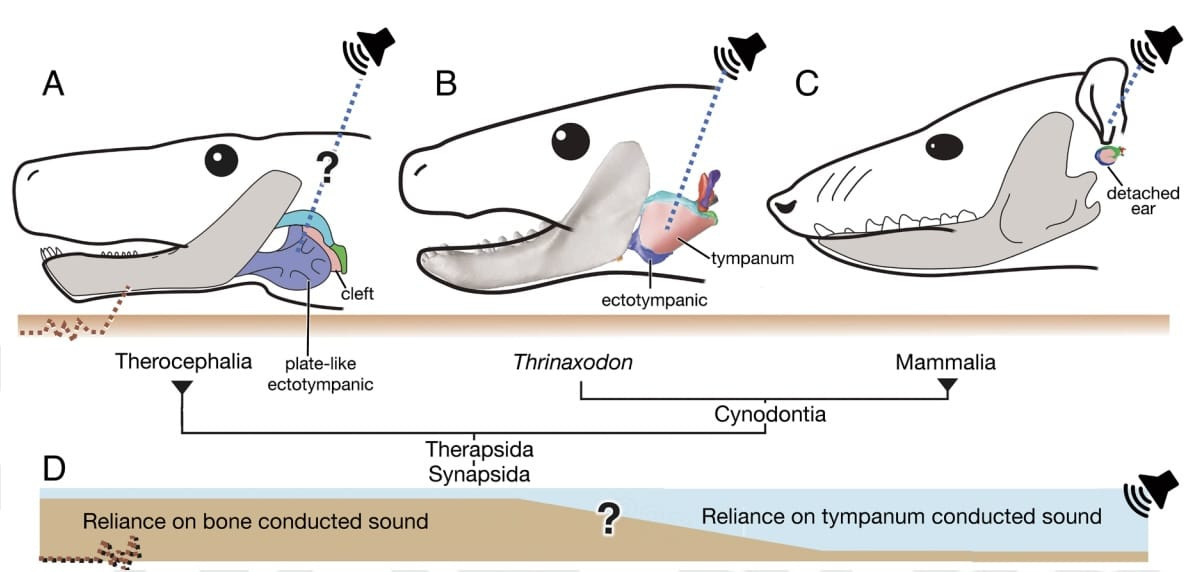
Prior to developing a fully separate middle ear, early animals detected sound primarily via bone conduction through their jaws. This carnivorous cynodont, however, seems to have possessed an early form of tympanic hearing, despite retaining middle ear bones—the malleus, incus, and stapes—still connected to the jawbone. As Wilken’s advisor, Zhe-Xi Luo, described, the simulations suggested:
“That hasn’t been possible before, and this software simulation showed us that vibration through sound is essentially the way this animal could hear.”
The researchers estimate that Thrinaxodon was sensitive to sounds between 38 and 1,243 hertz, with peak hearing effectiveness near 1,000 hertz at 28 decibels, comparable to a faint whisper. While this hearing range is far narrower than that of modern humans, who detect sounds from 20 up to 20,000 hertz, it would have been sufficient for sensing environmental noises, tracking prey, or evading predators.
New Confirmation of a Long-Standing Evolutionary Idea
Debate has persisted for decades about precisely when mammalian hearing originated. The proposition that Thrinaxodon might represent a crucial transitional stage dates back to Edgar Allin’s initial suggestion more than 40 years ago, but until recent advances in imaging and computational modeling, concrete validation was lacking. This study provides robust, physical evidence affirming that early theory.
Beyond validating a long-held perspective, these insights deepen our comprehension of mammalian evolution, indicating that auditory innovations began emerging shortly after Earth’s greatest mass extinction event. As Wilken emphasized, this represents a paradigm shift in paleontologists’ understanding of how hearing evolved in early predatory synapsids:
“For almost a century, scientists have been trying to figure out how these animals could hear… until now we haven’t had very strong biomechanical tests.”
- Categories:
- Science







0 comments
Sign in to Comment