
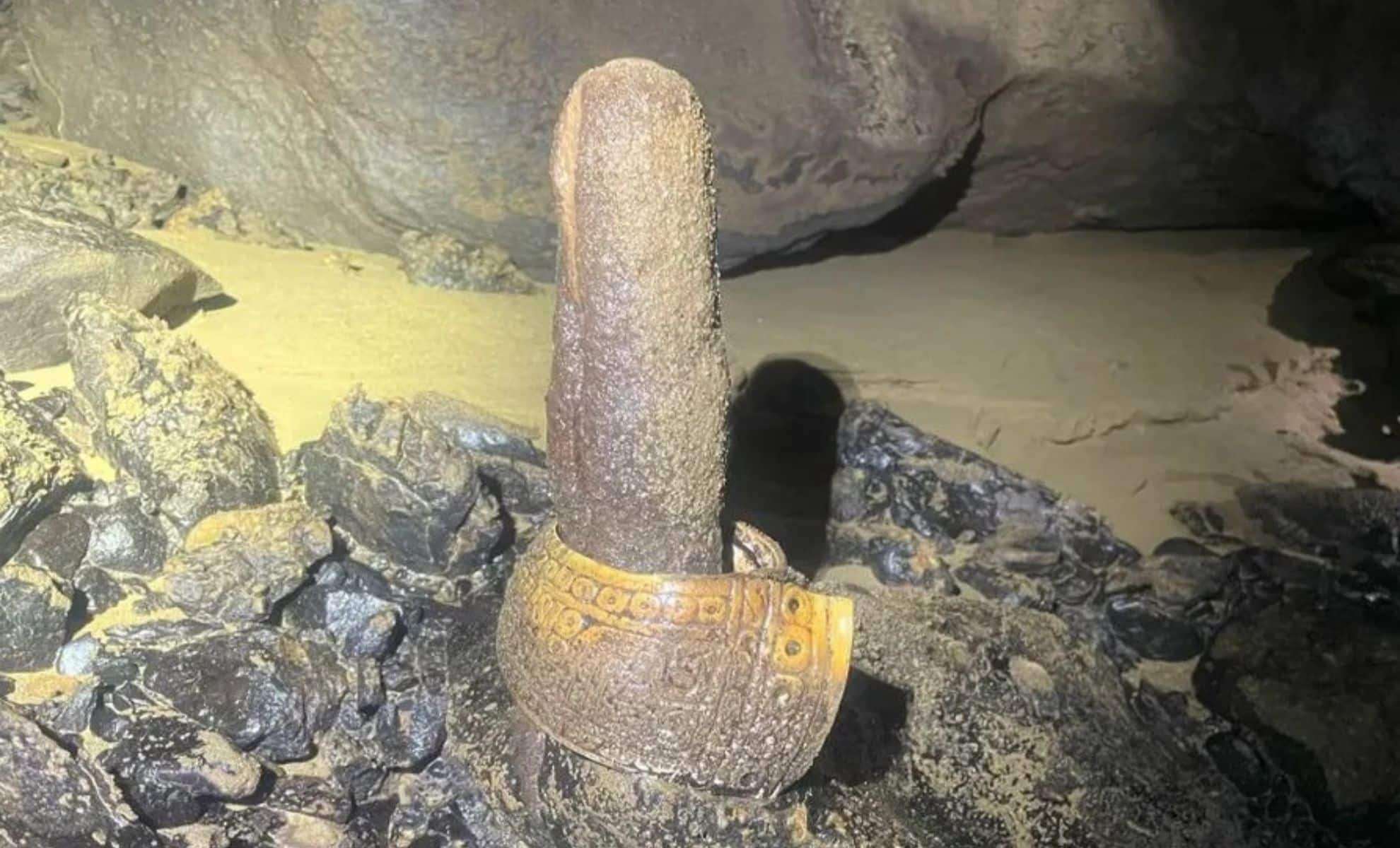
High in the rugged mountains of Guerrero, Mexico, an experienced cave explorer and her companion ventured into a tight limestone cavern believed to have been sealed off for centuries. Hidden among stalagmites and sediment deposits, they discovered not refuse, but an intricately arranged set of ancient relics from a largely unknown Mesoamerican society.
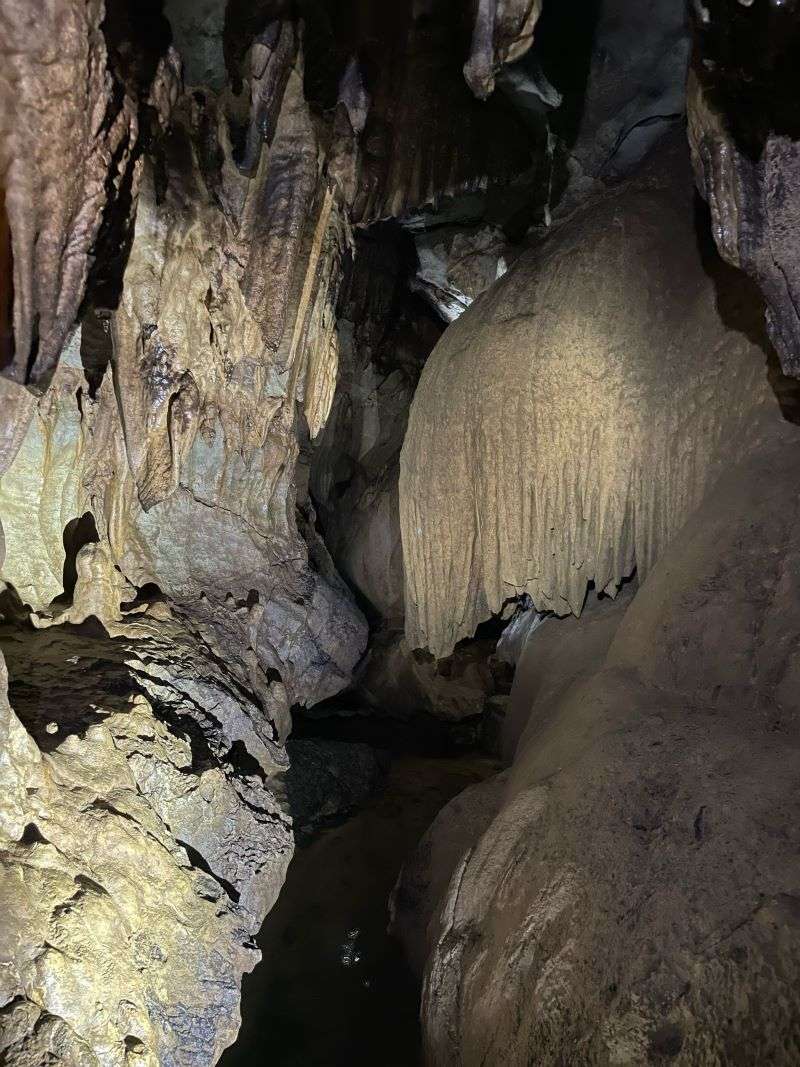
The September 2023 find came courtesy of Russian caver Ekaterina “Katiya” Pavlova and local guide Adrián Beltrán Dimas inside the Tlayócoc cave, near Carrizal de Bravo village within Leonardo Bravo municipality. Situated at roughly 7,800 feet altitude, the cavern had long been recognized by locals for its water sources and bat guano, yet few had dared enter its most inaccessible, confined chambers.
A Timeless Gateway Hidden in Difficult Terrain
Tlayócoc’s entrance offers two paths—one leading outside to a stream and another ascending over sharp rocks. Pavlova and Beltrán selected the latter, climbing a narrow, steep passage until they reached a submerged tunnel with an opening barely 15 centimeters high above the waterline. Pavlova went underwater first to prove the route was passable, followed by her guide.

About 30 meters in, they reached a cramped chamber with a ceiling about a meter high, where what initially seemed like discarded litter caught their eye. Pavlova, a professional cave mapper with six years of experience, was initially frustrated, thinking the objects were plastic or metal scraps. But closer examination revealed them to be shell bracelets, a large snail shell, and pieces of engraved stone. “The moment was thrilling and surreal,” she later said. “We really struck gold.”
The explorers immediately reported the find to the Instituto Nacional de Antropología e Historia (INAH), which dispatched archaeologists to assess the site in March 2025. The team meticulously recorded the artifacts under the leadership of Miguel Pérez Negrete and Cuauhtémoc Reyes Álvarez from INAH Guerrero, alongside historian and caving expert Guillermina Valente Ramírez of Universidad Autónoma de Guerrero.
Symbolic Relics Reflecting Ritual Significance
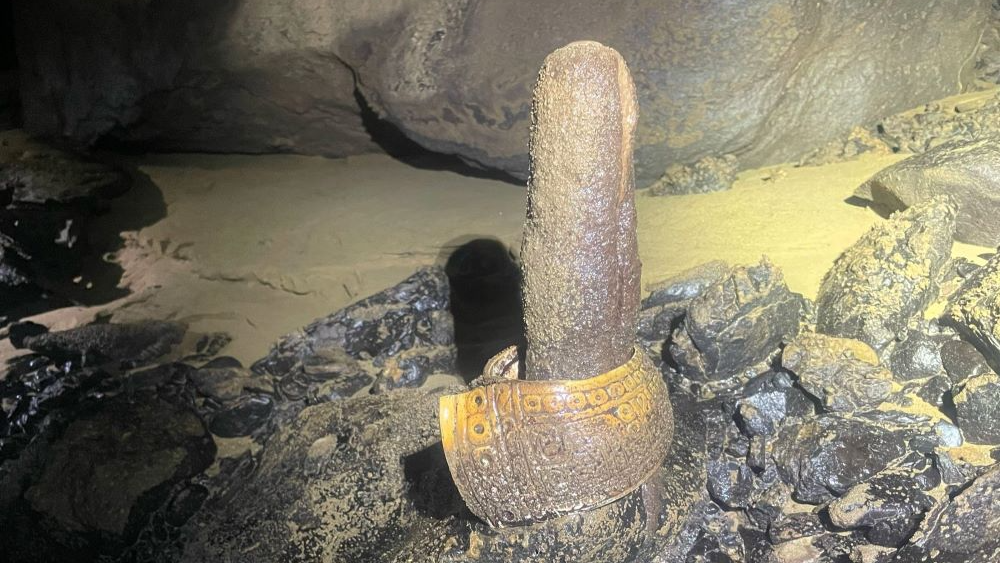
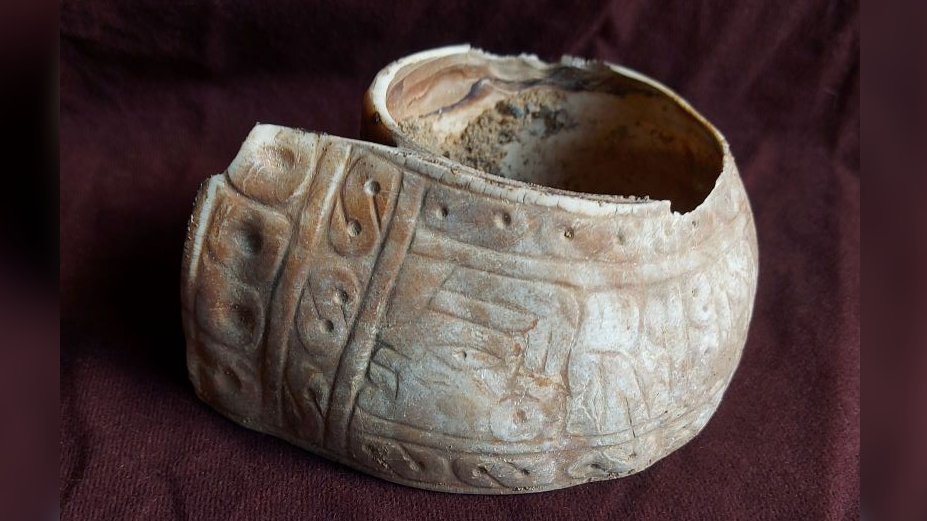
A total of 14 artifacts were recovered, including four shell bracelets—three adorned—likely sourced from Triplofusus giganteus, a massive marine snail. Among the most remarkable was a large Strombus shell featuring intricate carved designs and tiny perforations. Researchers also catalogued two intact stone disks and six fragments resembling pyrite mirrors, alongside a small charred wood piece about 3.2 by 3 centimeters in size.
Three bracelets displayed etched motifs—one depicting a human-like profile, possibly that of a deity, while another showed the xonecuilli, an S-shaped emblem connected to Venus and the measurement of time. Pérez Negrete suggested the figure might represent Quetzalcóatl or Tlahuizcalpantecuhtli, deities tied in Mesoamerican lore to the dawn and fertility.
Found wrapped around small stalagmites believed to symbolize phallic forms, the artifacts’ arrangement led the researchers to propose that the cavern functioned as a sacred place for fertility ceremonies, aligning with Mesoamerican beliefs linking caves to the underworld and Earth’s creation.
Historical Insights into a Lost Culture
The dating of the artifacts places them in the Postclassic era, roughly 950 to 1521 A.D., and attributes them to the Tlacotepehua, an obscure group once inhabiting Guerrero’s mountainous terrain. Sixteenth-century records describe them as related to the Tepuzteca, skilled metalworkers centered in Tlacotepec. The arrival of Spanish settlers led to their displacement by Nahua-speaking populations from Tlatelolco and Xochimilco.
Pérez Negrete noted, “The chronology aligns well with known historical data.” He added that the bracelet motifs show similarities to objects uncovered at El Infiernillo in Coahuayutla and other Huasteca region sites.
Conservation Efforts and Community Collaboration
The items remained in exceptional condition thanks to the cave’s stable humidity and limited access. INAH specialists note that the cave’s diameter might have been around 20 centimeters smaller a thousand years ago, though its general form remains much the same. Pavlova’s mapping indicates the cavern stretches nearly 252 meters, with a mostly horizontal layout and persistent water flow creating narrow and uneven pathways.
Working alongside local ejido groups, authorities secured the artifacts temporarily to prevent theft. The INAH team has engaged residents of Carrizal de Bravo in cultural preservation efforts, educating the community to discourage illicit artifact trafficking. “Engaging locals has been key to reducing looting,” remarked Pérez Negrete. “They are invaluable allies, watching over the site.”
Further research into the cave and its artifacts is planned, but for now, the Tlayócoc site stands as a remarkable discovery illuminating a mysterious culture that left little written record but a significant ceremonial legacy deep beneath the surface.
- Categories:
- News







0 comments
Sign in to Comment