
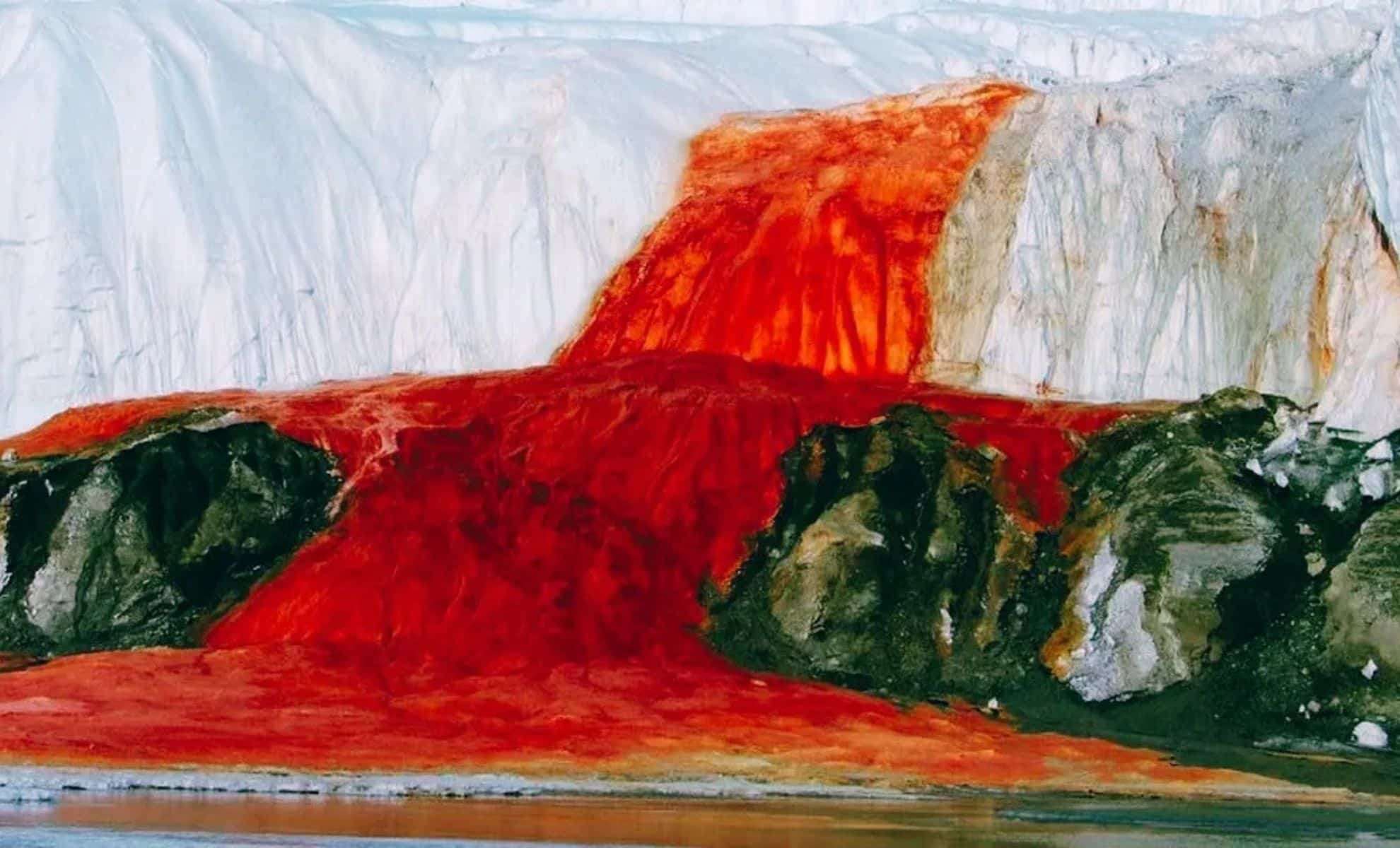
Antarctica’s Blood Falls has puzzled explorers and researchers for over 100 years. Its deep red water, streaming out of Taylor Glacier in one of Earth’s coldest and driest regions, has fascinated and baffled observers, sparking numerous speculative theories about its source. The dramatic contrast of crimson water against the icy white landscape is both captivating and eerie, raising questions about its origins and survival under the extreme Antarctic environment. While early assumptions often veered into the supernatural, contemporary research has finally pinpointed the true scientific causes of this phenomenon.
This article traces the scientific investigation into Blood Falls, from its mysterious past to the modern breakthroughs that have revealed the real story behind its distinctive red color.
Deep Origins: The Ancient Waters Beneath Blood Falls
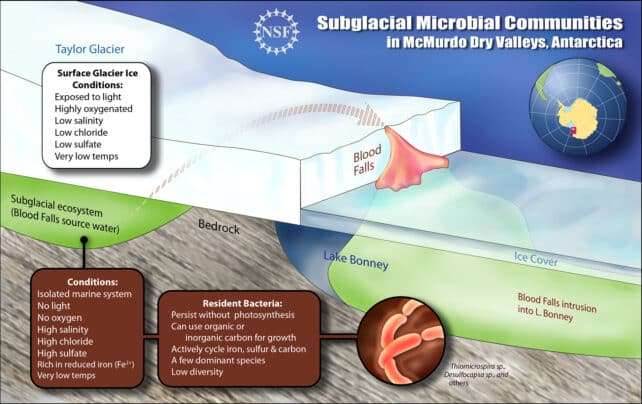
The story of Blood Falls starts far below the surface of Taylor Glacier, where an ancient, isolated liquid reservoir holds the vital clue. Situated over 1,300 feet (approximately 400 meters) beneath the glacier, this salty, iron-laden water body has been sealed off for millions of years following the glacier’s freezing over. Originally filled with ancient seawater, its high salt content prevents it from freezing, allowing water to remain liquid even at subzero temperatures.

The occasional release of this water creates the signature waterfall cascading down the glacier’s edge. Contrary to earlier beliefs that red algae caused the color, extensive studies revealed that the striking red hue is due to iron-rich water oxidizing upon exposure to oxygen. This chemical reaction generates the vivid blood-like coloration of the falls.
The Mechanism Behind the Flow: Glacier Dynamics Explained
What makes Blood Falls particularly unique is the persistent emergence of liquid water despite the glacier's extremely low temperatures. “Taylor Glacier is the coldest known glacier to maintain flowing water,” states Erin Pettit, a principal investigator studying this phenomenon. The key lies in the water’s high salinity combined with immense pressure from the glacier above, which significantly lowers its freezing point, keeping it liquid beneath harsh Antarctic conditions.
This continual release of ancient, briny water trapped beneath thick ice presents researchers with a rare chance to analyze interactions between subglacial water, ice, and the environment. Though the water’s discharge is sporadic, its consistency defies expectations in such a hostile frozen setting.
Life Thriving in the Harshest Places
Blood Falls does not only intrigue from a chemical or geological perspective; it is also a unique habitat for extremophile microbes. Despite the icy cold and salt-heavy environment, microbial communities flourish within the subglacial brine. These organisms provide valuable insights into survival strategies in extreme settings.
Discoveries at Blood Falls have broader astrobiological significance. The harsh conditions resemble those suspected on extraterrestrial bodies like Jupiter’s moon Europa or Saturn’s moon Enceladus, where subsurface oceans are believed to exist. Studying these microbes enhances our understanding of the potential for life elsewhere in the solar system, expanding the frontier of habitability research.
A Window Into Earth's Distant Past
The water released at Blood Falls represents a geological archive, preserved untouched for millions of years. The subglacial reservoir beneath Taylor Glacier remains sealed from external environments, providing scientists with a pristine view of ancient Earth conditions.
This isolation invites questions about similar subglacial ecosystems in other parts of the world. If comparable natural reservoirs exist elsewhere, they could offer further revelations regarding Earth's history and the origins of life.
Decoding a Natural Marvel
What was once seen as a supernatural enigma is now understood as a remarkable example of Earth’s complex environmental systems. From the persistent liquid water flow in a frozen setting to the resilient microbial ecosystems thriving in isolation, Blood Falls continues to be a source of scientific wonder. Ongoing studies promise to deepen our knowledge of this extraordinary natural feature and its implications for understanding life in extreme environments.
This hidden crimson cascade stands as a powerful symbol of nature’s resilience and the intricate processes shaping our planet. Although the mystery of its glaring red waters is solved, Blood Falls remains an awe-inspiring and enigmatic site on Earth.
- Categories:
- News







0 comments
Sign in to Comment