
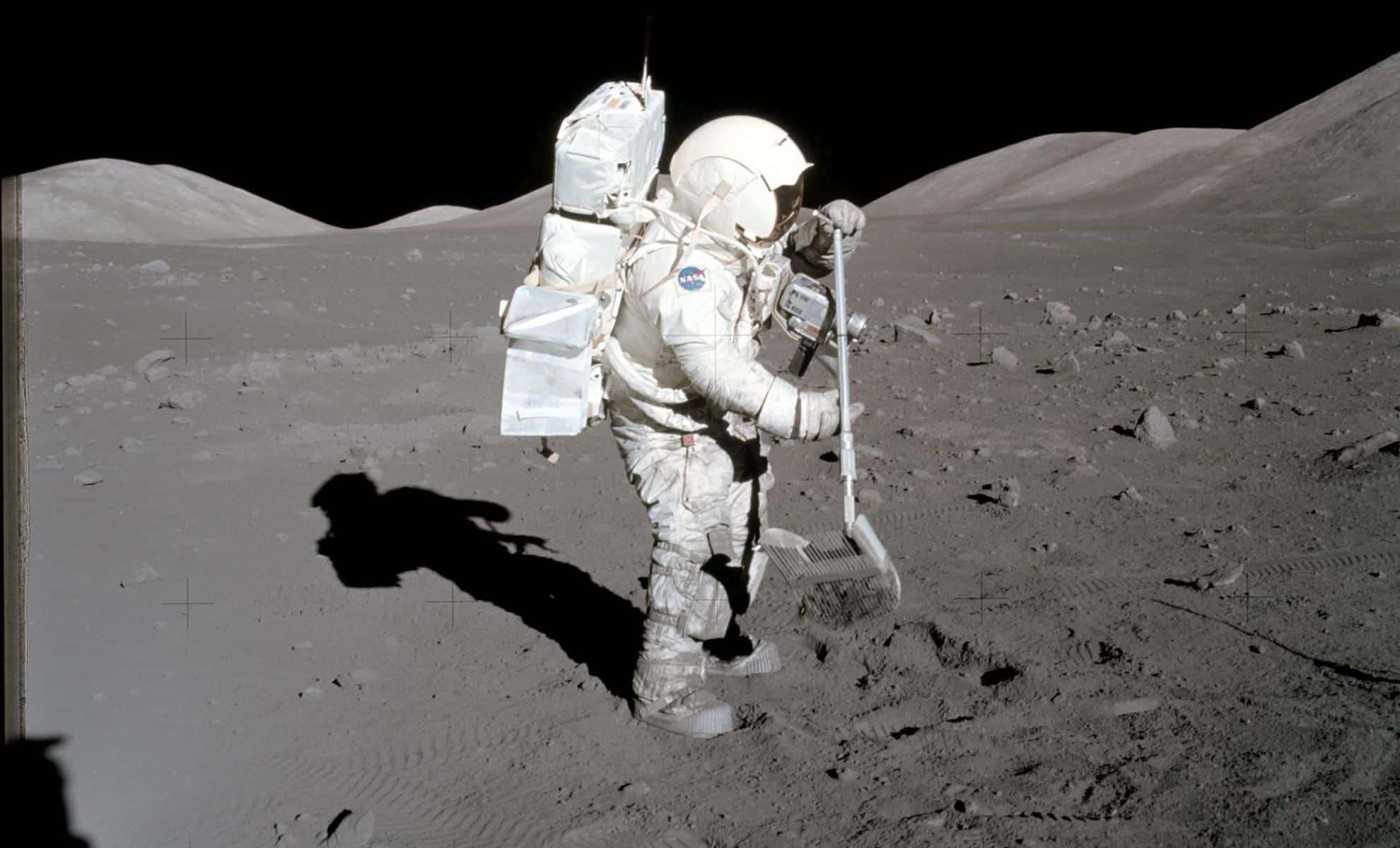
In December 1972, NASA’s Apollo 17 mission marked the final manned journey to the Moon, bringing back priceless lunar specimens, including material from a bright, distinctive area known as the “Light Mantle” located at the base of the South Massif in Taurus-Littrow Valley. Although gathered over half a century ago, these samples have only recently been unlocked for comprehensive examination through the Apollo Next Generation Sample Analysis (ANGSA) Program. This project harnesses cutting-edge technology to deepen our understanding of lunar geology as preparations accelerate for upcoming missions like NASA’s Artemis initiative, set to return humans to the lunar surface within the next few years.
Scientists have long been intrigued by the Light Mantle due to its exceptionally reflective nature, yet its exact origin remains a mystery. Recent investigations, including research featured in the Journal of Geophysical Research: Planets, use advanced tools such as micro-CT scanning to analyze these samples and unravel the history behind this terrain.
Unraveling the Light Mantle’s Geological Origins
The unusual features of the Light Mantle have prompted several hypotheses regarding its formation. A leading theory proposes the deposit is composed of ejecta from the Tycho impact event, which formed the prominent 85-kilometer-wide Tycho Crater. Tycho is well-known on the Moon for its distinctive rays spreading over vast distances, including the area where the Light Mantle lies at the South Massif.

In recent work, Dr. Giulia Magnarini of the Natural History Museum in London emphasized that the Light Mantle’s genesis is still actively debated. “The high-albedo deposit has been proposed as (a) ejecta originating from the Tycho crater impact; (b) material from the South Massif shifted by Tycho ejecta striking its summit; or (c) a series of landslides triggered by seismic shaking along the Lee-Lincoln fault within Taurus-Littrow Valley,” Dr. Magnarini explained. These varied views underscore the intricate geological forces at work, with no single dominant explanation confirmed thus far.
Besides impact-related theories, the possibility of landslide formation has gained traction. Dr. Magnarini pointed out that the Light Mantle may represent a rare example of long-runout landslides on the Moon—a process documented on Earth and Mars but virtually unknown in lunar geology. “I study long-distance landslides on Earth and Mars, but the Light Mantle is currently the Moon’s only known case,” she said. “There’s still much to learn about how these landslides on the Moon generated such extended flows.” This hypothesis suggests quake-induced ground shaking, possibly sparked by nearby impacts like Tycho, could have caused large volumes of South Massif material to travel extensively, forming the Light Mantle deposit.
Innovative Analytical Techniques Unlocking New Details
One major advancement in recent sample investigation is the use of sophisticated imaging technologies. At the time Apollo samples were returned, scanning capabilities lacked the resolution needed to capture the fine-scale features of lunar rocks. Modern micro-CT scanning methods, adapted from medical imaging, now enable scientists to visualize the internal structure of these specimens in remarkable detail, revealing insights into the processes shaping their formation.
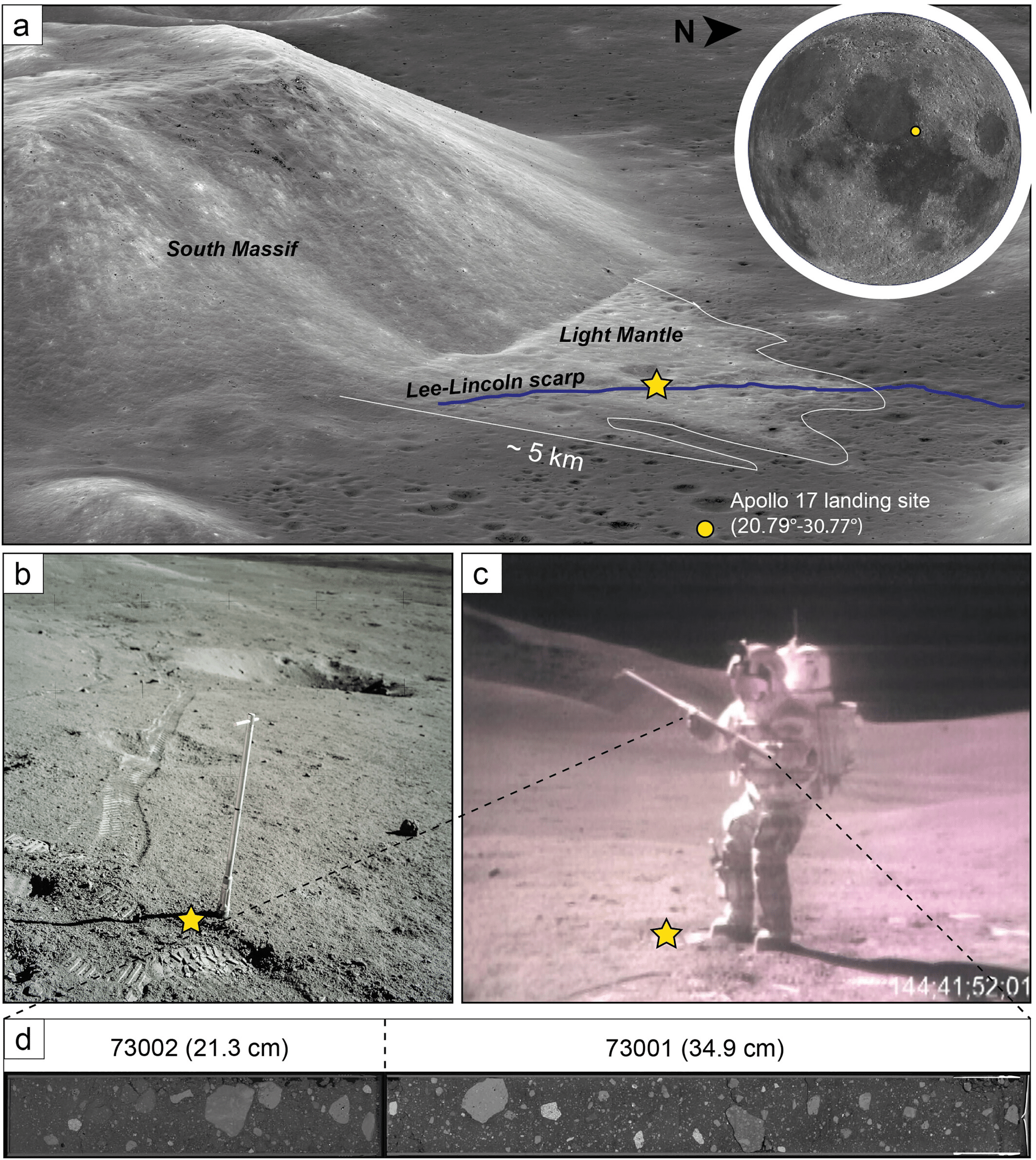
Dr. Magnarini praised NASA’s foresight in conserving these geological treasures. “NASA’s decision during the Apollo missions to reserve some samples for future study was ahead of its time,” she noted. “They safeguarded these specimens so that they could benefit from technological advances and novel scientific methodologies that were unimaginable then.” This strategic preservation has enabled researchers to extract new knowledge that was inaccessible using earlier methods.
Among the intriguing findings are “clasts,” or rock fragments thought to have detached from the main South Massif body. These fragments provide vital clues regarding the landslide mechanics. Dr. Magnarini explained that the fine coating found on these clasts reveals how the landslide material moved. “The clasts give us important information about landslide dynamics and material transport. The finer coating on the clasts originates from the clasts themselves, not the surrounding debris, indicating breakage that allowed the landslide to flow more fluidly,” she said. These details help scientists understand how lunar material can traverse great distances, despite the Moon lacking atmosphere and liquid water.
Preparing for Artemis and Future Lunar Exploration
Reexamining the Apollo 17 lunar samples represents a pivotal step in expanding scientific knowledge and supporting upcoming Moon missions. Data derived from these specimens will directly inform plans for NASA’s Artemis program, which aims to land astronauts back on the Moon by 2027. The Apollo Next Generation Sample Analysis (ANGSA) Program remains integral to advancing lunar research as we prepare for this new era of exploration.
NASA describes the program’s mission as to “maximize the scientific return from Apollo samples in preparation for future lunar expeditions expected in the 2020s and beyond.” Leveraging state-of-the-art analytical tools, scientists hope to uncover fresh insights into the Moon’s geological past, its dynamic processes, and its potential to sustain human presence.
- Categories:
- News











0 comments
Sign in to Comment