
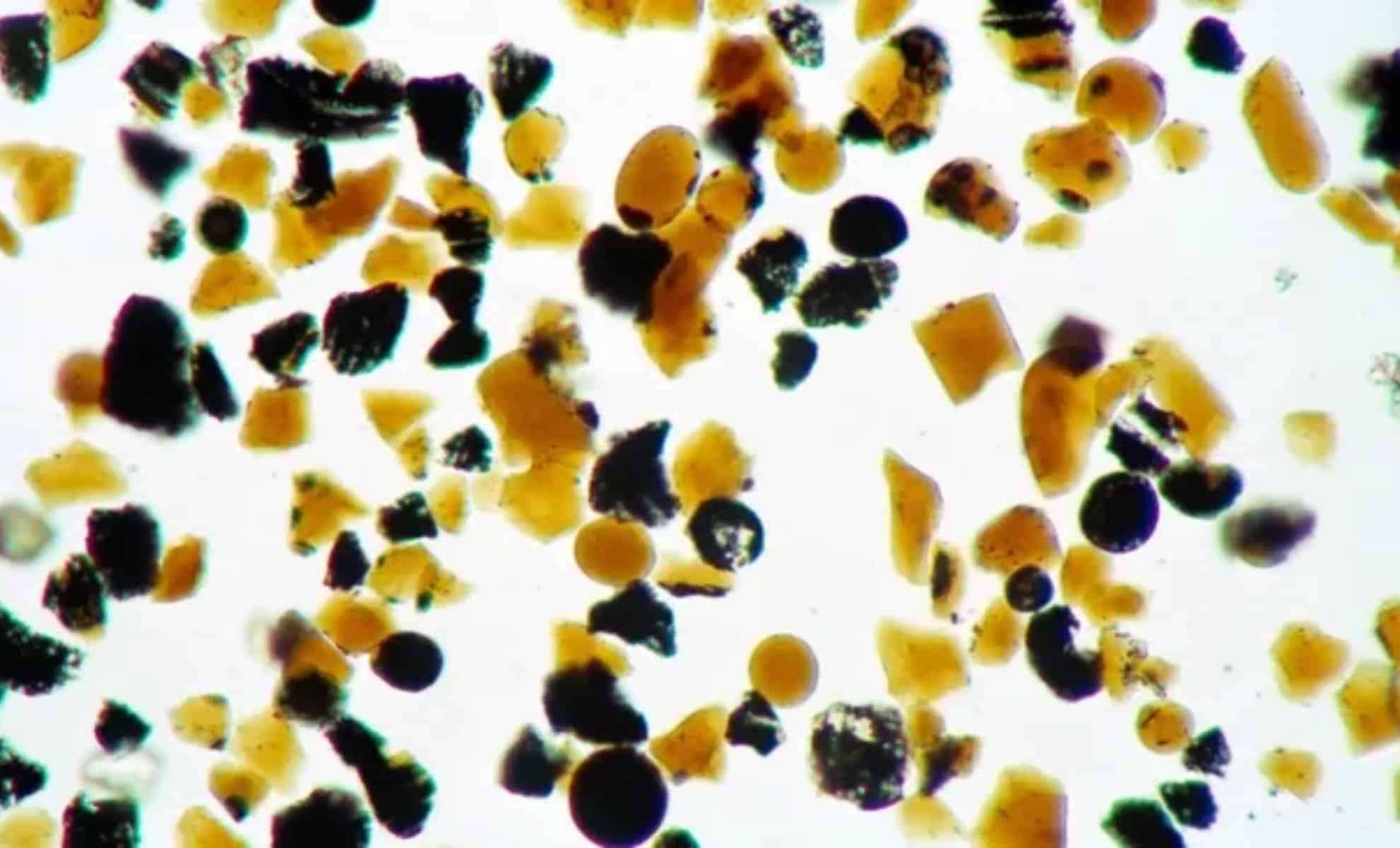
When astronauts from the Apollo missions landed on the Moon, they anticipated encountering the familiar grey terrain and dust that define our nearest celestial neighbor. Unexpectedly, they encountered tiny, dazzling orange glass beads scattered over the lunar surface, resembling minuscule jewels. These tiny spheres, smaller than a grain of sand, have intrigued researchers for decades, and here’s what makes them remarkable.
Explosive Volcanic Origins Billions of Years Ago
Research reveals that the minute orange beads found on the Moon are more than just eye-catching; they are ancient remnants capturing the Moon’s volcanic history. These glassy orbs were created around 3.3 to 3.6 billion years ago amid vigorous volcanic eruptions when the Moon was geologically active. Unlike Earth's volcanoes, which erupt under the influence of an atmosphere that moderates cooling, the Moon's void environment caused lava to solidify almost instantly upon exposure to space.
As molten lava shot from the Moon’s depths, it was ejected into the harsh vacuum where it rapidly froze into glass spheres. This swift solidification process remarkably preserved these beads for billions of years without significant alteration.

Physics professor Ryan Ogliore from Washington University in St. Louis describes these beads as “some of the most astonishing extraterrestrial materials in our possession,” emphasizing they serve as “tiny, pristine portals into the Moon’s inner workings.” The Moon’s absence of weather and atmosphere ensured these glass beads remained well-preserved, offering a pristine glimpse into its ancient past.
Advanced Techniques Unlock Lunar Glass Mysteries
For over half a century, these lunar glass specimens awaited technological advancements that could reveal their secrets without harm. Modern innovations in microscopy and analysis have empowered scientists to examine the beads’ internal properties with unmatched precision. Employing cutting-edge instruments such as high-energy ion beam technology and electron microscopes, researchers can now explore the subtle details hidden within these lunar samples.
Handling the beads necessitated utmost caution to avoid contamination from the Earth’s atmosphere, as even minimal exposure could modify the ancient minerals on their surfaces. These new findings deepen knowledge about the formation processes and volcanic phenomena that shaped the Moon billions of years ago.
Insights into Lunar Volcanism
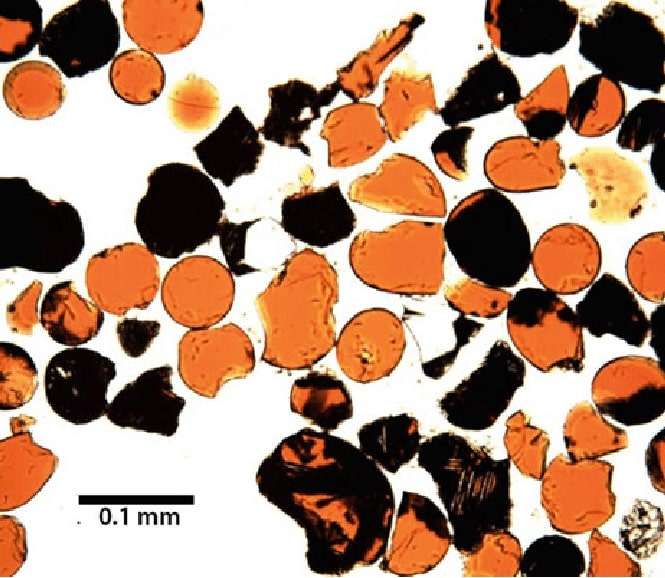
The scientific value of these glass beads lies in their diverse colors and compositions. While many display a vivid orange gloss, others appear black, each variety narrating a different volcanic episode. These distinctions reveal clues about the nature of eruptions over long geological intervals. The beads encompass unique minerals and isotopic traits that indicate the temperature, pressure, and chemistry of lunar volcanic events, enhancing understanding of how volcanism evolved on the Moon.
Ogliore poetically compares studying these particles to “reading chronicles written by an ancient lunar volcanologist,” highlighting their role as microscopic records of the Moon’s fiery interior.
A Glimpse into the Moon’s Fiery Youth
The presence of these glass beads reminds us that the Moon was once far more geologically lively than the quiet orb we observe today. Billions of years ago, intense volcanic eruptions shaped its surface, leaving behind these tiny but significant artifacts. Continued exploration of these beads enriches our comprehension of the Moon’s development and its place in the early narrative of our solar system.
For researchers, the Moon’s volcanic glass beads are not merely captivating gems; they form a vital piece in decoding the Moon’s formation stages and the environmental conditions that sculpted its surface.
- Categories:
- News










0 comments
Sign in to Comment