
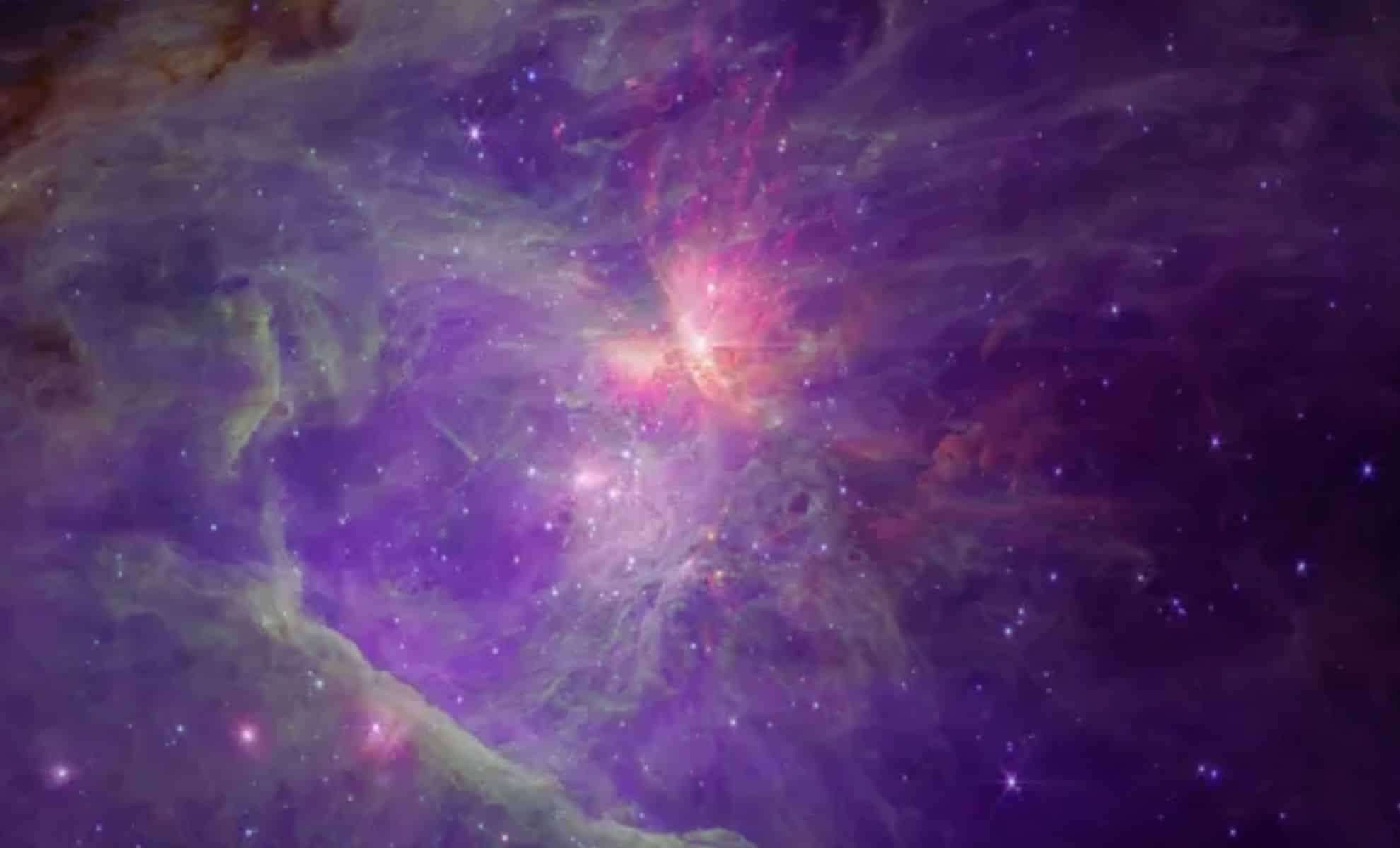
The James Webb Space Telescope (JWST) has once again captivated astronomers by revealing intriguing celestial phenomena, including the apparent detection of solitary pairs of Jupiter-sized bodies within the Orion Nebula Cluster. These intriguing entities, called JuMBOs (Jupiter-mass binary objects), garnered widespread attention upon their initial identification in 2023. Yet, recent simulation-based research challenges the reality of these rogue pairs, proposing they might be observational artifacts rather than genuine planetary systems. A paper published in Monthly Notices of the Royal Astronomical Society: Letters contends that what was thought to be JuMBOs could instead be background interference, calling into question their existence and origins.
Richard Parker of the University of Sheffield led a team employing computational simulations to explore the durability of JuMBOs amid the chaotic environment of a star-forming nebula. Their analysis revealed that these planetary pairs are exceptionally delicate and unlikely to endure over extended durations. This finding encourages astronomers to revisit their initial interpretations of JWST’s observations and consider whether these enigmatic structures require reevaluation.
Unraveling the Enigma of JuMBOs
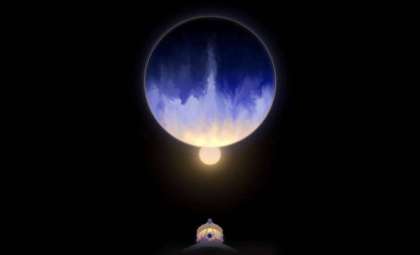
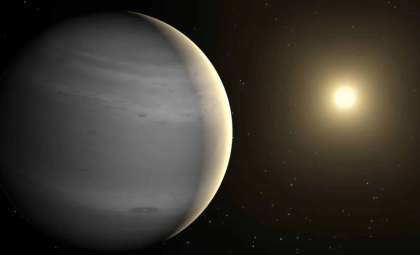
The identification of JuMBOs was groundbreaking as it defied prevailing models of planet formation. These objects, comparable in scale to Jupiter, were detected drifting unbound within the Orion Nebula, orbiting no star. Each JuMBO consists of two massive gas giants, with masses ranging between 0.7 and 30 times that of Jupiter, orbiting one another at separations of about 25 to 400 astronomical units. This discovery of large, free-floating planetary binaries challenged existing planetary formation theories and triggered several hypotheses.

One proposition was that these objects originated within a star’s gravitational influence but were ejected through close encounters with other stellar bodies. Alternatively, they might represent stalled star formation remnants—stellar cores that failed to ignite. However, such frameworks struggled to reconcile the observed delicacy and characteristics of JuMBOs within the turbulent environments where they were found.
Modeling JuMBO Survival in an Active Nebula
To assess the longevity of JuMBOs, Parker and colleagues developed detailed models simulating a star-forming nebula populated by numerous stellar bodies and candidate JuMBOs. These simulations aimed to understand how these free-floating pairs would behave amidst strong gravitational influences and stellar interactions within conditions mirroring the Orion Nebula. The model incorporated 1,500 elements to accurately represent the region’s complexity.
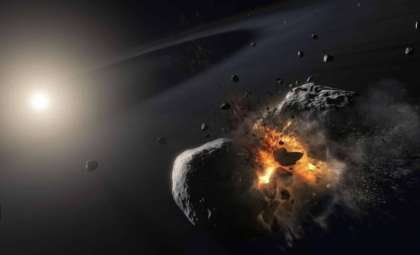
The simulation outcomes were revealing: under typical dense nebula conditions, JuMBOs were predicted to be extremely short-lived. Parker explained, “These computer simulations calculate the force due to gravity on each object from all of the other objects,” emphasizing that repeated iterations help track ongoing interactions. Results indicated that nearly 90% of JuMBOs would be disrupted or destroyed by surrounding stars within a million years. Even in scenarios with fewer stars and tighter planetary orbits, about half of these pairs were still disrupted due to gravitational forces.
Reconsidering the Reality of JuMBOs
The fragility of JuMBOs as revealed by these simulations has led astronomers to question their true existence. The high likelihood of destruction implies that such pairs are unlikely to survive long-term in environments like the Orion Nebula. Parker noted, “Because the planet-planet binaries are less massive, they have a lower energy and are even more susceptible to destruction.” This has prompted some experts, including Kevin Luhman, to suggest that JWST’s detections might have mistaken distant background sources for JuMBOs.
If these models accurately portray the environmental conditions of the Orion Nebula, the original JuMBOs would need to have formed in far greater numbers than currently detected to account for the few observed. This raises the possibility that JuMBOs are not planetary binaries but rather unrelated, distant objects misidentified as such. To validate this hypothesis, further analysis of JWST’s data and independent verification by additional teams will be essential.
- Categories:
- News







0 comments
Sign in to Comment