
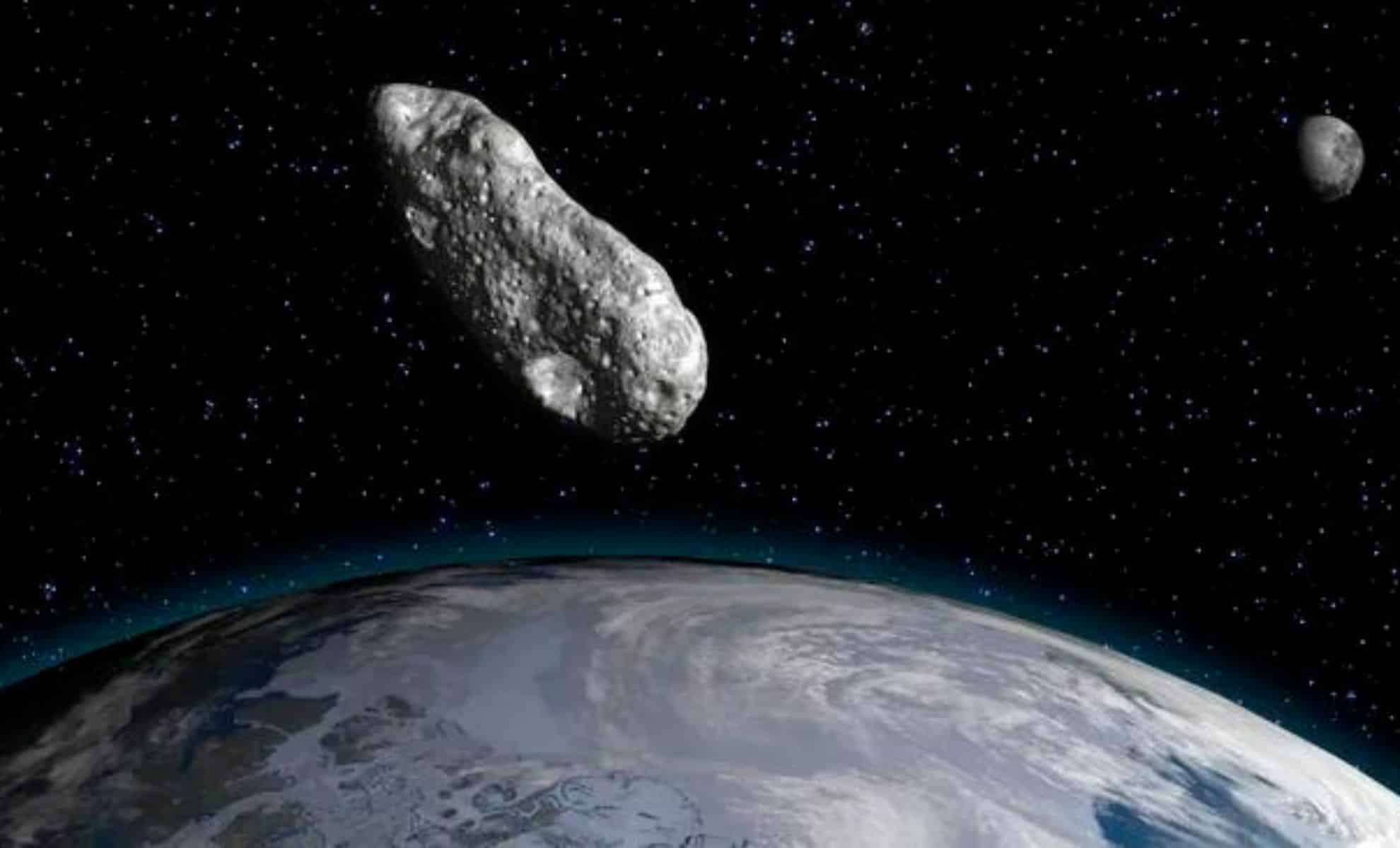
The asteroid designated 2024 MK is poised to pass within the space separating Earth and the Moon on June 29. With a diameter near 480 feet (146 meters), it surpasses the size of the Great Pyramid of Giza.
At its nearest point, 2024 MK will come within approximately 184,000 miles (295,000 kilometers) of Earth, which equates to about 75% of the average lunar distance.
This close pass provides an exceptional chance for astronomers to study a sizable near-Earth object as it journeys through our cosmic neighborhood.

Tracking and Features of Asteroid 2024 MK
The asteroid 2024 MK was first spotted by South African astronomers on June 16. This late detection highlights the critical role of continuous sky surveillance initiatives. NASA classifies 2024 MK as a potentially hazardous asteroid due to its considerable size and orbit that occasionally crosses Earth's path.
The asteroid travels at a remarkable velocity of around 21,000 mph (34,000 km/h) during its closest approach, making it a significant subject of scientific inquiry because of its speed and scale.
Confirmed Safety: No Risk to Earth
Despite its close passage, 2024 MK poses no threat. NASA’s comprehensive tracking confirms the asteroid will maintain a safe distance as it continues on its orbit. Post-flyby, it will head onward toward the asteroid belt located between Mars and Jupiter.

Predictions from NASA indicate 2024 MK won’t return near Earth until 2037, and even then, it is not expected to endanger our planet. This is based on extensive observational data and precise orbital calculations performed by space scientists.
Context: Recent Near-Earth Asteroid Events
Just days earlier, on June 27, asteroid 2011 UL21 made a close approach to Earth. This much larger asteroid, measuring between 1.1 to 2.4 miles (1.7 to 3.9 kilometers) across, passed at a distance of roughly 4.1 million miles (6.6 million kilometers).
While that distance was significant, 2011 UL21 represented the largest asteroid to approach our planet this closely in over a century. The Virtual Telescope Project’s live broadcast of this event offered an extraordinary view of the colossal space rock, emphasizing the ongoing vigilance required to monitor the dynamic solar system environment.
Continuous Vigilance on Near-Earth Objects
NASA currently monitors over 35,000 near-Earth objects (NEOs), defined as celestial bodies that come within 120 million miles (195 million kilometers) of the Sun. Many of these cross Earth’s orbit, necessitating ongoing scrutiny to evaluate any risks posed.
At present, no known asteroids threaten Earth for at least the next century. This extensive early-warning system enables astronomers to detect and track NEOs ahead of time, crucial for devising potential defense measures. Deepening our understanding of their movement and attributes helps prepare for future encounters.
The upcoming flybys of 2024 MK and 2011 UL21 underscore the importance of studying potentially hazardous asteroids. Each event provides valuable data to improve forecasting and protection strategies. As space science advances, insights from these close encounters will be vital in safeguarding our planet against possible impacts.
- Categories:
- Astronomy ,
- News ,
- Space ,
- Nasa








0 comments
Sign in to Comment