

In May 2024, the skies dazzled with some of the brightest and most colorful auroras recorded in centuries. These extraordinary light displays extended well beyond the typical polar regions, driven by intense solar storms that sparked widespread fascination and scientific curiosity about the solar activity behind this phenomenon.
Powerful Solar Storms Sweep Through in May 2024
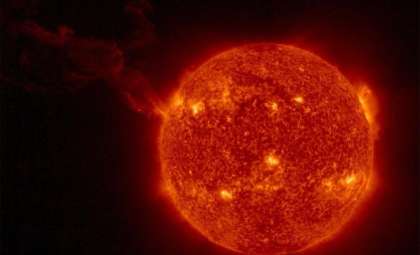
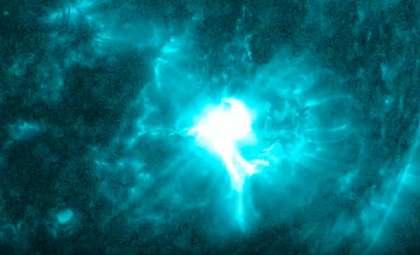
At the start of May 2024, our Sun unleashed a series of intense solar storms that propelled vast clouds of charged particles and magnetic fields—known as coronal mass ejections (CMEs)—towards Earth. These solar eruptions collided with Earth’s magnetic shield, or magnetosphere, triggering geomagnetic storms as incoming solar wind interacted dynamically with our planet’s magnetic environment.
How Earth’s Magnetosphere Responded
Incoming solar wind energy compresses the magnetosphere’s side facing the Sun and elongates its opposite side into a stretched tail. Charged particles become ensnared within this tail and surge back along magnetic field lines toward Earth’s polar regions. Upon impacting atmospheric atoms and molecules, these energized particles cause them to glow, creating the mesmerizing northern and southern lights that collectively form auroras.

Unprecedented Brightness and Reach
May’s auroral displays stood out for their intensity and surprising visibility at much lower latitudes than usual, including parts of the United States and Europe—areas where seeing auroras is a rare occurrence. The combination of strong solar events and favorable atmospheric conditions set the stage for dazzling light shows featuring vivid greens, pinks, purples, and reds that captivated both casual observers and scientists.
Comparisons to Historic Events
Humanity has long marveled at auroras, with some historical accounts chronicling spectacular sightings. The recent events have drawn comparisons to the monumental Carrington Event of 1859, the most intense geomagnetic storm on record. That event produced auroras visible near the equator and caused extensive telegraph system disruptions. While the May 2024 storms didn’t cause such widespread interference, their visual grandeur and broad geographic spread were impressive.
Why This Matters to Science
These auroral episodes offer vital insights into solar dynamics and their influence on Earth's space environment. Space weather can impact satellites, navigation systems, power infrastructure, and aviation. Understanding solar activity and its magnetospheric interactions enhances our ability to forecast space weather events and devise strategies to mitigate their effects on technology and society.
Advances in Space Weather Observation
Modern satellite technology, including instruments aboard the Solar and Heliospheric Observatory (SOHO) and the Parker Solar Probe, has revolutionized our capacity to observe and anticipate solar activity. These tools tracked the May 2024 CMEs in real-time, enabling accurate predictions and allowing authorities to prepare for potential disturbances caused by enhanced solar wind conditions.
Implications for Technology and Research
The recent auroral activity underscores the necessity for ongoing investment in space weather science. As our world grows increasingly dependent on technology vulnerable to space weather, understanding and anticipating solar-driven events becomes ever more critical. Beyond practical concerns, aurora studies deepen knowledge of space plasma physics and the complex interplay between solar and terrestrial systems.
Looking Ahead: The Future of Aurora Studies
The breathtaking auroras of May 2024 have spurred fresh scientific inquiry. Researchers aim to delve into the extensive data acquired to unravel finer details about aurora formation and solar cycle variability. Upcoming missions, such as the European Space Agency’s Solar Orbiter, promise to enrich our comprehension of the Sun-Earth relationship. Progress in this field will rely on partnerships across international agencies, academia, and industry.
- Categories:
- Astronomy ,
- Space





0 comments
Sign in to Comment