
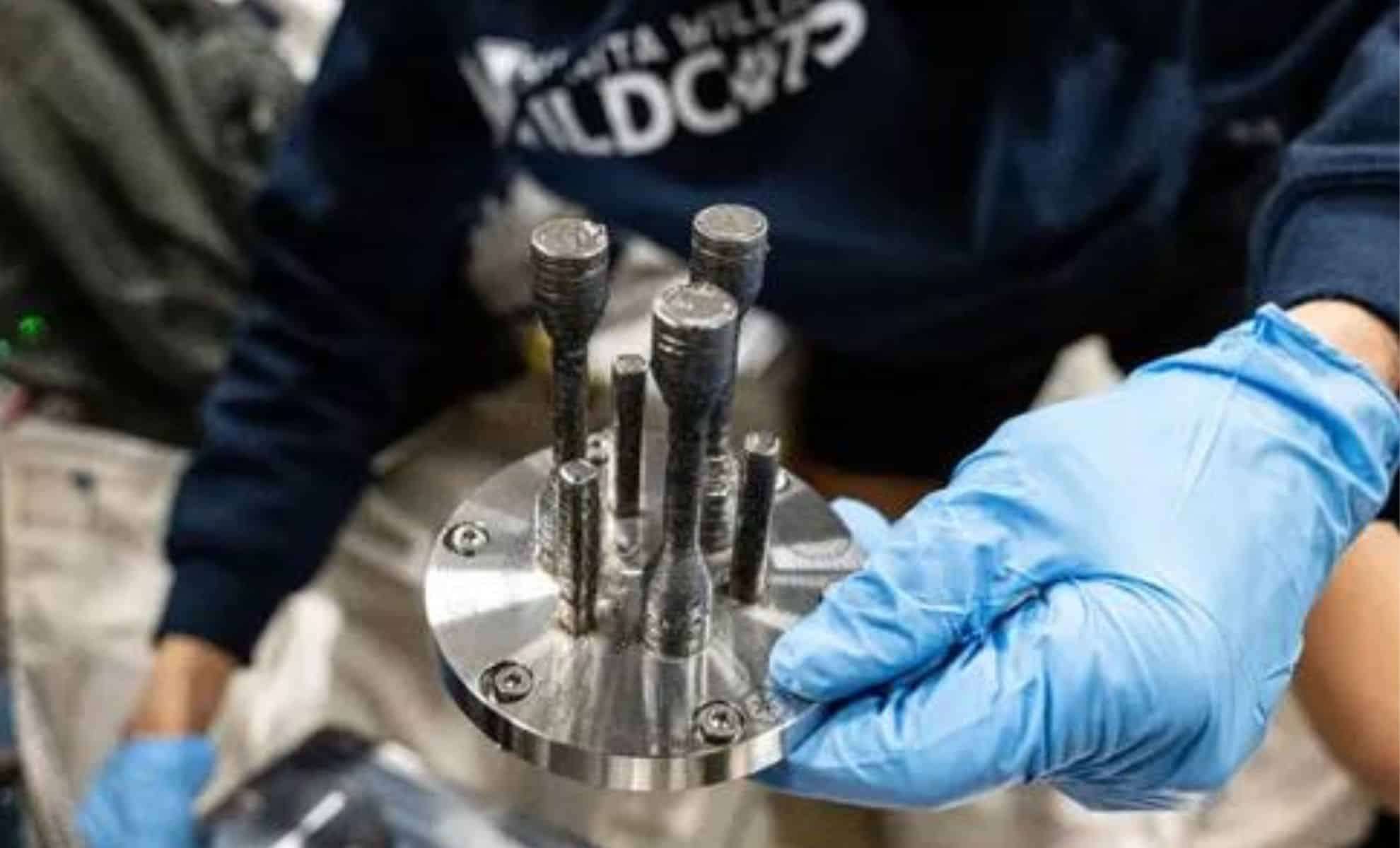
A pioneering breakthrough in space technology: astronauts aboard the International Space Station have successfully fabricated the first metal piece using 3D printing in space.
This development signifies a critical leap forward for manufacturing in orbit, which is vital for sustaining extended space missions far from Earth. The ability to produce metal parts on-site could transform mission logistics, enabling crews to build and repair essential equipment as humanity ventures toward the Moon, Mars, and beyond.
Overcoming Microgravity Obstacles in Metal 3D Printing
While 3D printing has previously been demonstrated in space, it has primarily involved plastic materials. Though plastics have their uses, they don’t offer the strength, durability, or heat tolerance that metal parts provide, which are crucial for many tools and machines used in space. Printing metal in a microgravity environment, however, introduces unique challenges since gravity on Earth helps keep molten material stable during printing.

In zero gravity, molten metal behaves unpredictably, often drifting away without gravity’s pull to support it, resulting in potential defects. To solve this, the European Space Agency (ESA) engineered a custom Metal 3D Printer capable of operating in microgravity. It works by melting stainless steel wire with a powerful laser heated to 2,192°F (1,200°C) and deposits the molten metal in layers to construct the object.
“ESA Exploration teams have reached a key milestone with the first successful metal 3D print in orbit, advancing in-situ manufacturing capabilities,” said Daniel Neuenschwander, ESA’s Director of Human and Robotic Exploration. Achieved by a collaborative, international team, this innovation moves astronauts closer to fabricating vital components in space rather than depending on fragile supply chains from Earth.
Why Metal 3D Printing Matters for Future Space Travel
Being able to produce metal parts directly in space carries significant benefits for exploration. Currently, astronauts must transport all tools and spares with them, which becomes impractical as missions extend to the Moon, Mars, or deeper space. The capacity to print components on demand allows crews to maintain spacecraft, habitats, and systems remotely without lengthy resupply missions.
The ESA Metal 3D Printer is part of a broader push towards self-reliance in space mission logistics. By manufacturing crucial parts in orbit, astronauts can circumvent the delays and vast expenses of shipping replacements from Earth. This capability proves especially vital during emergencies when quick repairs are required. As noted by Tom’s Hardware, “This 3D printing technology is expected to be essential for the success of long-duration missions.”
Returned parts will undergo rigorous testing to verify their quality and reliability for space applications. Research centers in Germany, Denmark, and the Netherlands will examine the printed components’ strength and structure, providing valuable data on the viability of 3D-printed metal for critical in-space usage.

Advancing Long-Term Human Space Missions with In-Orbit Manufacturing
As both government agencies and private companies plan for extended journeys to the Moon and Mars, the ability to fabricate parts in space will prove transformative. Without frequent shipments from Earth, crews will rely on manufacturing tools, components, and habitats on location. In the future, 3D printing could not only create spare parts but also fabricate entire structures such as bases and modules using materials harvested from extraterrestrial surfaces.
“This breakthrough sets the stage for distant missions where building spare parts, construction elements, and instruments on demand will be indispensable,” emphasized Neuenschwander. With growing ambitions for lunar and Martian exploration, space-based metal printing will equip astronauts to build and sustain vital infrastructure for long-term habitability and mission success.
Furthermore, 3D printing technology holds promise for constructing habitats on the Moon and Mars using local materials, a concept known as in-situ resource utilization (ISRU). Using regolith—the loose surface soil found on these celestial bodies—as raw material, astronauts could manufacture everything from shelter walls to radiation shields, greatly cutting down on the need to transport construction supplies from Earth.
Looking Ahead: Expanding the Potential of 3D Printing in Space
The achievement of metal 3D printing in orbit represents a major technological milestone but is just the beginning for space manufacturing. As this technology matures, its scope could extend beyond metal parts and tools. Scientists are investigating the feasibility of producing more intricate items in space, ranging from medical devices to biological tissues and even organs.
Though bioprinting is still in early stages, it offers a potential solution to critical medical challenges during long missions by enabling production of tissues or organs far from Earth. While widespread application remains years away, the recent success with metal printing marks progress toward advanced manufacturing that supports human health and survival in space.
According to Space.com, “This revolutionary technology continues to impact sectors on Earth including medicine, construction, food production, and manufacturing.” As human missions become longer and more complex, 3D printing will become an ever more vital tool for exploring and living throughout our solar system.








0 comments
Sign in to Comment