

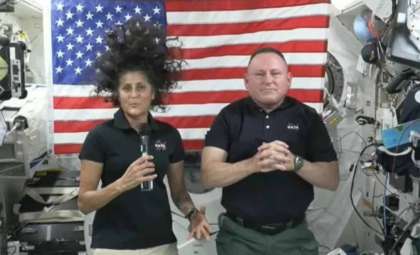
On September 13, 2024, NASA astronauts Butch Wilmore and Suni Williams opened up about their unexpected prolonged mission aboard the International Space Station (ISS).
The duo had planned for a brief trip to space, but their return was delayed when the Boeing Starliner spacecraft came back to Earth without them due to safety issues. Originally set for an eight-day stay, their deployment has now expanded by several months, presenting fresh challenges as they adapt to a longer mission.
Starliner Returns Grounded, Leaving Crew on ISS
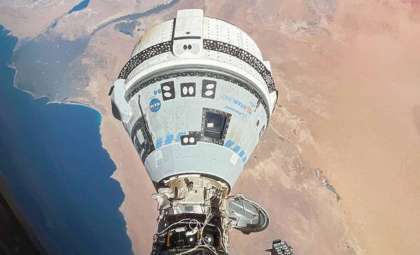
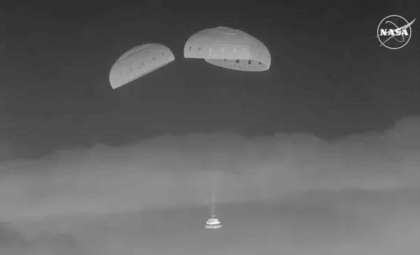
The Boeing Starliner was intended to transport Wilmore and Williams safely back home after a short stint at the ISS. However, technical difficulties, including thruster malfunctions and helium leaks, led NASA to label the return trip as too risky. On September 6, the capsule touched down safely in New Mexico's desert but without its crew aboard, forcing the astronauts to remain on orbit.

Wilmore reflected on the situation, sharing, “It was tough at times. We faced some challenging moments throughout.” As the spacecraft’s pilot, seeing their vehicle leave without them was emotionally taxing, admitting, “You never want to see it take off without you, but that’s the situation we ended up in.” Despite the setback, both astronauts acknowledged that testing new spacecraft naturally involves unexpected hurdles. “That’s par for the course in this line of work,” Williams noted.
Now, their mission duration is expected to extend well beyond the initial eight days, potentially lasting over eight months. They anticipate returning on a SpaceX capsule later this year, highlighting ongoing obstacles within Boeing’s contribution to NASA’s commercial crew program.
Settling Into a Longer-Term Role in Orbit
Veteran astronauts Wilmore and Williams have found it easier to adapt to the extended stay on the ISS due to their previous experience. Both have logged considerable time aboard the station, which has helped them quickly adjust to new responsibilities as integral members of the crew. Wilmore remarked that while transitioning wasn’t instantaneous, it became “nearly seamless” over time.
Williams, a participant in two earlier long-duration flights, expressed her enthusiasm about being back in space, saying, “This is where I truly belong. I cherish being up here.” She found acclimating to the prolonged mission to be “relatively straightforward” thanks to her background. Together, they've engaged fully in daily station activities such as maintenance and scientific research. Williams is set to assume the role of ISS commander soon, coinciding with the mission’s lengthening timeline.
Recent crew rotations introduced new personnel, including two Russian cosmonauts and an American aboard a Soyuz spacecraft, temporarily increasing the ISS population to 12, nearing its operational peak. By late September, a new team is expected on a SpaceX Crew Dragon, restoring crew levels and preparing for Wilmore and Williams’s eventual journey home.
Managing Emotional Strains from Extended Spaceflight
In addition to technical adjustments, Wilmore and Williams have confronted the emotional toll of an extended mission. Williams shared concerns about missing precious moments with family, especially time with her mother. Wilmore expressed regret over missing his youngest daughter's last year of high school in person. Despite these sacrifices, support from loved ones and communities back on Earth has bolstered their spirits. Wilmore noted how encouraging messages and prayers have helped them persevere.
Committed to staying connected with Earth life, Wilmore has taken proactive steps, including requesting an absentee ballot to participate in the November elections from orbit over 260 miles above the planet’s surface.
Williams, optimistic throughout, underscored the unique nature of their role as test pilots. She reflected on flying on two different spacecraft—the Boeing Starliner and soon the SpaceX Crew Dragon—during a single mission, stating, “Testing is what we’re meant to do.” Although disappointed not to pilot the Starliner back, she emphasized the importance of focusing forward: “You have to turn the page and focus on what’s next.”
Boeing’s Hurdles Impact NASA’s Commercial Crew Future
The challenges faced by Starliner represent a notable setback for Boeing’s spaceflight efforts. Chosen alongside SpaceX over a decade ago to ferry astronauts following the shuttle’s retirement, Boeing has struggled to achieve consistent success. In contrast, SpaceX has been reliably transporting crews to the ISS since 2020. Starliner’s string of malfunctions before even docking with the ISS in June has raised doubts about Boeing’s readiness.
Although Starliner’s safe return to Earth was achieved, uncertainty surrounds Boeing’s continued role in NASA’s commercial crew program.
Williams acknowledged the frustration of not returning via Starliner but reminded that spaceflight always involves risk and unpredictability. She remains enthusiastic about riding the SpaceX capsule arriving soon and is focused on mission goals.
Persevering Through Challenges: A Testament to Astronaut Resilience
Currently, Wilmore and Williams continue essential work aboard the ISS, supporting vital experiments and station upkeep. Their experience highlights space travel’s unpredictable nature and the resilience astronauts must exhibit when plans shift abruptly. As NASA and partners like Boeing and SpaceX work on improving spacecraft, insights from this mission will help shape safer and more reliable future explorations.
Looking toward upcoming ventures to the Moon and Mars, adapting to mission extensions, technical difficulties, and unexpected delays will become even more critical. For Wilmore and Williams, their prolonged space journey underscores the true nature of spaceflight—where flexibility and readiness are paramount for success.





0 comments
Sign in to Comment