
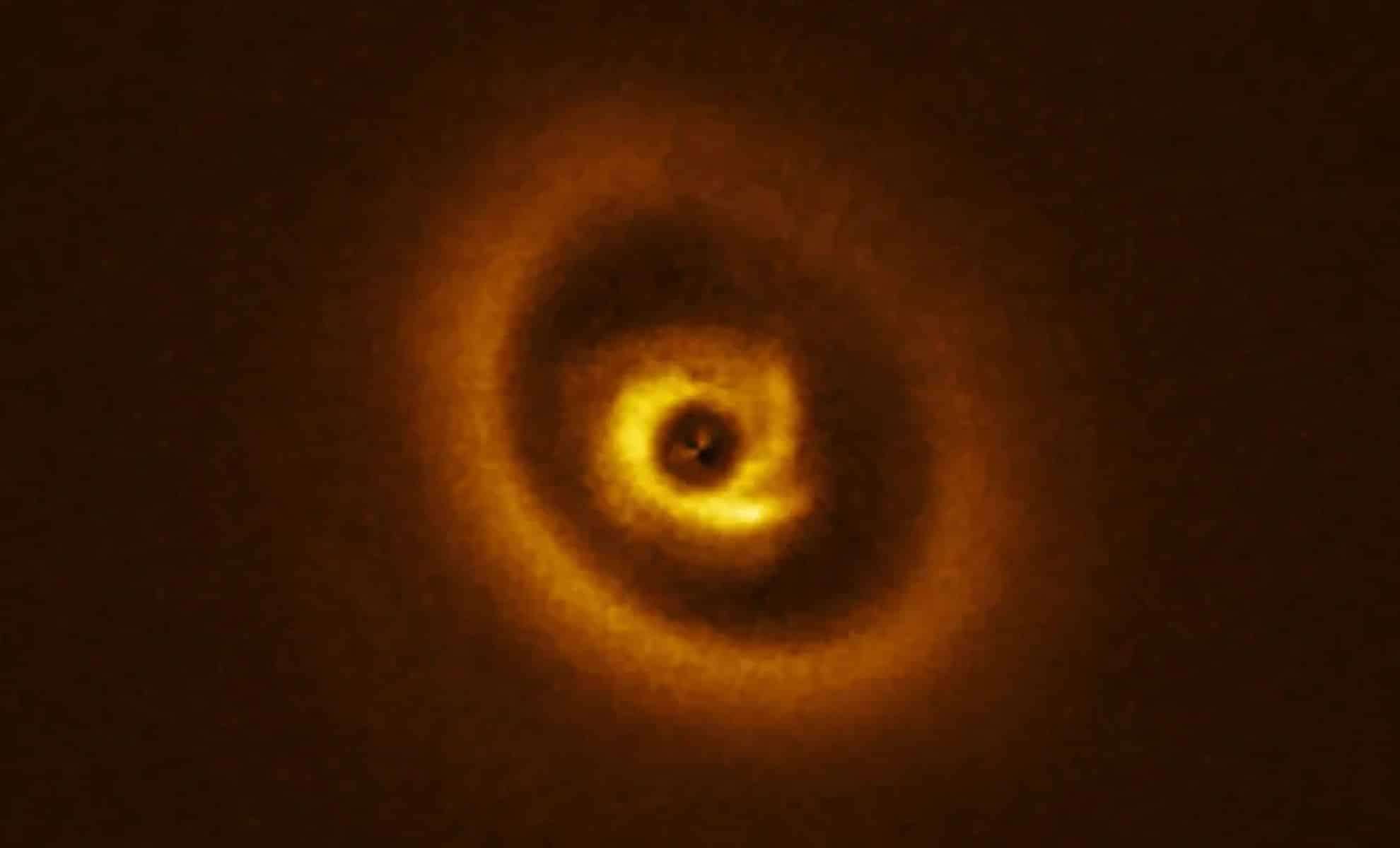
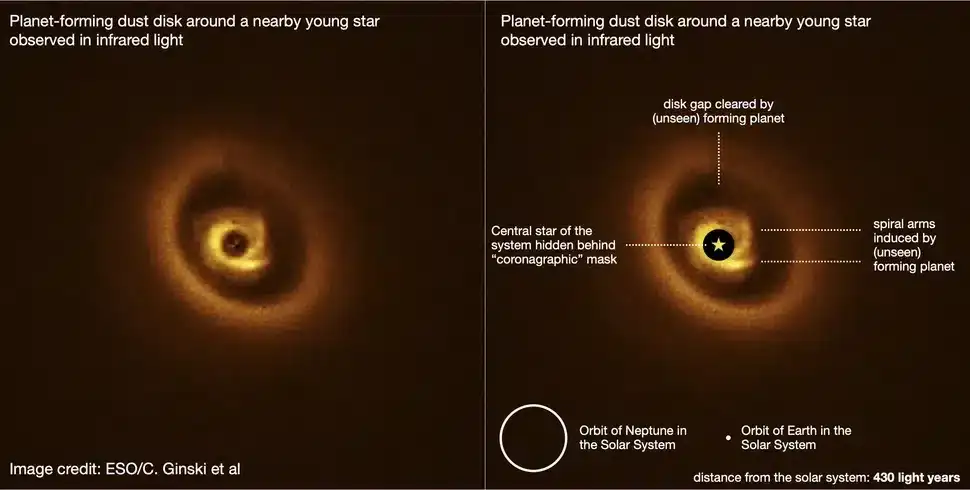
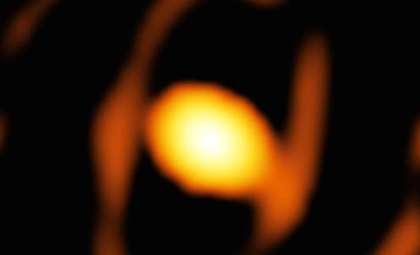
An extraordinary image taken by the Very Large Telescope (VLT) reveals the early phases of planet creation. This snapshot displays a young star encircled by a dynamic disk of gas and dust, likely the cradle of a colossal planet. Situated within the stellar nursery of the Orion Nebula, this observation captures a cosmic event that has intrigued scientists for decades: a star possibly forming a massive planet.
Observing Planet Formation in Action
The VLT’s new image highlights a nascent star still in its developmental phase. Researchers are particularly thrilled since the star resides in a nebula—a hotspot of active star birth. The rotating disk of gas and dust enveloping the star may be the birthplace of a planet. As gravity compacts these materials, they start to form solid bodies, including potentially enormous planets.
Experts suggest that the gas and dust observed here could foster the emergence of giant exoplanets. This process reflects the early history of our own solar system billions of years ago, when planetary bodies began to take shape. These findings expand our understanding of planetary genesis across different star systems, especially those hosting young stars.

“Studying young planets within their natal disks provides essential insights into the components and interactions involved in planet formation. Until now, only one confirmed planet in this early stage and a few unconfirmed candidates have been observed,” explained the team behind the study.
The Power of the Very Large Telescope
The Very Large Telescope, situated at the Paranal Observatory in Chile, is among the most sophisticated astronomical observatories worldwide. With its array of instruments, it captures detailed views of distant celestial objects. Its advanced capabilities made it possible to obtain this high-resolution image of a young star and its encircling disk.
This observation was enabled by the telescope’s infrared detection, which is vital for examining gas and dust that obscure young stars in visible light. Infrared wavelengths permit astronomers to peer through dense interstellar clouds to investigate the environments where planets begin to form.
Unraveling How Exoplanets Take Shape
Recent research highlights that the likelihood of planet formation in this young star system prompts deeper investigation into exoplanetary origins. Although thousands of exoplanets have been detected, most orbit mature stars. This breakthrough sheds light on the earliest chapters of planet evolution, revealing how planets develop during the initial millions of years after their host star forms.
By focusing on youthful stars like this one, scientists gain valuable knowledge about the mechanisms driving planetary birth. The presence of a gas disk strongly indicates active planet formation. While the specifics of the emerging planet remain unknown, this discovery offers important clues about the diversity of planets that exist in our universe.
- Categories:
- News




0 comments
Sign in to Comment