
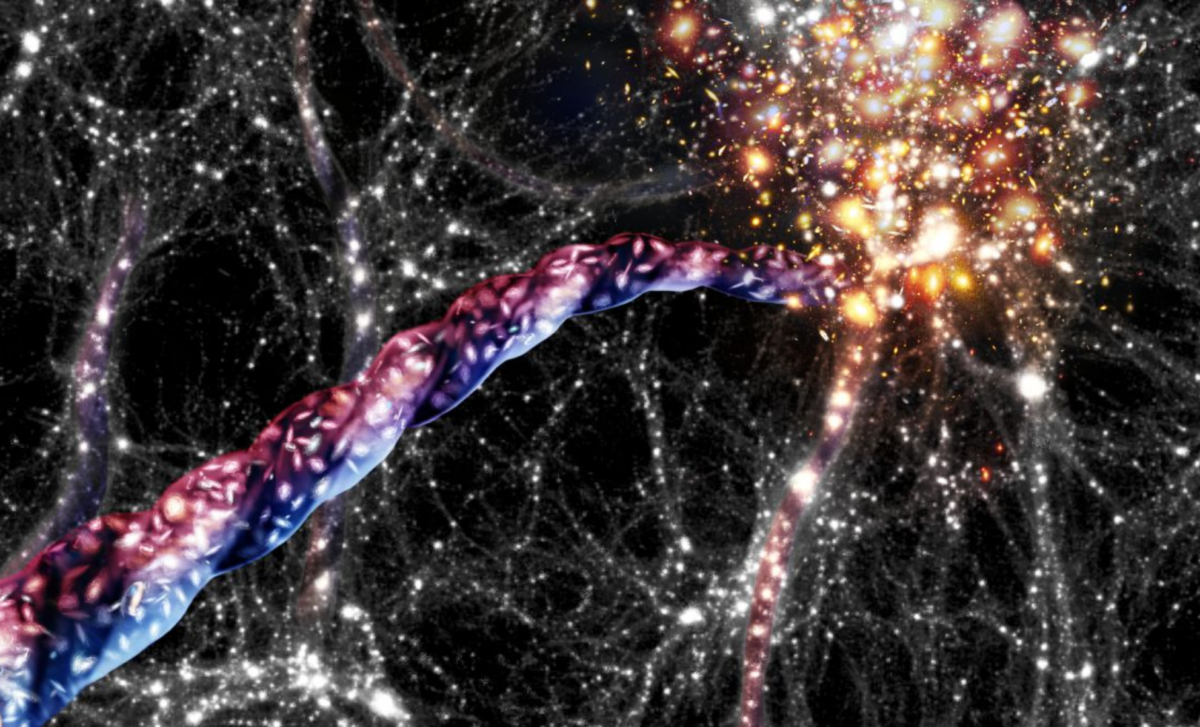
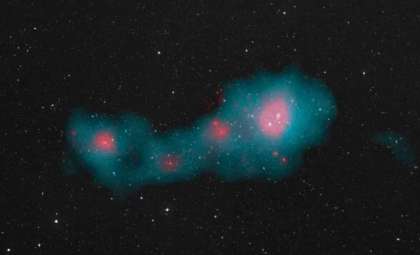
A global research consortium spearheaded by the University of Oxford has uncovered an enormous, extraordinary cosmic filament positioned approximately 140 million light-years from Earth. This slender chain of galaxies rotates in a manner that questions current galaxy formation theories. Published in Monthly Notices of the Royal Astronomical Society, the research offers fresh insights into how galaxies develop their spins and evolve, illuminating the forces at play within the Universe's grandest formations. Critical contributions came from observations made with cutting-edge instruments such as South Africa’s MeerKAT telescope.
A Unique Combination of Rotational Dynamics
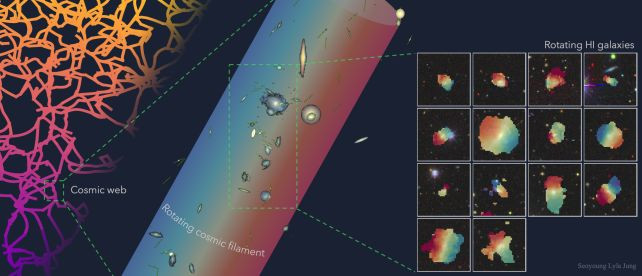
The filament's exceptional nature stems not just from its vast scale but from its simultaneous exhibition of spin alignment and rotation. Co-lead author Dr. Lyla Jung of the University of Oxford explained,
“What makes this structure exceptional is not just its size, but the combination of spin alignment and rotational motion. You can liken it to the teacups ride at a theme park. Each galaxy is like a spinning teacup, but the whole platform—the cosmic filament—is rotating too.”
Add Cosmo Herald as a Preferred Source

This distinctive dual rotation gives unprecedented clues on how galaxies inherit their angular momentum from larger cosmic frameworks, potentially transforming our understanding of galactic spin evolution over vast spatial and temporal scales.
The galaxies within this filament display a remarkable alignment in their spins, matching the filament’s own rotation rather than exhibiting random orientations. Such coherence challenges standard galaxy formation models and introduces a novel paradigm for uncovering the influences shaping these immense cosmic networks. It suggests the Universe itself imparts rotational energy to the galaxies embedded within its structure.
Contributions of Cosmic Filaments to Galactic Development
Cosmic filaments rank among the Universe’s largest entities, spanning millions of light-years. These extensive arrangements of galaxies and dark matter form the cosmic web’s framework, serving as channels through which matter flows. The identification of this spinning filament opens a new chapter in understanding galaxy growth and the interactions between large-scale structures and galactic evolution.
Dr. Madalina Tudorache, co-lead researcher from the Institute of Astronomy at the University of Cambridge and Oxford’s Department of Physics, highlighted the filament's value in piecing together the Universe's past.
“This filament is a fossil record of cosmic flows. It helps us piece together how galaxies acquire their spin and grow over time,” Dr. Tudorache said.
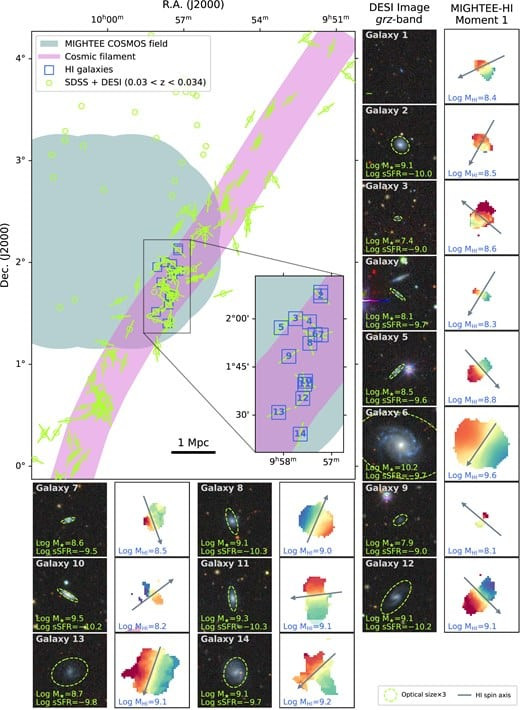
Examining gas-abundant galaxies embedded in this filament allows scientists to track the movement of matter and momentum within the cosmic web, offering insights into the fundamental mechanisms driving galaxy evolution, star birth, and cosmic progression.
The hydrogen-rich gas in these galaxies plays a vital role in star formation since hydrogen is the primary building block. By concentrating on these gas-laden galaxies, researchers can better understand how cosmic gas channels through filaments, influencing galaxy shape and spin. This also sheds light on early Universe conditions that remain largely enigmatic.
Technological Advances Enabling the Breakthrough
The remarkable identification of this rotating filament was made feasible by modern astronomical technology. The team relied on observations from MeerKAT, a premier radio telescope array in South Africa comprising 64 dishes. This facilitated a detailed sky survey known as MIGHTEE, revealing the filament’s colossal and dynamic nature. Additional optical data from the Dark Energy Spectroscopic Instrument (DESI) and the Sloan Digital Sky Survey (SDSS) complemented this, illustrating the filament’s structure and spin.
Professor Matt Jarvis, a principal contributor to the study published in Monthly Notices of the Royal Astronomical Society, pointed out the vital role of combining multiple observatories:
“This really demonstrates the power of combining data from different observatories to obtain greater insights into how large structures and galaxies form in the Universe. Such studies can only be achieved by large groups with diverse skillsets, and in this case, it was really made possible by winning an ERC Advanced Grant/UKIR Frontiers Research Grant, which funded the co-lead authors.”
This achievement underscores the importance of collaborative efforts and innovative technology in advancing our cosmic understanding.
- Categories:
- Astronomy

0 comments
Sign in to Comment