
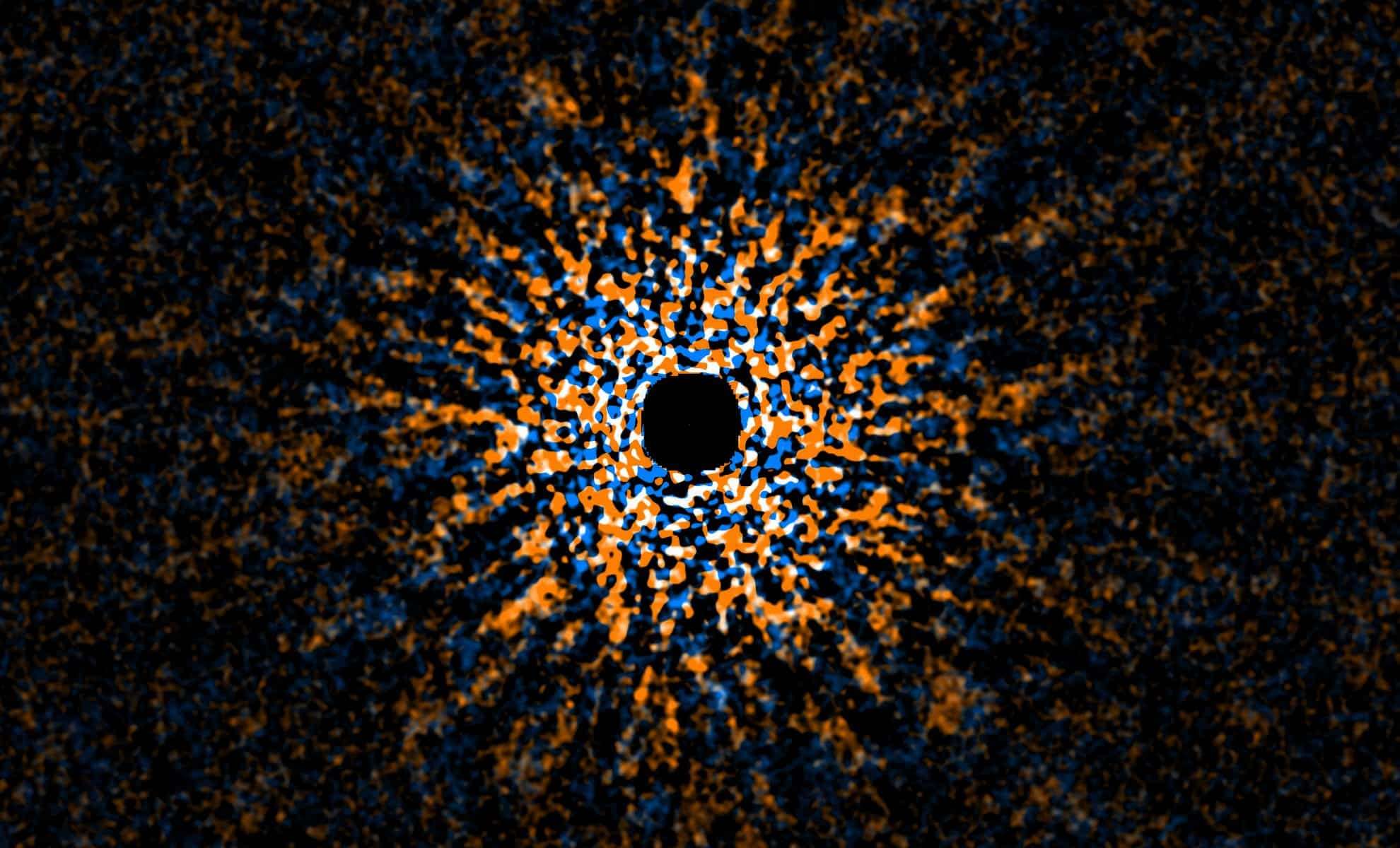
A strident leap in astronomical imaging was achieved when researchers successfully captured a direct photograph of GJ504b, an exoplanet often dubbed the “second Jupiter.” This feat was accomplished thanks to the innovative capabilities of the Subaru Telescope combined with its HiCIAO coronagraph imager and the AO 188 adaptive optics system. The planet orbits its sun-like parent star, GJ 504, around 60 light-years away within the constellation Virgo. With a mass estimated between three and six times that of Jupiter, GJ504b holds the record as the lowest-mass exoplanet visualized through direct imaging. This milestone marks a new era in exoplanet exploration, showcasing the potential to unlock secrets of faraway planetary environments through state-of-the-art observational technology. The discovery is a result of efforts from the Strategic Explorations of Exoplanets and Disks with Subaru (SEEDS) Project.
GJ504b: Insights into the ‘Second Jupiter’ and Its Properties
Scientists are captivated by the parallels between GJ504b and Jupiter, as the exoplanet shares many traits with our solar system’s largest gas giant. Situated approximately 44 astronomical units (AU) from its star, the planet’s orbit extends similarly to the distance from the Sun to Pluto within our own solar system. Despite these similarities, GJ504b’s distinctive atmospheric composition and overall features present a fresh angle for studying gas giants beyond our neighborhood.
With a mass roughly three to six times that of Jupiter, GJ504b ranks among the heaviest exoplanets that have been directly imaged so far. Its emission is faint, and its temperature hovers around 500 Kelvin (230°C), which is notably cooler than many other known exoplanets. What sets this planet apart is its relatively clear atmosphere, showing minimal cloud coverage. This transparency provides scientists with enhanced observational opportunities to analyze the planet's atmospheric makeup and behavior, offering clues about its formation and evolution.

Advanced Imaging Techniques: Subaru Telescope’s Role in Capturing GJ504b
Directly photographing exoplanets is a tremendously challenging endeavor, overcome by the Subaru Telescope’s cutting-edge instrumentation. The HiCIAO coronagraph imager plays a critical role by effectively blocking out overwhelming starlight, enabling the much dimmer planetary light to be detected. Meanwhile, the AO 188 adaptive optics system sharpens the images by correcting for the atmosphere’s distortive effects on incoming light. Together, these technologies make it possible to visualize planets like GJ504b with unprecedented clarity and detail.
The SEEDS Project spearheads these efforts to explore and characterize exoplanets and their host stars, continually expanding the frontiers of exoplanet science. This landmark discovery adds valuable information to the growing collection of directly imaged planets, challenging existing theories regarding their formation and dynamics.
Exploring GJ504b’s Atmosphere: Unlocking Exoplanet Mysteries
The atmosphere of GJ504b has drawn particular scientific attention due to its peculiar features. With a relatively cool temperature near 500 Kelvin (230°C), this planet contrasts with many hotter exoplanets observed previously, making it a compelling subject for atmospheric research. Its minimal cloud coverage distinguishes GJ504b from other exoplanets whose atmospheres are often obscured by thick clouds, enabling more direct study of its atmospheric chemistry and meteorological patterns.
Studying exoplanets like GJ504b is vital for advancing knowledge of planetary development. Although it bears resemblance to Jupiter in size and mass, variations in temperature and atmospheric composition highlight the diversity of planetary environments. Understanding these differences could help scientists unravel the processes shaping planet formation across various stellar systems.
- Categories:
- News









0 comments
Sign in to Comment