
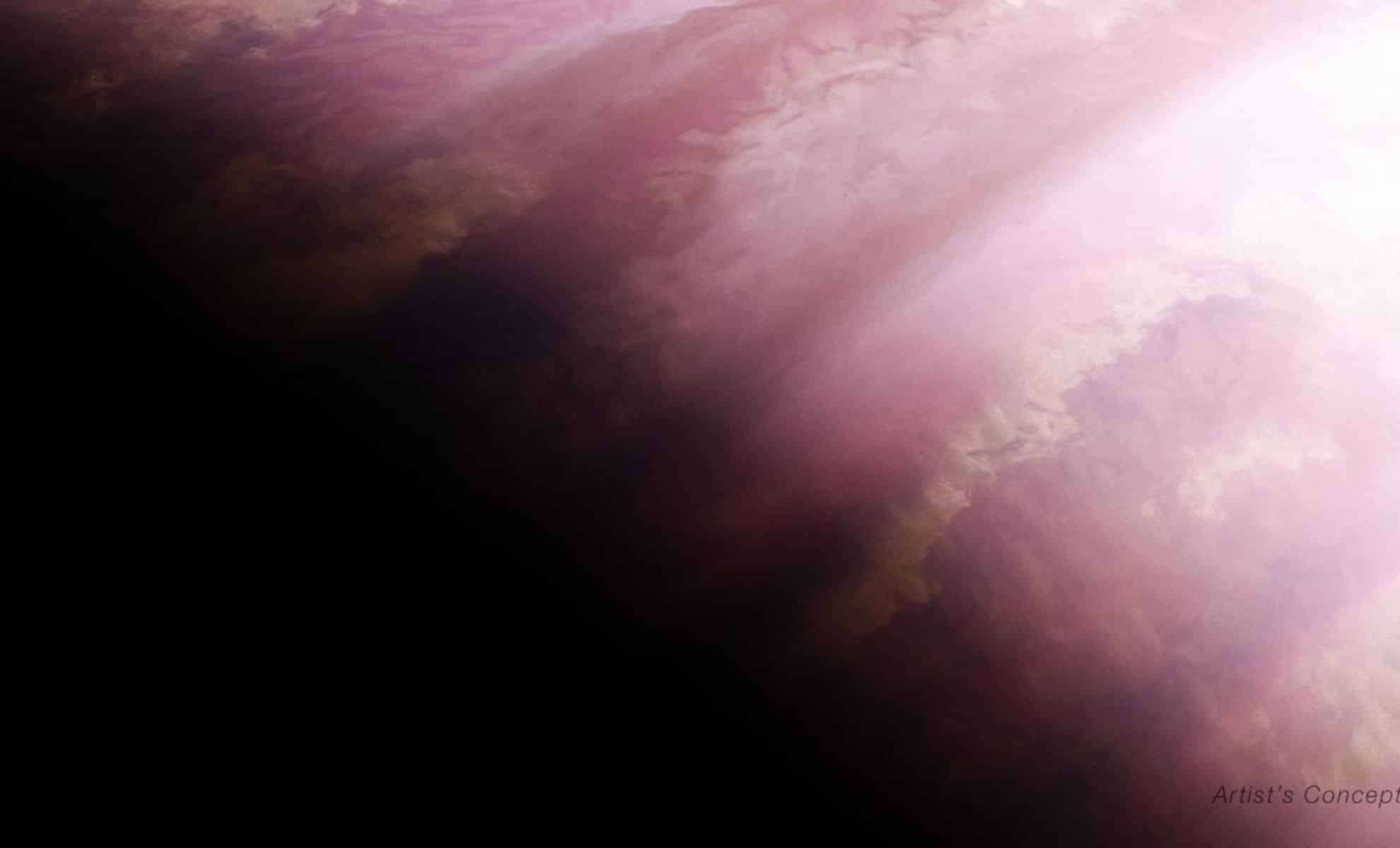
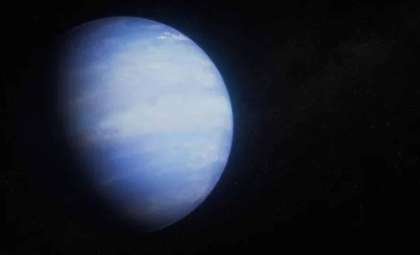
NASA’s James Webb Space Telescope (JWST) has unveiled remarkable atmospheric contrasts between the eternal sunrise and sunset zones on the distant exoplanet WASP-39b.
This massive gas giant, situated about 700 light-years from our solar system, offers a rare glimpse into the atmospheric dynamics of planets orbiting other stars.
Investigating the Twilight Zones of WASP-39b
WASP-39b is a hot Jupiter, a large gaseous planet comparable in size to Jupiter but with a mass nearer to that of Saturn. It orbits extremely close to its star, completing a full revolution in just four Earth days. This tight orbit results in tidal locking, causing one hemisphere to permanently face the star while the opposite side remains in shadow. This setup creates dramatic temperature contrasts and a notable atmospheric boundary known as the terminator.

By employing JWST’s Near-Infrared Spectrograph (NIRSpec), scientists have precisely mapped temperature variations along this terminator. The evening terminator side is notably hotter, around 1,450°F (800°C), whereas the dawn side is cooler, near 1,150°F (600°C).
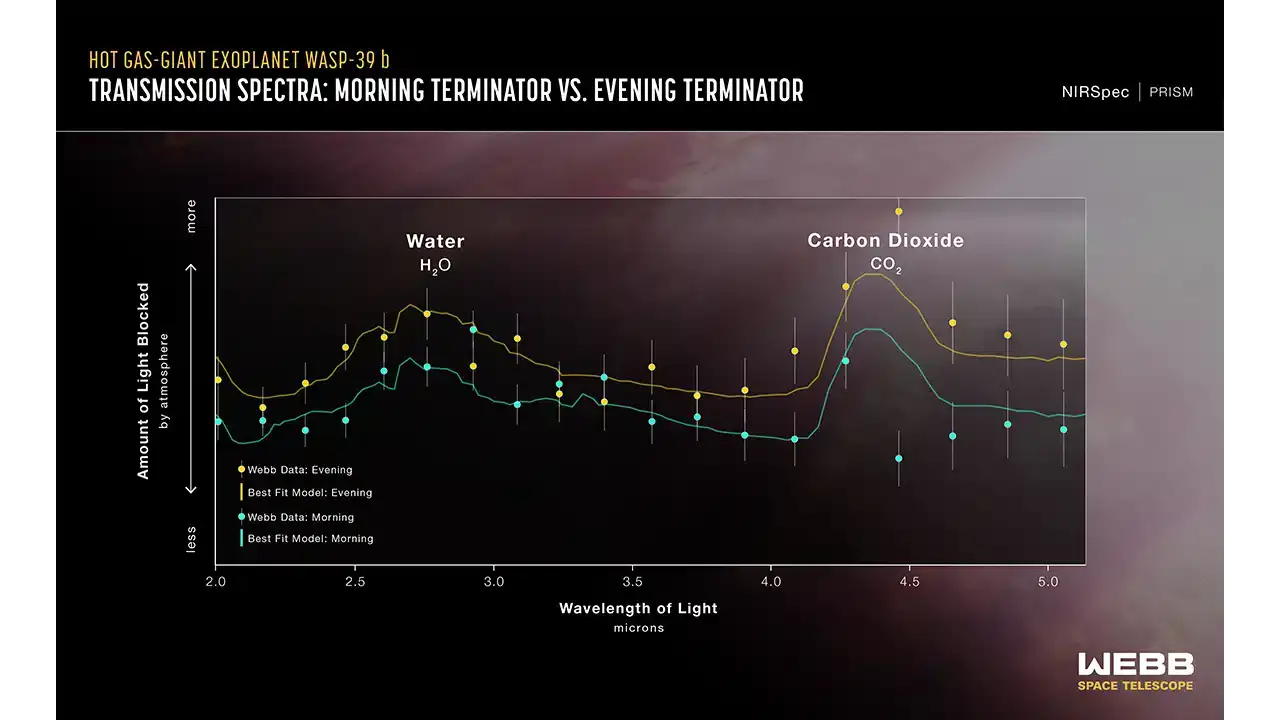
This temperature disparity points to intricate atmospheric processes and cloud dynamics on WASP-39b. “It’s really stunning that we are able to parse this small difference out, and it’s only possible due Webb’s sensitivity across near-infrared wavelengths and its extremely stable photometric sensors,” said Néstor Espinoza, an exoplanet expert at the Space Telescope Science Institute and lead author of the research.
Atmospheric Motion and Weather Systems
Examining the terminator region of WASP-39b sheds light on the planet’s atmospheric circulation. The readings support the presence of strong equatorial jet streams sweeping gas around the globe. Hot gases flow from the sun-facing side to the dark side, cooling as they cross the terminator, while cooler air moves back toward the heated hemisphere, warming up. This continuous circulation drives complex weather patterns and underlies the observed temperature differences.
This dynamic flow is fueled by sharp temperature and pressure contrasts between the bright day side and the dark night side. Warm air expands and rises on the dayside, and cooler, denser air descends on the nightside, creating powerful winds that redistribute heat throughout the planet.
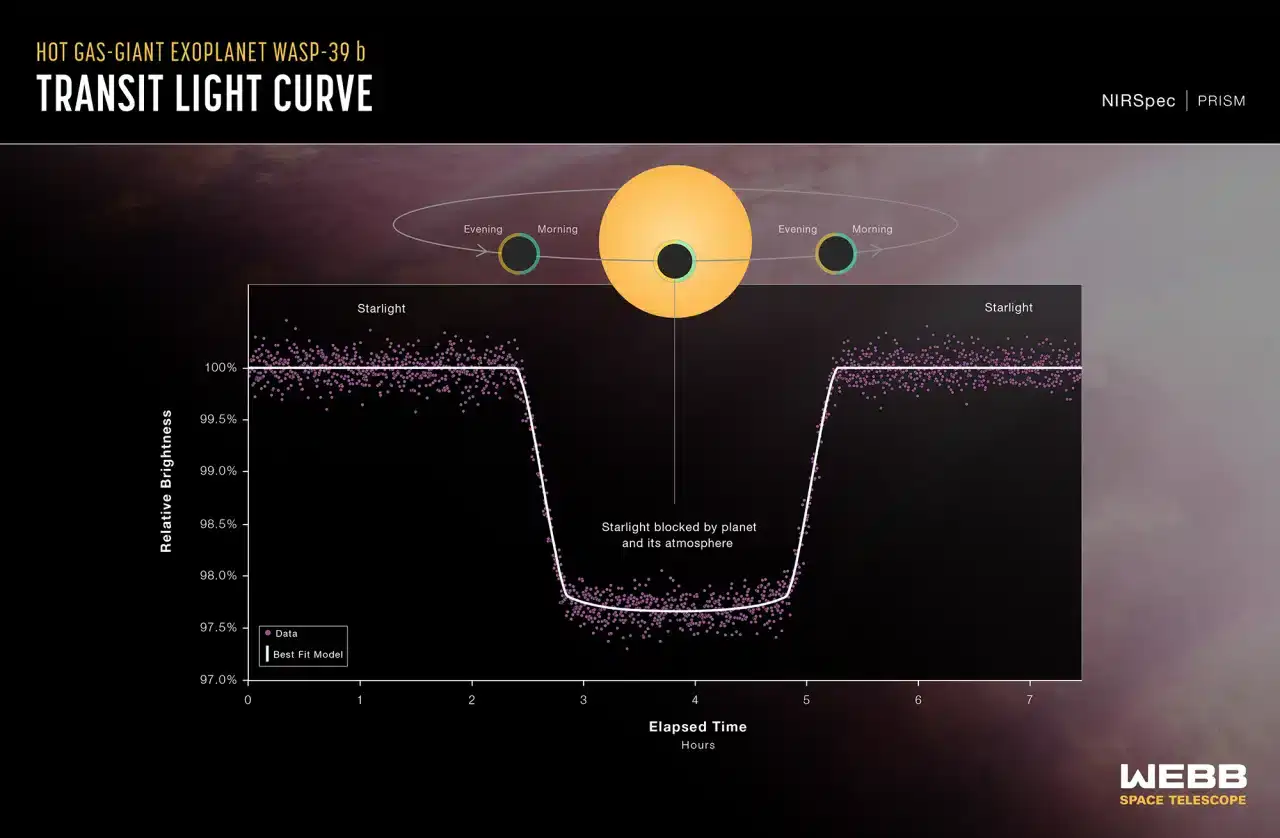
Grasping these atmospheric patterns is vital for refining models predicting exoplanet weather. As Espinoza explained, “Because we can tell that the evening edge is hotter, that means it’s a little puffier. So, theoretically, there is a small swell at the terminator approaching the nightside of the planet.”
Advancing the Study of Exoplanet Atmospheres
This breakthrough significantly enhances knowledge of exoplanetary atmospheres. Distinguishing between morning and evening terminators offers a detailed, three-dimensional view of these far-off worlds. This improvement enables more precise simulations of climate and weather on planets beyond our solar system.
The achievement also highlights JWST’s remarkable capabilities in the field of exoplanet investigation. Espinoza noted, “Now we’ve demonstrated the feasibility of this method with JWST, and the precision of JWST is so immense, it really opens up a new avenue into understanding and measuring atmospheric circulation for exoplanets that we were previously largely insensitive to.” This opens doors to studying other hot Jupiters and similar planets, potentially uncovering environments where life might thrive or learning more about planet formation and development.
Ongoing Research with JWST
Scientists plan to continue leveraging JWST’s suite of instruments to explore WASP-39b along with additional exoplanets. Analyzing various wavelengths of light will reveal more about the atmospheric makeup of these alien worlds. Insights gained from WASP-39b will provide a critical reference to improve understanding of atmospheric behaviors and cloud mechanics across an array of exoplanets.
The extraordinary precision of JWST’s observations allows researchers to detect subtle phenomena such as minor temperature variations and their influence on atmospheric layers. “This analysis is also particularly interesting because you’re getting 3D information on the planet that you weren’t getting before,” Espinoza emphasized. These advances not only aid studies of hot Jupiters but also broaden exploration of diverse exoplanet types.
The comprehensive investigation of WASP-39b’s terminator region by NASA’s James Webb Space Telescope provides unprecedented details on this distant planet’s atmospheric activity. These findings deepen our grasp of hot Jupiter climates and showcase JWST’s strengths in unveiling the mysteries of the universe. Each new discovery pushes us closer to unraveling fundamental cosmic questions and our connection to the cosmos.
- Categories:
- Astronomy ,
- News ,
- Space ,
- Nasa




0 comments
Sign in to Comment