
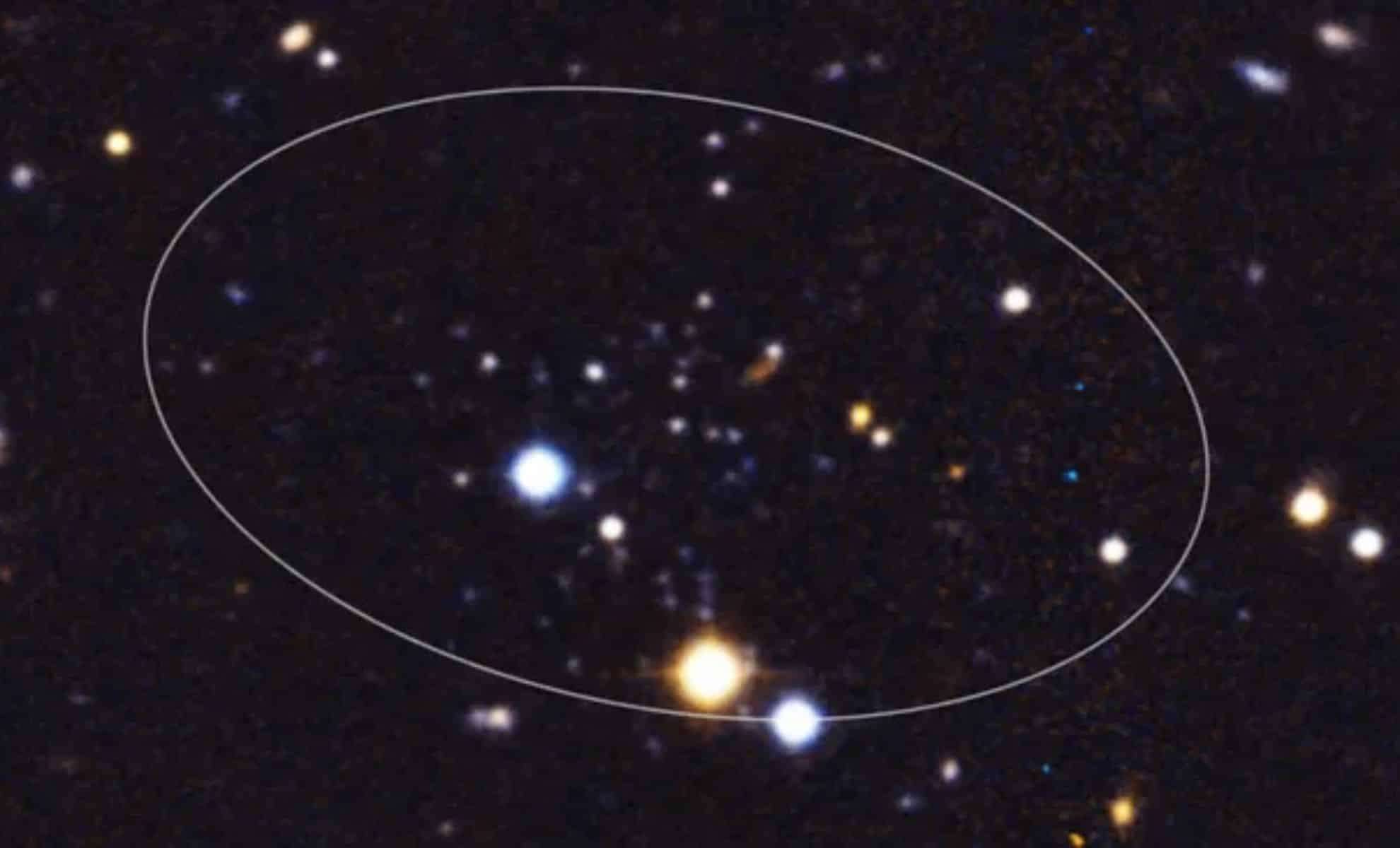
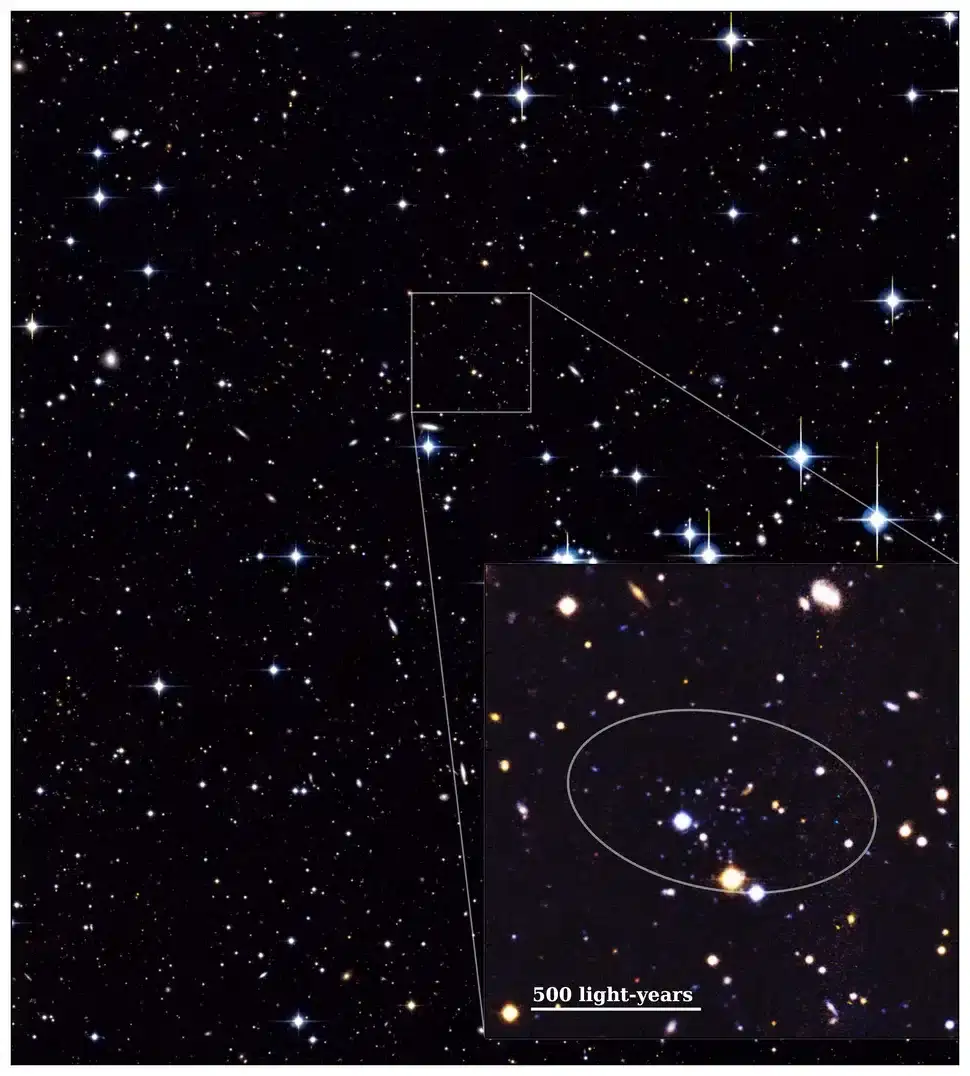
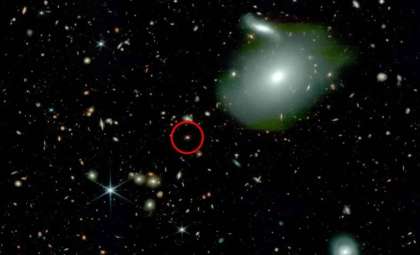
Astronomers have identified a remarkable celestial body: Andromeda XXXV, now recognized as the tiniest and faintest galaxy detected to date. Situated approximately three million light-years from Earth, this minuscule galaxy orbits the larger Andromeda Galaxy, shaking up current models of how galaxies evolve. Astonishingly small—just a millionth the scale of our Milky Way—this galaxy’s very survival in the tumultuous early universe has puzzled researchers.
The results, featured in The Astrophysical Journal Letters, propose that dwarf galaxies like Andromeda XXXV may possess unique resilience against cosmic forces, prompting a reevaluation of galactic formation theories. Marcos Arias from the University of Michigan led the investigation, employing the Hubble Space Telescope alongside extensive astronomical data to reveal this cosmic anomaly.
A Minuscule Galaxy That Defies Conventional Wisdom
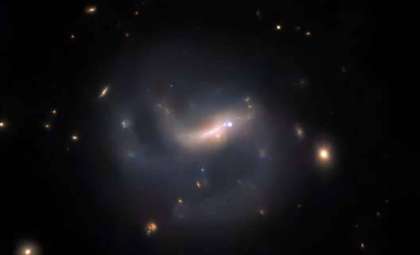
Dwarf galaxies have long been known to astronomers, with the Milky Way hosting dozens of these small companions. Yet spotting similarly faint dwarfs around other prominent galaxies like Andromeda has proven challenging. Previously discovered dwarf galaxies tended to be larger and brighter, reinforcing assumptions based on observations of our own galaxy.

Andromeda XXXV challenges these assumptions by being both the smallest and dimmest galaxy yet identified, while still functioning as a complete galaxy.
Eric Bell, a professor at the University of Michigan and co-researcher, remarked, “These galaxies are fully operational, yet only about a millionth the Milky Way’s size. It’s akin to having a fully formed human being the size of a grain of rice.”
This revelation compels astronomers to reconsider how such tiny galaxies could persist through the volatile conditions of the cosmos.
Why Would Andromeda XXXV Have Been Expected to Disintegrate?
The early universe was an extreme environment, saturated with intense heat, strong radiation, and cataclysmic cosmic phenomena. Most small galaxies were believed to have been destroyed in this era—their gas heated away before they could stabilize and form stars.
Nonetheless, Andromeda XXXV endured these hostile conditions. Its ongoing existence suggests gaps in our comprehension of galactic evolution.
Bell shared, “Its faintness is remarkable — it’s a peculiar system that defies our expectations in numerous ways.”
Scientists hypothesize that Andromeda XXXV either developed protective traits or resided in an environment conducive to retaining enough gas, allowing it to keep forming stars long after similar galaxies ceased to exist.
The Galactic Enigma: Why Did Some Tiny Galaxies Vanish While Others Persisted?
A key question in astrophysics is what causes certain galaxies to stop star formation billions of years ago while others like Andromeda XXXV continue to thrive.
For the Milky Way’s dwarf galaxies, the prevailing belief is depletion of gas led to their dormancy. In contrast, Andromeda’s dwarf galaxies may have been subject to gravitational forces from their larger host that stripped them of the gas needed to birth stars.
This has led researchers to dub the phenomenon a “galactic murder mystery.” Were these small galaxies naturally fading away, or forced into extinction by their parent galaxies?
If Andromeda XXXV managed to hold onto its gas supply longer, this could explain its survival when others failed. Scientists are keen to discover more galaxies like it to discern if it is an unusual survivor or part of a broader, previously overlooked pattern.
Implications for Our Cosmic Perspective
The identification of Andromeda XXXV profoundly impacts our understanding of galaxy birth, survival, and cosmic development. It raises new inquiries into how galaxies interact with their environments and what factors allow them to withstand destructive forces.
Future space missions and advanced telescopes aim to find more such diminutive galaxies. Should additional examples emerge, this could transform our theories about galactic formation and offer fresh insight into the history of the Milky Way itself.
“There remains much to uncover,” stated Marcos Arias, lead author of the study. “Even in our cosmic backyard, there’s so much about galaxy formation, evolution, and architecture that we’ve yet to decipher before we can truly reconstruct the universe’s past.”
With every new finding, the cosmos continues to surprise us—and Andromeda XXXV is yet another testament to that enduring mystery.
- Categories:
- News




0 comments
Sign in to Comment