
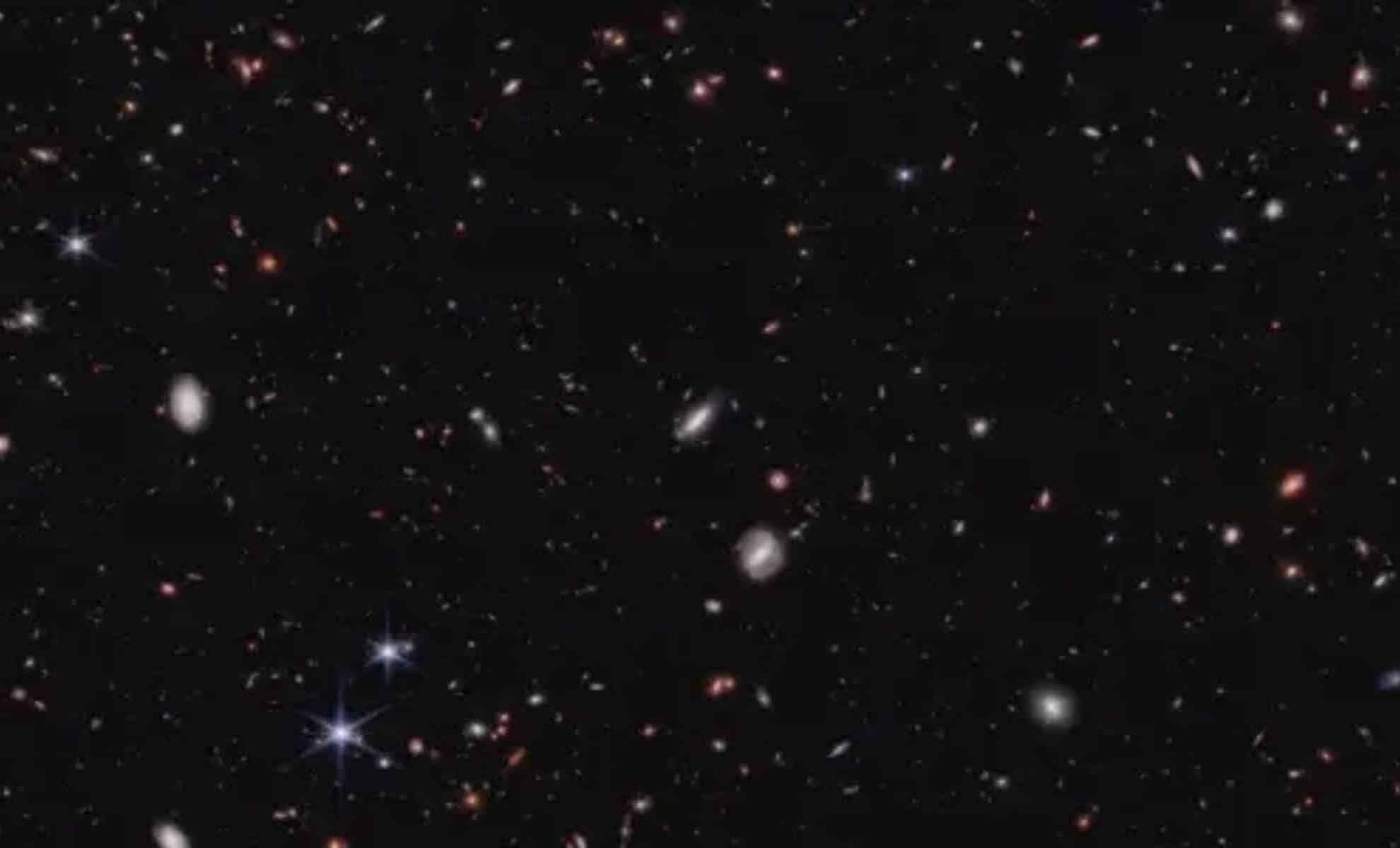
Recent data from the James Webb Space Telescope (JWST) is prompting scientists to reconsider established ideas about dark matter's influence on how galaxies form, offering new support for an alternative framework called Modified Newtonian Dynamics (MOND).
JWST’s latest observations reveal that early galaxies were larger and more luminous than the traditional dark matter paradigm anticipated, implying these galaxies formed much faster than previously believed. MOND, a theory developed decades ago, suggests a different approach to gravity that could explain these surprisingly massive young galaxies without invoking dark matter, according to findings from Case Western Reserve University.
Early Universe Galaxies Larger Than Expected
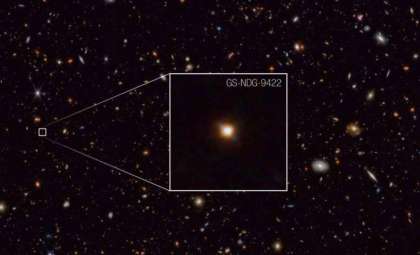
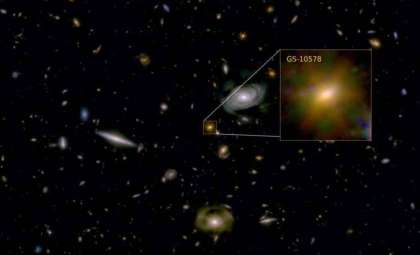
The dominant cosmological model posits that dark matter provides the gravitational pull necessary to gather gas and stars, shaping galaxies over billions of years from smaller fragments. As such, astronomers expected JWST to uncover faint, diminutive protogalaxies from the universe’s infancy. Contrary to these forecasts, JWST has captured images of bright, massive galaxies appearing far earlier in cosmic history, challenging established theories.

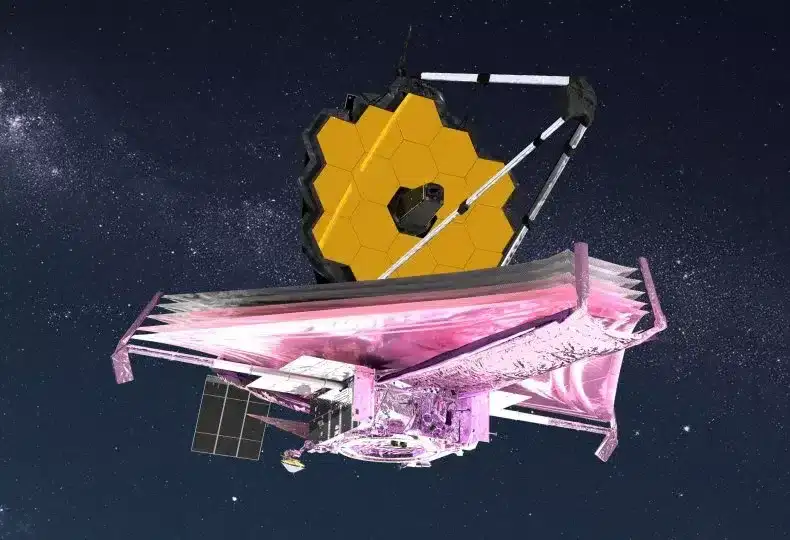
“The predictions based on dark matter do not align with what we observe,” stated Stacy McGaugh, a Case Western Reserve astrophysicist whose research questions dark matter’s role in early galaxy assembly. By contrast, MOND—which modifies gravitational behavior under low-acceleration conditions predicted ahead of these discoveries—anticipated the existence of rapidly formed large galaxies in the early cosmos. Originating with physicist Mordehai Milgrom in the 1980s, MOND proposes alternate gravitational dynamics at vast distances, aligning well with JWST’s unprecedented observations.
MOND Offers a Different Gravitational Perspective on Galaxy Growth
MOND challenges the conventional gravitational framework by suggesting gravity functions differently at extremely low accelerations, like those found at galaxy outskirts. Although traditionally a fringe viewpoint, MOND has anticipated features of early galaxy formation overlooked by dark matter models. McGaugh’s team demonstrated that the mass and luminosity of JWST-detected galaxies closely match MOND’s predictions of swift cosmic structure emergence. “In essence, MOND anticipated these outcomes,” McGaugh noted, emphasizing the importance of testable predictions in science.
According to MOND, early massive galaxies could have formed as unified, expansive entities rather than aggregating slowly from smaller units. McGaugh elaborated, “The introduction of dark matter aimed to explain how an initially smooth universe could evolve into the clumpy galaxy-filled cosmos we observe. MOND instead suggests galaxies expanded with the cosmos initially and then gravitational forces reversed this expansion to collapse matter into dense galaxies — all without dark matter.”
Research Publication and Broader Cosmological Impact
Published on November 12, 2024 in The Astrophysical Journal, the study involves McGaugh alongside collaborators Federico Lelli of Italy’s INAF–Arcetri Astrophysical Observatory, Jay Franck (ex-Case Western Reserve), and James Schombert from the University of Oregon. Their results reinforce MOND’s predictive capabilities and suggest that it might explain galactic formation features where dark matter theories fall short, though merging MOND with other pillars of cosmology, like general relativity, remains complex.
As highlighted by Phys.org, despite MOND’s explanatory strengths, it struggles to address several cosmological phenomena that dark matter currently accounts for. Still, JWST’s insights point to MOND as a valuable lens for understanding gravitational dynamics and galaxy assembly under certain universal conditions. “Reconciling MOND with general relativity remains a formidable challenge,” McGaugh noted, underscoring the need for continued investigation into these frameworks.
Reevaluating the Influence of Dark Matter on Universe’s Development
The data from JWST has revived interest in MOND as a contender for explaining early cosmic structures, highlighting significant unanswered questions in cosmology. While dark matter remains the dominant explanation for the cosmos’s large-scale architecture, this research exposes potential limitations, suggesting that our cosmic story might involve more nuanced gravitational interactions. MOND’s compatibility with new evidence invites further exploration of gravity’s nature and galaxy evolution.
As JWST continues to deliver groundbreaking observations, the debate over dark matter’s role versus modified gravity theories intensifies. Future JWST findings could be crucial for disentangling these competing models. Whether MOND’s acceptance grows or a novel paradigm emerges, JWST’s revelations confirm that our cosmic understanding is continually advancing in surprising directions.
- Categories:
- News





0 comments
Sign in to Comment