
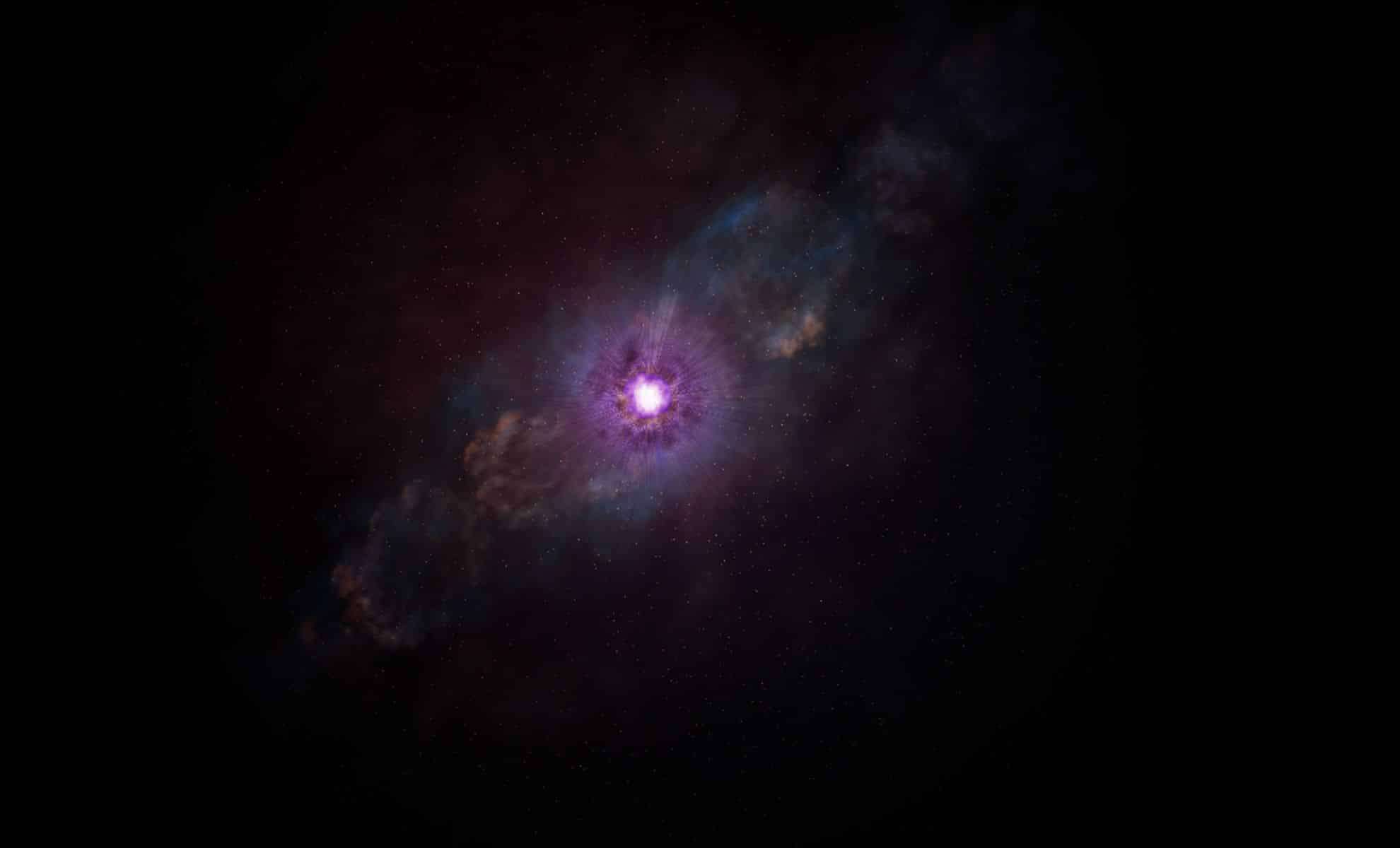
Scientists have for the first time documented a white dwarf star undergoing two explosive events during a single supernova, unveiling groundbreaking insights into these stellar phenomena. Utilizing the European Southern Observatory’s Very Large Telescope (ESO’s VLT) to examine the remnants of supernova SNR 0509-67.5, researchers have confirmed that white dwarfs can experience a pair of detonations within a Type Ia supernova.
New Insights into Type Ia Supernova Events
Type Ia supernovae serve as key tools for astronomers to understand cosmic expansion due to their consistent brightness. These events stem from white dwarf stars—dense stellar remnants akin to our Sun—that accumulate material until reaching a tipping point. However, the precise trigger behind their explosive transformations has remained a mystery.
Leading this research, Priyam Das, a University of New South Wales Canberra PhD candidate, published findings in Nature Astronomy. He stated, “White dwarf explosions are central to many areas of astronomy, yet the exact ignition process has long been unresolved.”

While the prevalent theory suggests material transfer from a companion star prompts the supernova, emerging evidence hinted that some might involve two successive blasts: one in an outer helium shell and another in the star’s core.
Evidence Supporting the Dual Explosion Theory
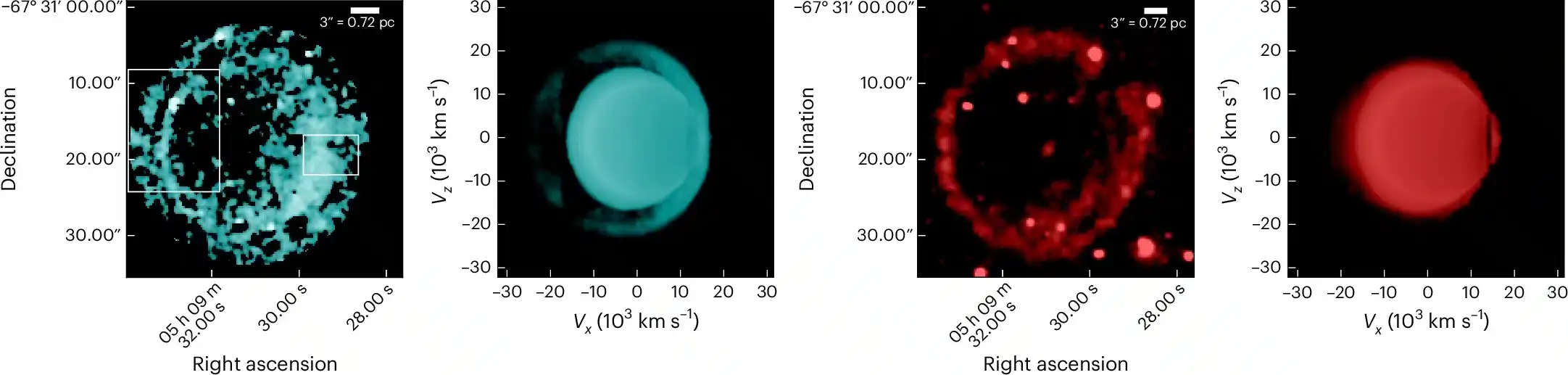
Previously lacking clear proof, the double-detonation scenario has now been visually identified. Observations of SNR 0509-67.5 revealed unique features indicating two separate bursts occurred.
In this process, helium layers build up on the white dwarf’s surface, eventually igniting and sending a shockwave inward that triggers a second, more intense core explosion. This mechanism’s signature, detectable in calcium shell layers around the supernova remnants, has now been firmly documented.
As Ivo Seitenzahl from the Heidelberg Institute for Theoretical Studies explains, “This offers compelling confirmation that a Type Ia supernova can erupt before the white dwarf reaches the traditional critical mass.”
Decoding the Cosmic Signature
The team employed the Multi Unit Spectroscopic Explorer (MUSE) on ESO’s Very Large Telescope to analyze the structure of the supernova’s aftermath. Distinct dual calcium layers within the debris clearly showed the hallmark of the double-detonation phenomenon, diverging from the classic Chandrasekhar mass explosion model.
For astronomers, this finding is not only a scientific milestone but also offers a vivid snapshot of the complex dynamics following such a rare cosmic event. Reflecting on this achievement, Das remarked, “Uncovering how these spectacular explosions unfold offers tremendous satisfaction.”
Studying these supernovae is crucial not just for comprehending stellar life cycles but also for gauging the universe’s growth. Type Ia supernovae’s reliable luminosity has been essential to measuring cosmic distances, contributing to the discovery of the universe’s accelerating expansion—a breakthrough honored with the 2011 Nobel Prize in Physics.
Unraveling a Stellar Enigma
This revelation significantly enhances our grasp of how white dwarf explosions occur, pointing to an earlier and more complex detonation process than previously thought. Rather than waiting to reach a critical mass, white dwarfs can explosively detonate via the double-detonation route, introducing a new classification of supernovae and enriching our comprehension of these cosmic phenomena.
Ongoing investigations into the remnants of SNR 0509-67.5 promise to reveal further insights into the mechanisms at play during white dwarf explosions, shedding light on the broader mysteries of cosmic structure and expansion.
- Categories:
- News








0 comments
Sign in to Comment