
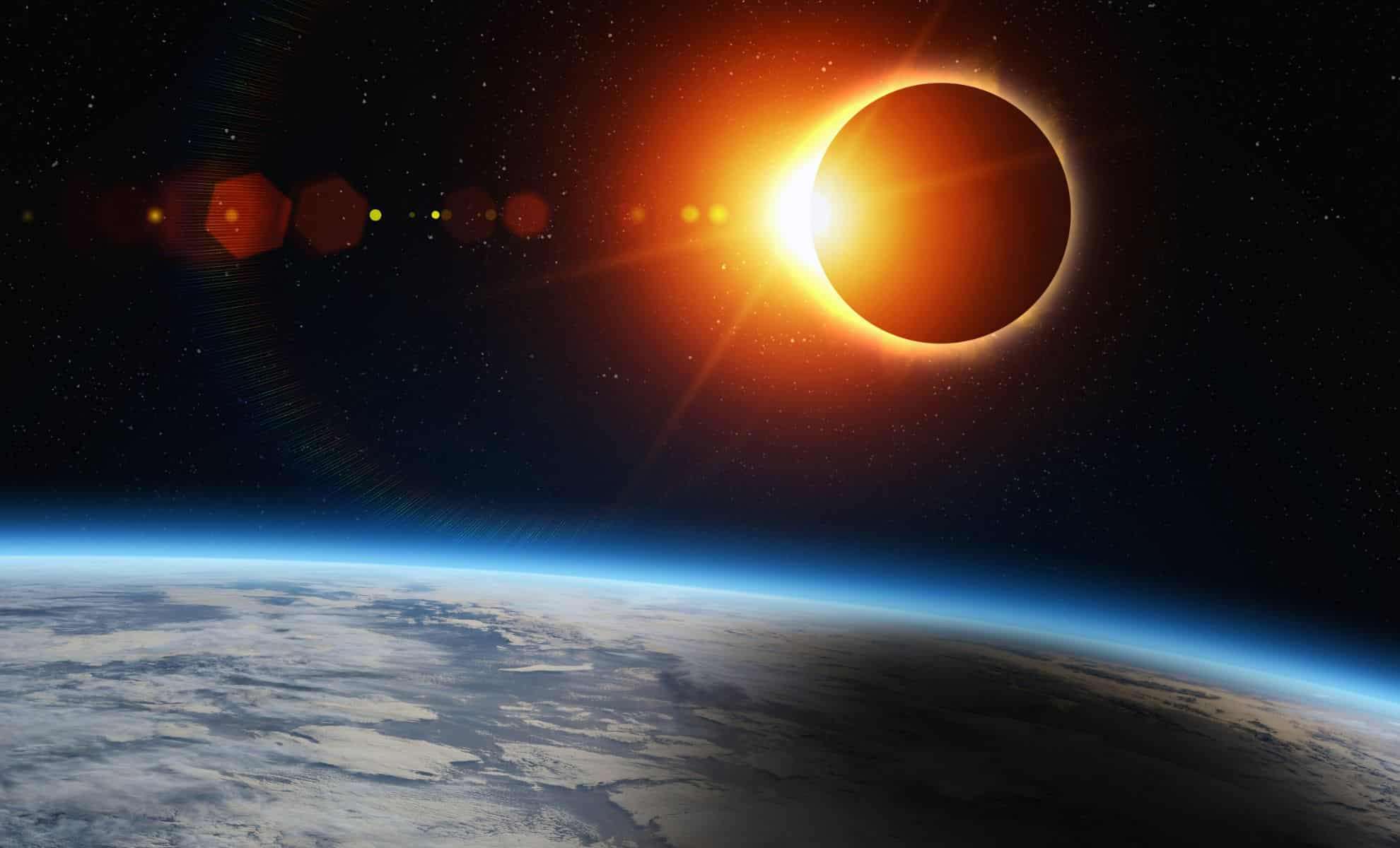
On August 2, 2027, skywatchers worldwide will be treated to a stunning astronomical spectacle: a total solar eclipse lasting approximately six minutes. Nicknamed the “Great North African Eclipse”, this rare event is anticipated to mesmerize audiences across Southern Europe, North Africa, and sections of the Middle East. While most of North America won’t catch the full eclipse—only a partial one will be briefly visible in Newfoundland, Canada—the complete shadow will provide an unforgettable display. For those seeking detailed data on precise paths and timings, the Time and Date guide offers extensive information vital for eclipse observers.
The Trajectory of the August 2027 Total Solar Eclipse
A total solar eclipse occurs when the Moon aligns perfectly between the Earth and the Sun, completely covering the Sun for those located along its path of totality. The upcoming eclipse’s shadow will move across various regions, beginning over the North Atlantic Ocean and sweeping through parts of Europe, Africa, and the Middle East.
Initiation Over the North Atlantic
The eclipse’s shadow first emerges over the North Atlantic Ocean before reaching land in Southern Spain, landing specifically on the Costa de la Luz in Andalusia. It will then proceed to Gibraltar, the British Overseas Territory, before continuing its path south into North Africa.

Progress Through North Africa and the Middle East
The path next crosses over countries such as Morocco, Algeria, Tunisia, Libya, and Egypt. Egypt will witness the longest duration of total darkness during the eclipse, with certain locations like Luxor and Berenike experiencing up to 6 minutes and 22 seconds of totality—ideal destinations for eclipse enthusiasts.
The shadow will then traverse the Middle East, passing through Saudi Arabia, Yemen, and parts of East Africa before concluding over the Chagos Archipelago in the Indian Ocean. In total, approximately 89 million people will have the chance to witness this rare cosmic alignment.
Optimal Locations to Experience the Eclipse
Selecting the best vantage point is key to fully appreciating the 2027 total solar eclipse. The path offers diverse spots across several countries, with different weather patterns and eclipse durations influencing the viewing experience. Here are some top recommendations:
Luxor, Egypt: The Ideal Viewing Destination
Luxor, Egypt stands out as the premier place to observe the eclipse. With an astonishing totality span of 6 minutes and 20 seconds, it boasts the longest duration on land between 2009 and 2114. Beyond the eclipse, visitors can explore world-renowned landmarks like the Valley of the Kings, Karnak Temple, and the Luxor Temple, blending astronomy with cultural heritage.
Tunisia: A Comfortable Alternative
Those preferring milder climates might opt for Tunisia, which offers a more temperate setting along with a robust eclipse viewing opportunity. For instance, Sfax will enjoy totality lasting 5 minutes and 41 seconds, making it a strong alternative to Egypt while avoiding extreme summer heat and desert dust.
Spain and Gibraltar: European Viewing Points
Residents of Europe have excellent options as well. Locations in Southern Spain—notably Tarifa and Cadiz—will experience totality durations of up to 4 minutes and 39 seconds. Gibraltar also offers a unique vantage point to catch the eclipse as it first reaches land, though with shorter coverage.
What Makes This Eclipse Duration Exceptional?
The remarkable length of the 2027 total solar eclipse—up to 6 minutes and 22 seconds—is a standout feature, marking it as the longest eclipse visible on land between 2009 and 2114. But what causes this unusually extended duration?
The duration depends largely on the Moon’s elliptical orbit and its relative distance from Earth. When the Moon is near its closest approach, its shadow expands and prolongs the time of total coverage. Additionally, because this eclipse occurs near the equator, the shadow traverses a wider region of Earth’s surface. These factors combine to produce one of the longest and most captivating total solar eclipses in the foreseeable future.
Safety Practices for Observing the 2027 Total Solar Eclipse
Viewing a solar eclipse is a memorable event but demands strict eye safety measures. Never stare directly at the Sun without certified protective eyewear to prevent serious and lasting eye injury. Use ISO 12312-2-certified eclipse glasses or utilize safe alternatives like a solar viewer or a pinhole projector to enjoy the eclipse securely.
- Categories:
- News







0 comments
Sign in to Comment