
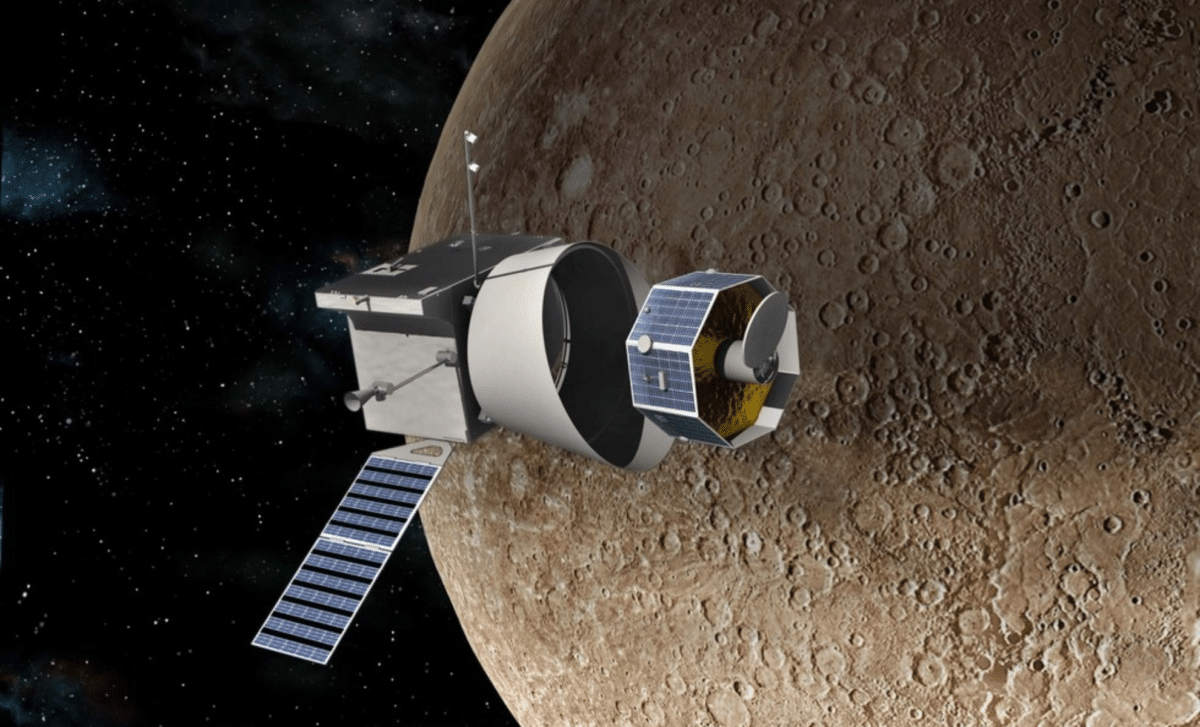
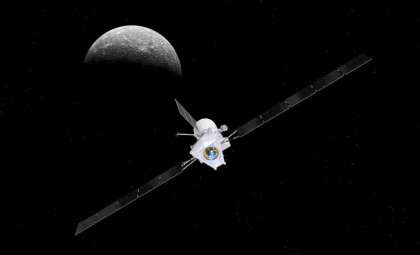
The eagerly awaited BepiColombo mission is about to reach a pivotal milestone. Launched in 2018, this collaborative project between the European Space Agency (ESA) and Japan Aerospace Exploration Agency (JAXA) aims to begin orbiting Mercury in late 2026. The mission’s twin spacecraft, the MPO (Mercury Planetary Orbiter) and Mio (Mercury Magnetospheric Orbiter), will start gathering extensive scientific data that could transform our knowledge of the solar system’s innermost planet.
The Enigmatic World of Mercury
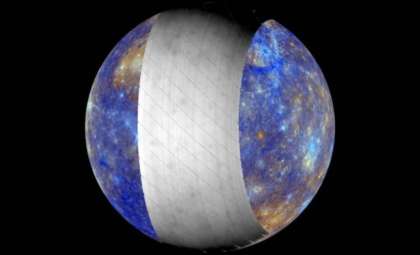
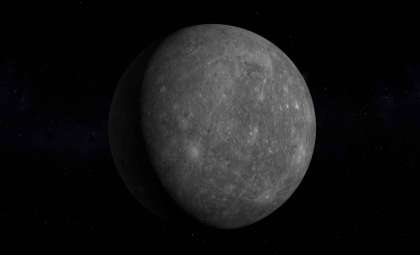
Despite its closeness to Earth, Mercury remains one of the most enigmatic terrestrial planets. Its extreme climate, irregular orbit, and unusual magnetic features continue to challenge scientists. Unlike neighbors such as Mars or Venus, Mercury’s tenuous atmosphere, iron-heavy core, and erratic magnetic field resist straightforward explanations. Unlocking Mercury’s secrets may not only illuminate its past but also offer broader lessons about planetary development and the solar system’s origins.
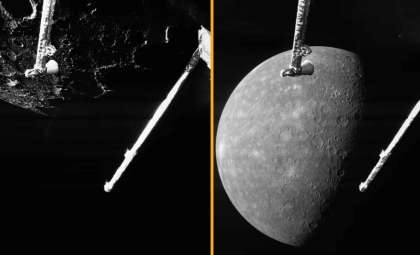
Mercury’s gravitational environment posed formidable hurdles for achieving stable orbit. The mission adopted a sequence of six flybys leveraging Mercury’s own gravitational pull to slow down — an approach inspired by Italian mathematician Giuseppe “Bepi” Colombo, the mission’s namesake. These maneuvers have finely tuned the spacecraft’s path, enabling orbit capture without excessive fuel consumption.

With orbit insertion imminent, the mission’s core science activities will commence. “It will capture the first X-ray images of the surface of another planet,” explains Charly Feldman from the University of Leicester, an instrumental developer for the MPO spacecraft. This imaging will help pinpoint surface elements and mineralogy with unmatched clarity, paving the way for direct comparisons with Earth, Mars, and the Moon.
Cutting-Edge Instruments and Critical Expectations
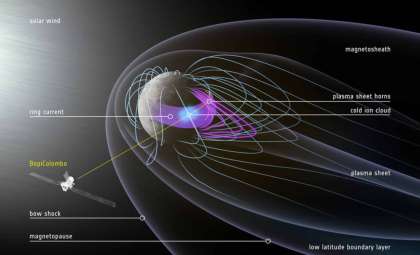
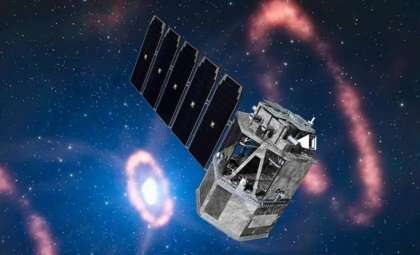
As reported by New Scientist, BepiColombo’s twin orbiters are equipped with advanced scientific instruments. The ESA-led MPO will focus on Mercury’s surface and internal makeup, while the JAXA-led Mio is tasked with examining the planet's magnetic environment and tenuous exosphere. Both orbiters must operate independently after separation, as there is no opportunity for repairs or resets.
“We constantly wonder whether our instruments will still function as intended,” Feldman confesses. “If something fails, there’s no way to fix it. The anticipation after such a long development period is thrilling yet nerve-wracking.”
This sentiment captures the collective tension among the mission’s scientists. The payloads were constructed nearly ten years ago, underwent rigorous testing in simulated space conditions, and now face the harsh realities of interplanetary travel. The stakes are high, but the potential gains immense. Should BepiColombo succeed, it will shed light on enduring puzzles such as the origin of Mercury’s magnetic shield, reasons for its unusually high density, and the processes that have shaped its surface under extreme solar influence.
A Window into Planetary Science
BepiColombo’s impact extends well beyond Mercury itself. Feldman highlights, “Understanding how planets arrive at their current state helps decode the entire solar system’s evolution.” The mission’s discoveries could revolutionize theories of planetary formation, especially for rocky planets orbiting close to their stars — an area growing in relevance due to exoplanet studies.
New Scientist underscores that this mission represents a major milestone for ESA, JAXA, and the global scientific community. The comprehensive data covering both surface composition and magnetic activity are expected to fuel research for years to come. Furthermore, these insights might guide future exploration efforts, encompassing both robotic probes and potentially crewed missions, by offering new perspectives on planetary geology and space weather interactions.
- Categories:
- Astronomy





0 comments
Sign in to Comment