

Neutron stars rotating at incredible speeds could be instrumental in detecting axions, hypothetical particles linked to dark matter.
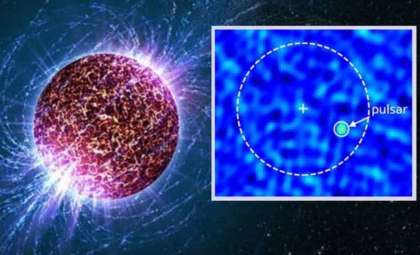
New findings from the University of Amsterdam indicate that pulsars—neutron stars with rapid spins—might produce vast amounts of axions. These particles could be observed through their interactions with the intense magnetic fields surrounding these cosmic objects.
This breakthrough offers a promising new avenue for identifying axions, elusive particles proposed decades ago to explain dark matter, which have remained undetected despite their significance in astrophysics.

The Role of Axions in Unlocking Dark Matter
Axions were first hypothesized in the 1970s to address a fundamental issue in particle physics known as the strong CP problem. Their properties suggest they could constitute dark matter—the mysterious substance accounting for much of the universe’s unseen mass. Because axions interact very weakly with normal matter, similar to neutrinos, spotting them directly has proven difficult. Yet, in environments with powerful magnetic fields, such as those near neutron stars, axions might transform into photons, the particles of light, revealing their presence.
In such strong magnetic fields, unexplained light emissions could result from axion transformation. Physicist Dion Noordhuis and colleagues argue that the intense magnetic environments of pulsars, neutron stars that rotate extremely fast, provide a perfect forge for generating axions. As the research notes, “These fast-spinning stars could generate a 50-digit number of axions per minute,” which, upon converting to photons, would make the star shine more brightly. Detecting this subtle increase in brightness could serve as an indirect signature of axions.

Pulsars as Natural Reservoirs for Axion Clouds
Characterized by rapid rotation often measured in milliseconds, pulsars are neutron stars with amplified magnetic fields due to their spin rates. This speed intensifies the magnetic forces, potentially creating an ideal environment for axions to form and then convert into photons. Noordhuis’s team suggests axions may accumulate into a dense “axion cloud” encircling the pulsar. Over millions of years, this cloud’s density could increase, producing a faint but continuous emission of photons detectable from Earth.
Further studies indicate that such axion clouds might form around many neutron stars and remain stable throughout the stars' lifespans. These clouds could be extraordinarily dense—up to 20 magnitudes greater than the typical dark matter density in our vicinity—boosting chances of spotting the associated photon signals. While direct axion detection is still challenging, this research narrows down specific locations where astronomers can focus their efforts: regions near intense neutron star magnetic fields.
Advancing Axion Exploration and Dark Matter Understanding
This work improves prospects for astronomers seeking axions by refining detection strategies and providing better estimates of their mass and characteristics. Monitoring pulsars for a narrow emission line within the radio frequency range could pinpoint axion mass values, even without direct capture of the particles. The investigation also explores the potential for a dramatic burst of light from axion activity near a neutron star’s end-of-life, although such an event would occur on timescales vastly exceeding the current age of the universe.
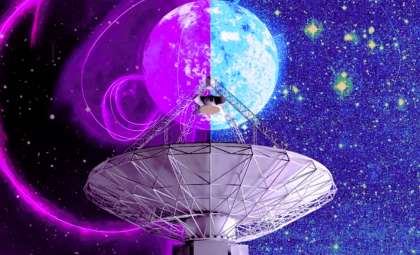
Looking ahead, astronomers are hopeful that new observations using cutting-edge radio telescopes will reveal axion signals. Discovering axions would mark a pivotal advancement in unraveling dark matter, which comprises an estimated 85% of all matter in the cosmos but remains hidden from direct observation. Neutron stars have thus become a crucial focal point in the quest to solve one of modern physics’ greatest enigmas.
- Categories:
- Astronomy ,
- News ,
- Science ,
- Physics








0 comments
Sign in to Comment