

A global collaboration of astronomers has identified a previously unknown variety of radio-emitting celestial body that could transform our understanding of long-period radio transient phenomena. Their findings, published on arXiv, introduce CHIME J1634+44, an extraordinary signal captured via the CHIME/FRB Pulsar Survey. This object stands out due to its exceptionally lengthy spin cycle, distinctive circular polarization, and evidence of increasing rotational speed—a rare combination never observed before in long-period transient sources (LPTs).
An 841-Second Rotation Period With Complex Pulsation Patterns
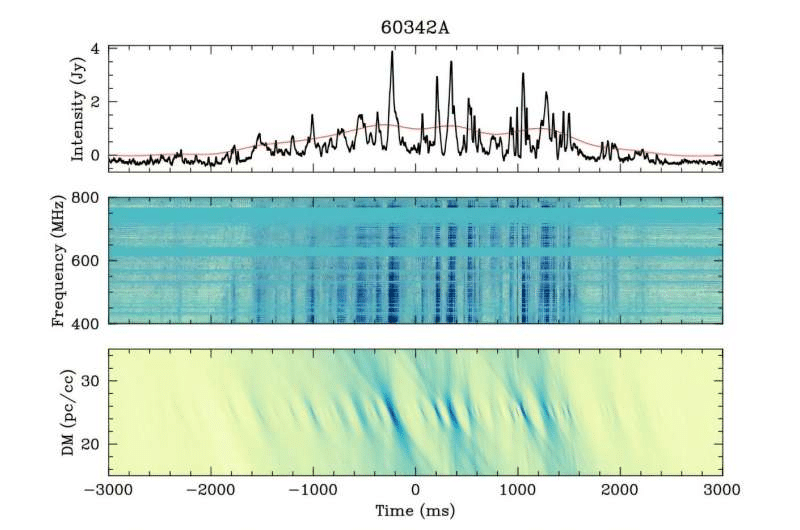
The source, named CHIME J1634+44, rotates at a notably slow rate of 841 seconds, ranking it among the slowest known radio pulsators. Remarkably, it also displays a secondary periodicity lasting 4,206 seconds, which scientists suspect might result from binary system dynamics, potentially indicating gravitational or mass-transfer interactions with a companion. Detected first in October 2022, this object has showcased multiple reactivation bursts, totaling 89 separate bursts recorded over approximately 4.5 years.
The source’s steady output of purely circularly polarized radio pulses is atypical among slow-rotating radio emitters. These observations imply that CHIME J1634+44 is not a conventional slow pulsar but potentially a magnetic white dwarf, magnetar, or a member of an entirely new category of astrophysical objects.

High-Precision Sky Surveillance Reveals a Unique Signal
The identification of CHIME J1634+44 was enabled by the CHIME/FRB single-pulse pulsar survey, which harnesses sophisticated triggering techniques to isolate galactic signals based on specific dispersion measures (DM). According to the researchers:
“CHIME J1634+44 was discovered in the CHIME/FRB single-pulse pulsar survey, where we are using the CHIME/FRB trigger criteria for all sources with a dispersion measure (DM) low enough to be considered inside the Milky Way galaxy according to both the NE2001 and the YMW16 DM models,” the researchers wrote in the paper.
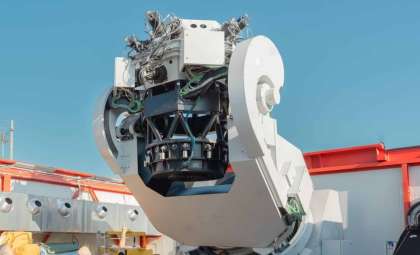
The Canadian Hydrogen Intensity Mapping Experiment (CHIME) has played a crucial role in identifying a variety of transient radio signals, ranging from fast radio bursts (FRBs) to slower, less frequent emitters like this source. Its ability to continuously observe large sky regions with exceptional sensitivity and timing resolution makes it an ideal instrument to pick up faint, variable low-frequency radio emissions.
Increasing Spin Rate Points to Dynamic Physical Processes
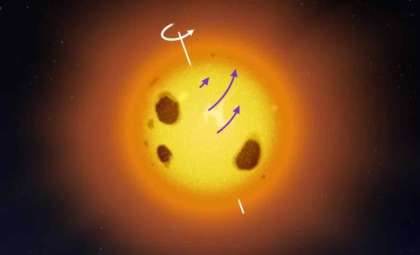
One surprising aspect of CHIME J1634+44 is its spin acceleration, with a negative period derivative close to −9.03 seconds per second. This spin-up behavior is unusual, as most neutron stars and pulsars typically slow down over time due to energy losses via radiation or particle winds. This acceleration phase suggests interactions such as accretion of matter from a companion or possible energy input through gravitational wave emissions.
This discovery could have significant consequences. If substantiated, CHIME J1634+44 would be the first long-period transient observed to spin up, challenging current theoretical frameworks. It also offers a unique opportunity to investigate angular momentum transfer mechanisms in extreme stellar environments where traditional pulsar models may fall short.
Shedding Light on the Mysteries of Long-Period Transients
Long-period radio transients are among the most enigmatic astrophysical sources, with their origins, emission properties, and evolutionary paths still largely speculative. The distinctive features of CHIME J1634+44 may help clarify the nature of this elusive population.
The research team highlighted the object’s importance:
“CHIME J1634+44 will serve as an important test bed for LPT emission theories and is unique among the array of known transient source emitters,” the scientists conclude.
This source’s exceptional combination of lengthy periodicity, spin acceleration, and circular polarization distinguishes it from known neutron star and magnetar groups. Continued observations could reveal the physical processes behind its emissions, enabling astrophysicists to resolve competing theories about long-period transient sources and potentially reshape models of their origins.
- Categories:
- News










0 comments
Sign in to Comment