
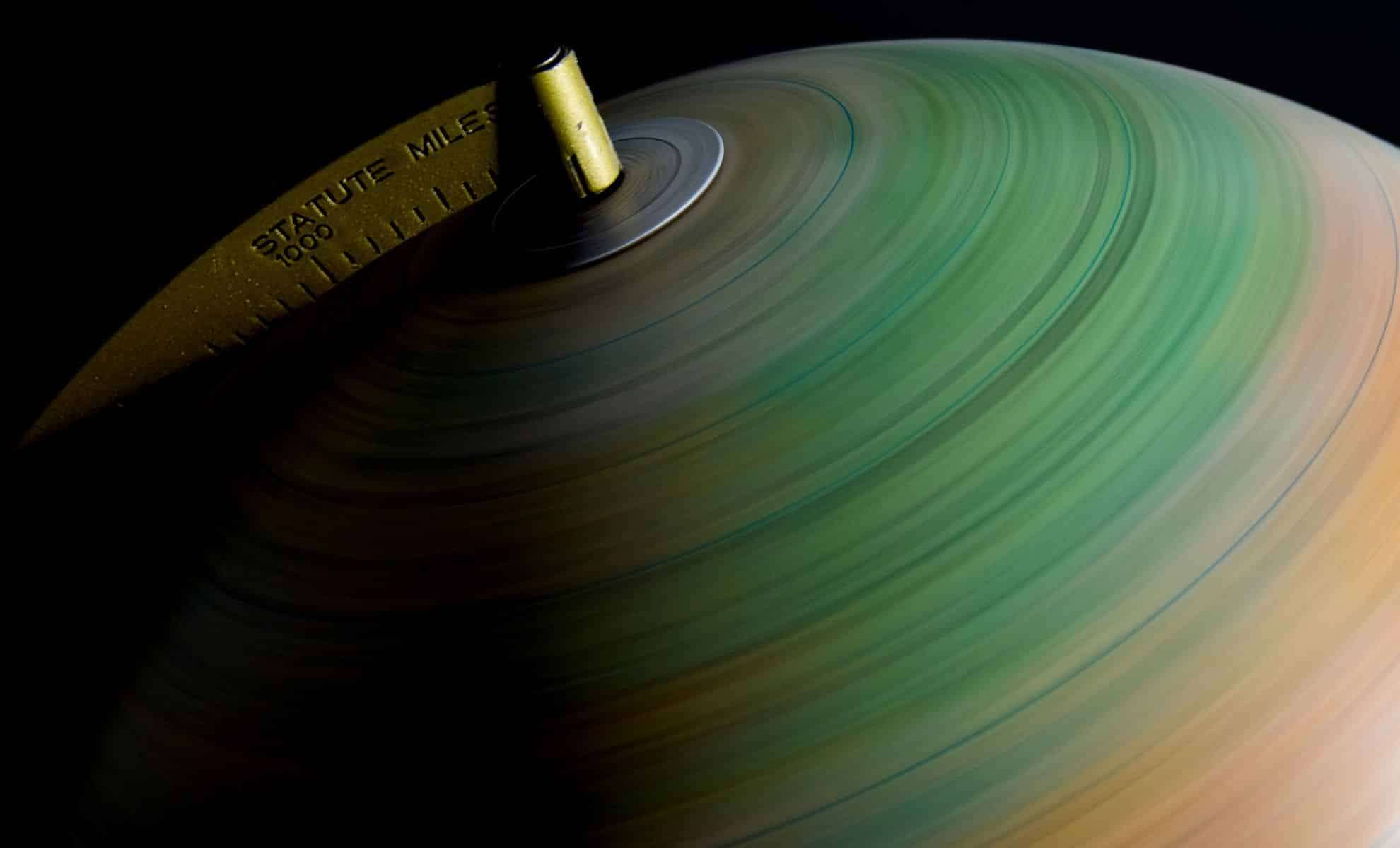
Researchers have observed an unexpected increase in the speed of Earth’s rotation, potentially leading to the shortest day ever documented. Astrophysicist Graham Jones from the University of London highlights three possible dates this summer—July 9, July 22, and August 5—when the planet’s rotation might quicken by 1.30, 1.38, or 1.51 milliseconds, respectively. Though these changes appear minor, they may significantly impact technologies dependent on exact timing.
Unraveling the Puzzle Behind Earth's Rapid Spin
The Daily Mail reports that since 2020, Earth has unexpectedly sped up its rotation, defying previous trends driven by the moon’s gravitational influence, which traditionally slows the planet's spin and gradually lengthens days over millions of years towards the established 24-hour cycle.
Despite intense scrutiny, scientists remain uncertain about the causes of this acceleration. Leonid Zotov from Moscow State University remarks, “No one anticipated this, and the reason for this acceleration remains unexplained.” Researchers are investigating a range of natural contributors to this phenomenon, including geophysical processes in the planet’s interior, ocean circulation, and atmospheric dynamics.

Influence of Earth’s Inner Workings and Environmental Forces
The Earth's rotation is influenced by its inner core—comprising swirling molten metals—whose fluid movement affects the planet’s shape and balance. Similar to how a figure skater spins faster by drawing arms inward, shifts in Earth's internal mass distribution can adjust spin velocity. Additionally, surface phenomena such as ocean currents and high-level atmospheric jet streams redistribute mass and momentum, subtly modulating Earth's rotational speed.
Since 2020, the planet has repeatedly broken records for shortest recorded days. For example, on July 19, 2020, Earth’s day was 1.47 milliseconds shorter than usual, with subsequent years seeing similar hops. The fastest recorded rotation occurred on July 5, 2024, with a day shorter by 1.66 milliseconds. These variations are meticulously monitored by atomic timekeeping to measure the "Length of Day" (LOD) with incredible accuracy.
Consequences for Global Systems and Timekeeping
Though the differences in milliseconds may seem trivial, they can disrupt essential technologies like GPS, communications networks, and financial systems that depend on exact timing. Even the tiniest shifts in rotation speed might cause malfunctions in satellite tracking and mobile applications.
The global time standard, Coordinated Universal Time (UTC), compensates for changes in Earth's rotation by adding leap seconds. However, a negative leap second—needed if Earth's spin continues accelerating—would be the first removal of a second in history, a novel adjustment to the timekeeping system.
At present, the priority is uncovering the reasons behind this faster rotation. Scientists are analyzing data from the US Naval Observatory and global Earth-rotation monitoring organizations. Their research aims to determine if this is a transient anomaly or the start of a sustained trend towards a quicker spinning Earth.
- Categories:
- News












0 comments
Sign in to Comment