
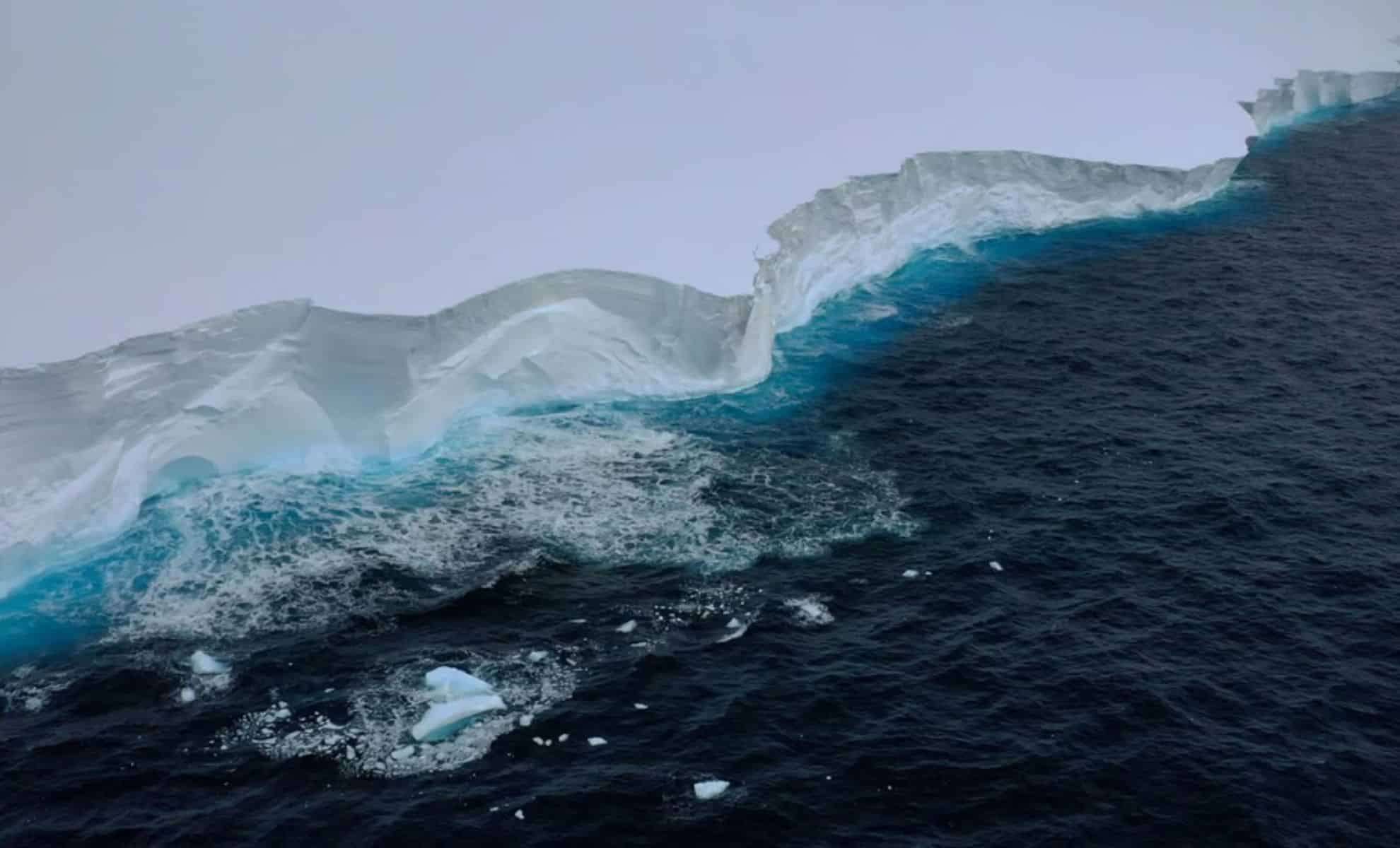
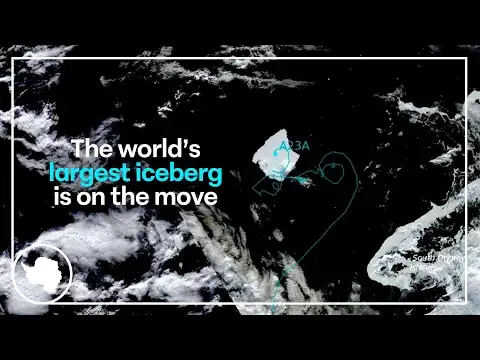
The Antarctic iceberg known as A23a, the largest of its kind on record, is making its way towards South Georgia, a remote island cluster renowned for its rich biodiversity in the southern hemisphere. Spanning twice the area of Greater London and weighing in excess of one trillion tons, this iceberg detached from the Filchner-Ronne Ice Shelf in Antarctica back in 1986 and remained largely immobile until it restarted drifting in 2023. It now advances through the Southern Ocean, nearing the South Atlantic archipelago.
Currently situated roughly 173 miles (280 kilometers) from South Georgia, concerns are mounting about A23a’s impact on the island’s unique wildlife populations, which include millions of penguins, seals, and rare marine creatures. The presence of such a massive iceberg could obstruct essential feeding routes for these species. “Icebergs are inherently dangerous. I would be extraordinarily happy if it just completely missed us,” remarked Simon Wallace, the captain of the government vessel Pharos, which operates around South Georgia.
The movement of A23a has been shaped by intricate ocean currents, notably Taylor columns — circular water flows generated by underwater topography that trap icebergs in rotating patterns. After months caught in this current, A23a broke free in December 2023 and began navigating through the so-called iceberg alley, a common pathway for icebergs traveling toward South Georgia.

Environmental Threats Posed by A23a’s Possible Grounding
Should A23a become lodged near South Georgia, the consequences for local ecosystems could be grave. The iceberg risks blocking routes used by penguins and seals to access feeding zones, recalling the disruption caused in 2004 by another enormous iceberg, A38-B, in the same vicinity. When animals lose access to food sources, competition intensifies and starvation threatens their survival, destabilizing the fragile ecosystem.
Beyond direct effects on animals, A23a’s gradual melting could significantly influence the surrounding marine environment. As it discharges vast amounts of freshwater combined with nutrients, this process can trigger phytoplankton blooms that underpin ocean food chains. Laura Taylor, a biogeochemist at the British Antarctic Survey (BAS), explains, “We know that these giant icebergs can provide nutrients to the waters they pass through, creating thriving ecosystems in otherwise less productive areas.”
Yet, due to A23a’s unprecedented size and origin, uncertainty remains about how it will affect nutrient dynamics and marine life. Taylor adds, “What we don’t know is what difference particular icebergs, their scale, and their origins can make to that process,” highlighting the necessity for ongoing research.
Factors Influencing the Iceberg’s Route
A23a’s trajectory toward South Georgia is governed by a mix of wind forces, oceanic currents, and its enormous mass. Having once rested on the seafloor for decades, its mobility has increased as it melts and detaches. Scientists are actively tracking how its path compares to other massive Antarctic icebergs.
“We are interested to see if it will take the same route the other large icebergs that have calved off Antarctica have taken,” noted Andrew Meijers, an oceanographer with BAS. “And more importantly, what impact this will have on the local ecosystem.” This journey through the Southern Ocean presents a rare chance to observe the dynamic relationship between melting ice and marine habitats, with implications for global climate patterns.
Though large icebergs typically release nutrients like iron into surrounding waters as they dissolve—stimulating phytoplankton production—the full environmental effects remain largely unknown. The exceptional size of A23a may intensify these impacts, producing both benefits and difficulties for sea life along its course.
South Georgia’s Rich Wildlife at Risk
South Georgia and nearby islets are celebrated for their remarkable biodiversity, often likened to that of the Galapagos Islands. The area supports millions of king penguins, fur seals, and albatrosses, all reliant on freely accessible seas for feeding. Should A23a become grounded, these animals could find themselves stranded on land, facing starvation and population drops that might take years to recover from.
Moreover, melting from A23a might alter the region’s water salinity and temperature, introducing additional stresses to marine life. While some species could benefit from the nutrient influx, others may struggle to adjust, leaving the long-term effects on South Georgia’s sensitive ecosystem uncertain. This makes the iceberg’s path a key concern for scientists and conservationists.
Anticipating A23a’s Impact
As A23a draws nearer, researchers and officials prepare for the potential consequences. Although its movement is governed by natural forces, this situation underscores the broader challenges posed by climate change and the far-reaching repercussions of melting polar ice.
The British Antarctic Survey has been meticulously monitoring A23a’s progress, gathering data to understand how glacier meltwater affects ocean ecosystems. This research aims to clarify how such enormous icebergs influence nutrient distribution, marine food chains, and carbon storage within the Southern Ocean.
Efforts currently focus on mitigating disruptions to wildlife and fisheries around South Georgia. While the final outcome of A23a’s voyage remains uncertain, its presence serves as a potent reminder of Earth's environmental interconnections and the pressing need to confront climate change at its roots.
This massive ice formation, a true frozen giant, continues its journey, providing both a warning about planetary vulnerability and a valuable opportunity to deepen scientific knowledge of our world's evolving natural systems.
- Categories:
- News











0 comments
Sign in to Comment