

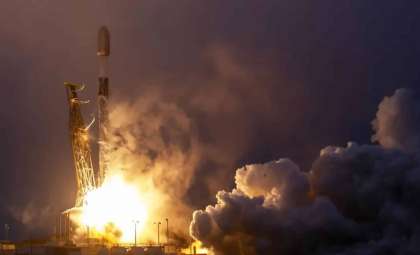
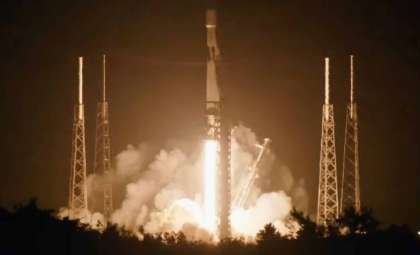
SpaceX has successfully conducted a pivotal static fire test on its Falcon 9 rocket, marking a key step toward restarting launches after a recent technical setback.
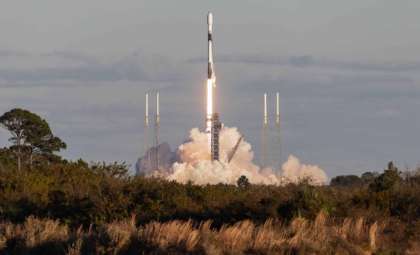
This engine test was carried out late on July 24 at Cape Canaveral’s Space Launch Complex 40 (SLC-40), forming a routine but essential part of SpaceX’s pre-launch safety and performance verification process.
Understanding the Falcon 9 Incident
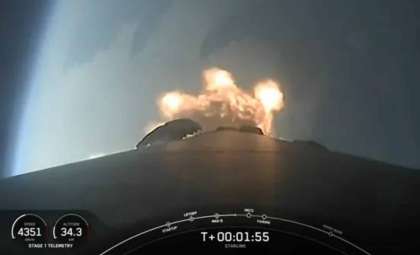
The Falcon 9 vehicle was grounded following an upper stage malfunction attributed to a liquid oxygen leak during the Starlink 9-3 mission on July 11.

This failure raised questions regarding the rocket's dependability, prompting an extensive investigation and implementation of corrective actions.
SpaceX’s technical teams have since worked meticulously to diagnose and rectify the fault, ensuring the Falcon 9’s readiness for safe relaunch. The latest static fire test is a critical checkpoint to verify that all adjustments have been effective and the vehicle's systems are functioning properly.
Significance of the Static Fire Test
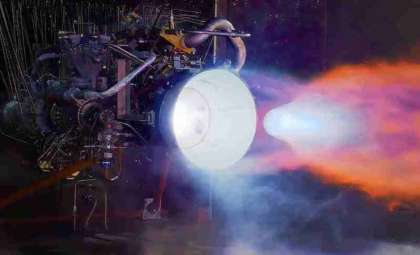
The static fire procedure is an integral pre-launch activity that confirms the proper operation of the rocket's engines and subsystems while it remains secured to the pad. The test involves firing the engines at full thrust for a short duration with the rocket fully loaded with propellant.
The July 24 static fire, approximately 10 seconds in length, supplied key information about the rocket's engine health and system readiness. The brief test is designed to validate engine ignition, performance consistency, and overall system stability.
Successfully completing this static fire places the Falcon 9 on course for flight recommencement, pending the conclusion of final regulatory evaluations. The data accrued from this test offer SpaceX engineers critical insights into engine function, fuel system behavior, and structural soundness to verify the earlier anomaly’s resolution.
Regulatory Oversight by the FAA
After the July 11 event, SpaceX submitted a request for a public safety determination to the Federal Aviation Administration (FAA) to enable resumption of launch operations. The FAA’s assessment focuses on reviewing safety-critical components, the incident's origin, and the sufficiency of implemented safety protocols.
The FAA explained, “When a public safety determination request is received, the agency evaluates safety-critical systems, the nature and consequences of the anomaly, the adequacy of existing flight safety analysis, safety organization performance, and environmental factors.”
This thorough evaluation process ensures that all potential hazards are addressed and the vehicle is safe to operate. While a final decision is pending, SpaceX remains optimistic that the corrective measures including the recent static fire test meet rigorous safety requirements.
Resuming Falcon 9 flights is essential not only for expanding the Starlink satellite network but also for supporting diverse missions such as crewed trips to the International Space Station (ISS). The FAA's ruling will significantly influence the pace of SpaceX's upcoming launches and impact the broader spaceflight sector.
Upcoming Launches and Prospects
The successful static fire milestone sets the stage for several important missions ahead. One key upcoming launch is the Starlink 10-4 deployment, which will add more satellites to SpaceX’s global internet constellation.
Moreover, SpaceX is preparing for the Crew-9 mission, which will ferry three NASA astronauts alongside a Russian cosmonaut to the ISS. This mission exemplifies ongoing NASA-Roscosmos collaboration amid geopolitical challenges and underlines SpaceX's burgeoning leadership in human spaceflight.
Another notable effort is the Polaris Dawn mission, led by entrepreneur Jared Isaacman, focused on free-flying Dragon operations involving scientific experiments and technology demonstrations. This mission is ambitious, aiming to conduct the first private spacewalk and to trial advanced laser communication technologies.
These forthcoming endeavors highlight SpaceX’s vital role in commercial space and international partnerships. The company’s rapid problem-solving and return-to-flight capability are crucial to maintaining mission schedules and advancing space exploration objectives worldwide.
- Categories:
- Astronomy ,
- News ,
- Space ,
- Aircraft







0 comments
Sign in to Comment