
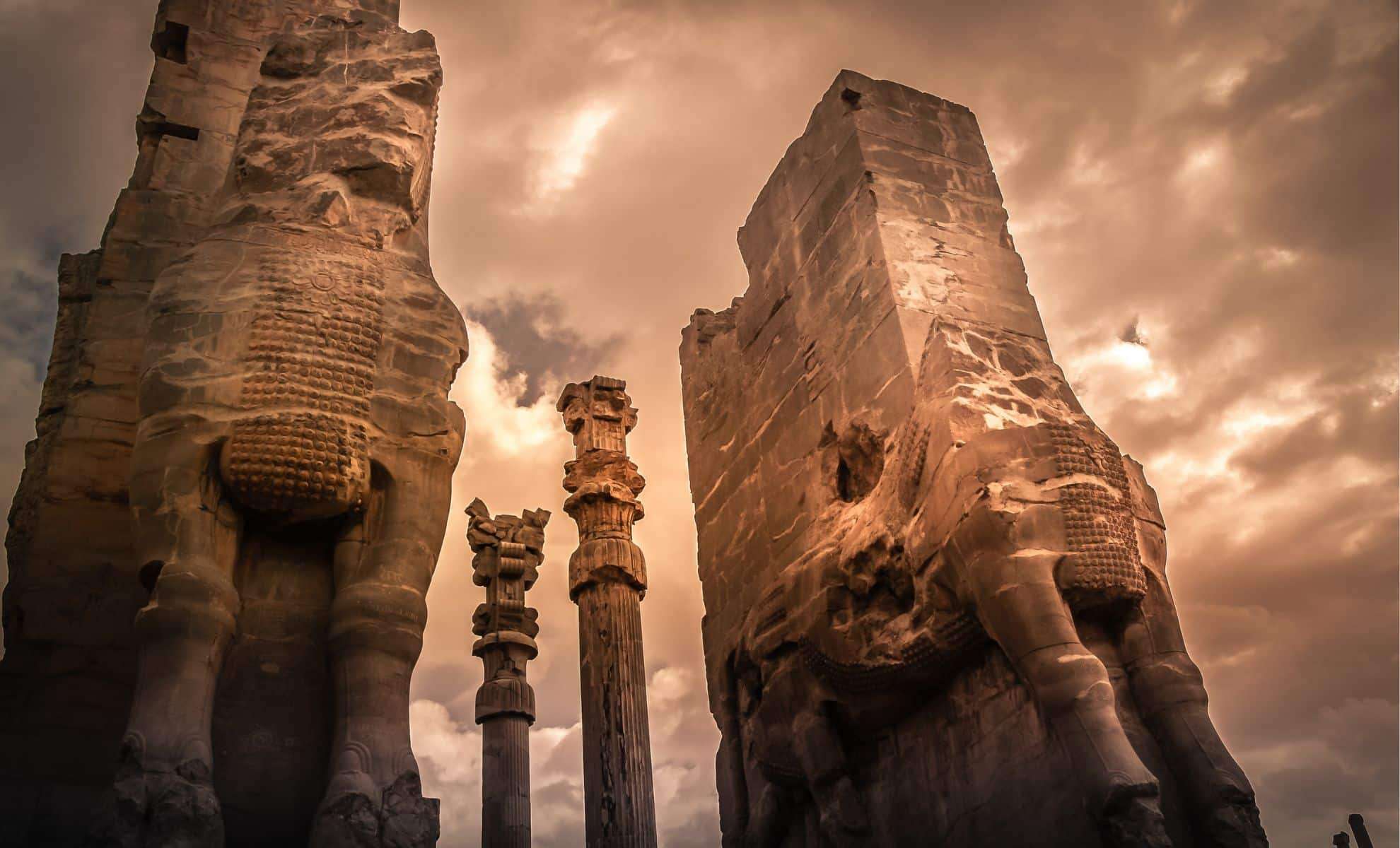
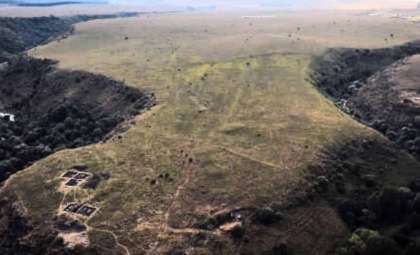
Hidden within the rugged terrain of southeastern Iran, researchers are uncovering remnants of a Bronze Age community that could challenge longstanding views about the origins of writing and urban development. These findings emerge from the dual mounds of Konar Sandal, situated near the Halil River in Kerman province — an area previously overlooked in the context of early civilizations.
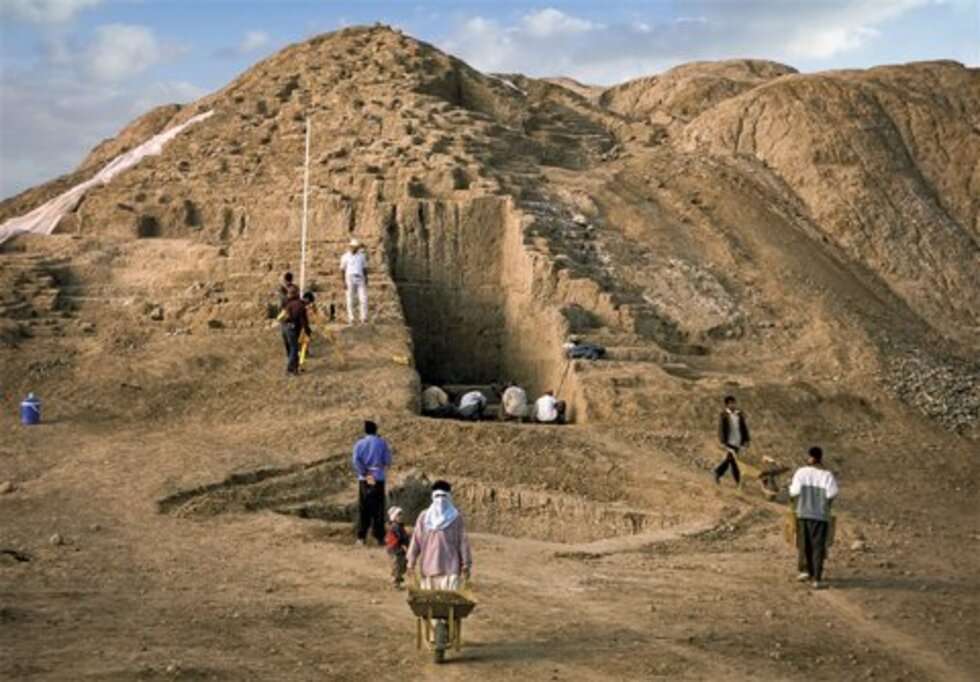
This ancient site, known as the Jiroft culture, lies near the contemporary city of Jiroft where unauthorized digs in the early 2000s revealed massive ruins. After nearly 20 years of methodical excavation, scholars have identified a sophisticated urban culture with designed infrastructure, elaborately decorated chlorite pottery, and indications of a writing system predating that of Mesopotamia.
Insights from the Halil Rud Region
According to ArkeoNews, initial artifacts from the location reveal a society adept in symbolic and artistic expression. Dark green chlorite vessels adorned with inlays of shell and hard stone feature hybrid creatures combining human and animal elements, alongside detailed architectural patterns. Some ceramics depict stepped temples similar to Mesopotamian ziggurats, often crowned by horn-like emblems associated with divinity in Babylonian lore.

Structures built from baked-earth bricks — including defensive walls and ritual platforms — highlight advanced planning. Excavations led by Iranian archaeologist Youssof Majidzadeh, who first linked Jiroft to the legendary Aratta kingdom in 2003, have uncovered what may have been a fortress and a religious center at the heart of the site.
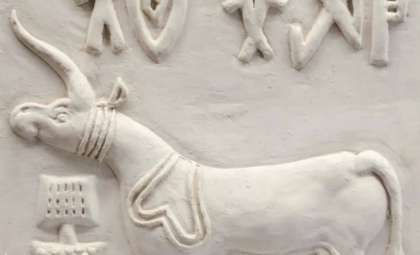
Stone artifacts shaped like “handbags,” previously considered ornamental, are now interpreted as standardized weights, indicative of a controlled economy. Relief artwork from the region features eagles and bulls, echoing themes from Sumerian myths such as the tale of Etana, the king who purportedly ascended to the heavens riding an eagle.
Potentially Older Writing than Sumerian Scripts?
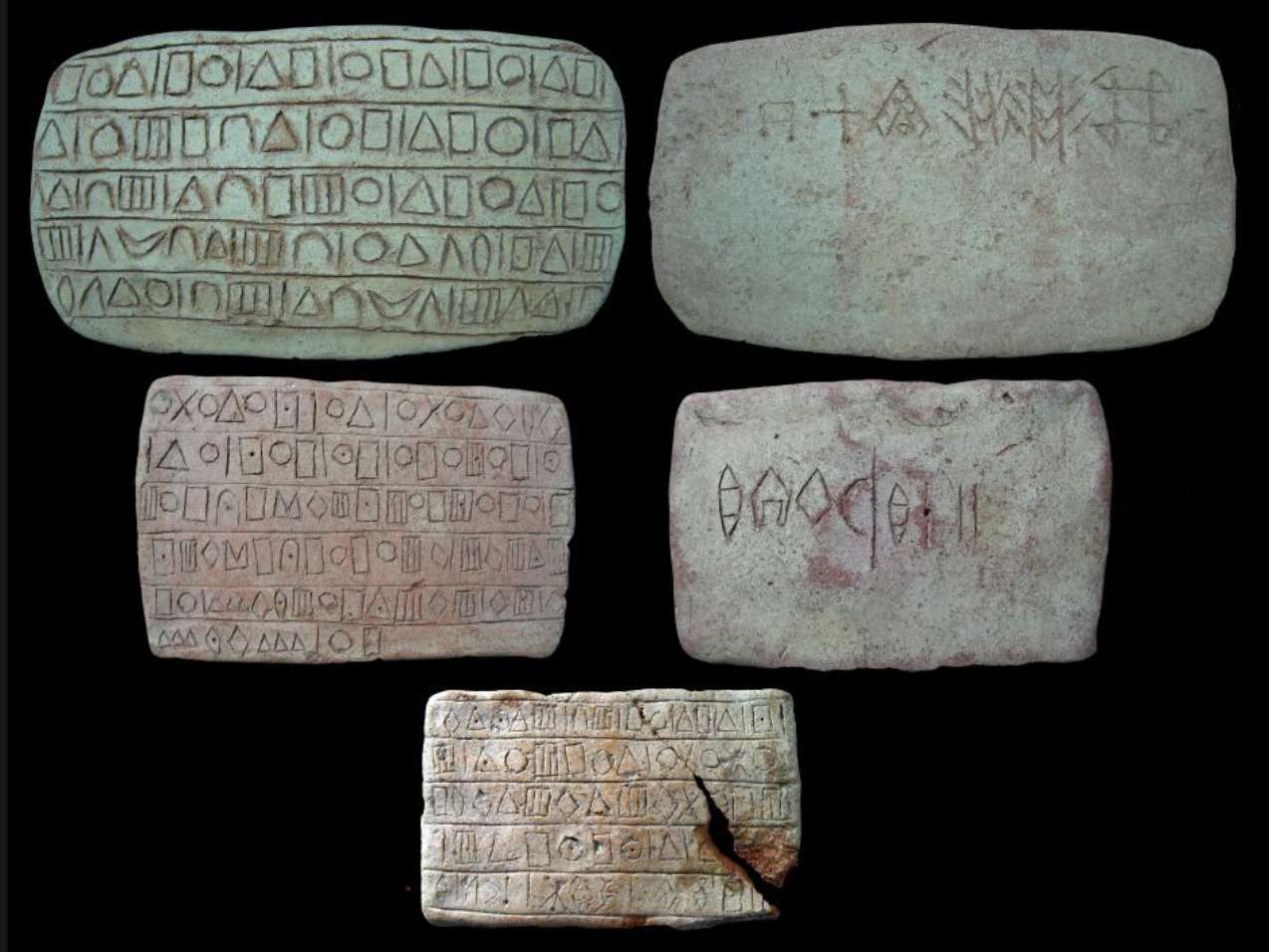
The aspects gaining worldwide interest involve the inscribed objects. Researchers have found stone and clay tablets with geometric symbols that might represent an early form of proto-Elamite script. These inscriptions date back to the fourth millennium BCE, preceding the earliest documented cuneiform from Uruk, long thought to be the birthplace of writing.
“The writing system discovered here may have played a pivotal role in the development of complex governance and urban centers,” Majidzadeh has noted. Although his proposal identifying the site as Aratta is not definitive, the repeated presence of these symbols across other Iranian plateau sites like Tepe Yahya and Tepe Sialk supports the idea that Jiroft was part of a broader early literate culture.
The possibility that Jiroft independently invented writing—or did so alongside Mesopotamia—remains under investigation, yet its significance is already evident. In 2014, François Desset characterized these inscriptions as the “Konar Sandal geometric tablets” in Iranica Antiqua, emphasizing their unique features and ambiguous links to Mesopotamian scripts.
Interregional Connections and Rivalries
The close cultural geographic positioning of Mesopotamian and Iranian groups has encouraged scholars to reevaluate regional interactions. Ancient Sumerian texts mention competing realms beyond the Zagros mountains, raising questions about whether Jiroft represented one of the eastern kingdoms involved in early territorial disputes.
Some researchers speculate it could be linked to the Marhashi kingdom, an identified foe of Sumer according to Mesopotamian sources. Others are wary of drawing direct connections. Artistic similarities may reflect shared motifs common across early civilizations rather than direct exchanges.
Nevertheless, the complexity of the Jiroft culture is undeniable. Third millennium BCE carved vessels now reside in museums like Geneva’s Musée Barbier-Mueller, while investigations in Kerman province continue uncovering evidence of a culture that left behind no written chronicles, only enigmatic symbols still under analysis.
A Civilization Reconstructed
Initially studied to protect ancient burial grounds from looters, the site now provides a rare lens into a society both interconnected with and distinct from Mesopotamian neighbors. Today’s palm groves along the Halil Rud River cover a terrain that, five millennia ago, may have hosted one of the earliest cities defined by monumental architecture.
The revelations from Jiroft are emerging piece by piece, tablet by tablet, exposing a region rich in symbolic language and urban intent — one that, if validated by further research, could prompt historians to rethink the exclusive role long assigned to Sumer, Uruk, and the fertile Euphrates Valley.
- Categories:
- News



0 comments
Sign in to Comment