
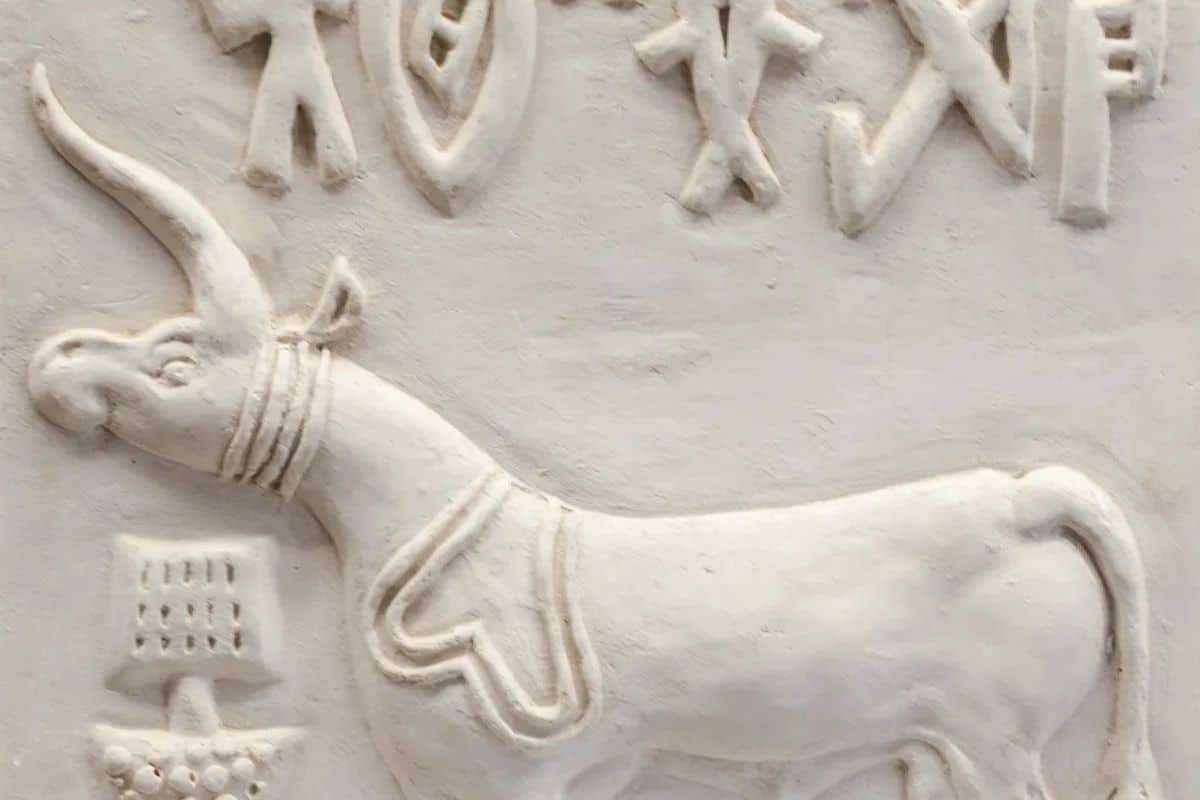
An enticing reward of $1 million has been announced for anyone who can successfully decode one of archaeology's most baffling mysteries: the Indus Valley Script (IVS). Originating over 5,000 years ago from one of the world’s earliest urban societies, this cryptic writing has defied attempts at interpretation by experts for decades. The grand prize, offered by Muthuvel Karunanidhi Stalin, Chief Minister of Tamil Nadu, seeks to encourage fresh ideas and innovative methods to unravel this Bronze Age riddle.
Understanding the Indus Valley Civilization and Its Writing
The Indus Valley Civilization, which thrived around 3,300 BCE across parts of today's northern India and Pakistan, was notable for its meticulously planned cities, sophisticated drainage systems, and extensive trade networks. At its peak, this civilization ranked among the largest of the ancient world alongside Mesopotamia and Egypt.
Despite its impressive advancements, many facets of the Indus Valley remain elusive—especially its script. The earliest known artifact inscribed with this script was found in 1875 by Sir Alexander Cunningham, founder of the Archaeological Survey of India. This small seal featured an engraving of a bull alongside a sequence of indecipherable symbols.

Thousands more similar inscriptions have since been discovered, each containing typically four to six symbols, often accompanied by depictions of animals like elephants, tigers, and rhinoceroses.
Unlike ancient writing systems such as Egyptian hieroglyphs, the IVS has yet to be found in any bilingual context similar to a “Rosetta Stone.” Furthermore, the brevity of these inscriptions offers limited material for researchers to analyze.
Why Decoding This Script Is Crucial
Unlocking the Indus Valley Script could reveal invaluable insights into the administration, trade, or everyday life of one of humanity’s first advanced civilizations. Many inscriptions appear on seals believed to have been used in commercial transactions, suggesting their significance in economic activities.
Beyond intellectual curiosity, deciphering the IVS would mark a landmark success comparable to breakthroughs like the cracking of Egyptian hieroglyphs or Mesopotamian cuneiform. Moreover, it could pave the way to solving other enigmatic scripts such as the Linear A characters from Minoan Crete, the mysterious Rongorongo glyphs from Easter Island, or the perplexing Voynich Manuscript.
A $1 Million Incentive to Inspire Breakthroughs
This substantial cash prize follows in the footsteps of earlier challenges aimed at solving ancient texts. In 2023, the Vesuvius Challenge awarded a similar sum for deciphering charred scrolls from Herculaneum, which were buried by the eruption of Mount Vesuvius in 79 CE. That contest was won within a year, largely thanks to innovative AI techniques that uncovered Latin portions of the scrolls.
Inspired by that success, Stalin’s competition aims to motivate a similar fusion of human creativity and cutting-edge technology. The reward is open to any individual or team capable of providing a convincing decipherment as judged by a panel of archaeological authorities.
The full terms of the prize are yet to be announced, but the announcement has already ignited enthusiasm among scholars, linguists, and history buffs alike.
Challenges Hindering the Decoding Process
Despite the allure of fame and fortune, unraveling the IVS remains an immense challenge. A major obstacle is the lack of any bilingual artifact to provide a comparative linguistic key. For Egyptian hieroglyphs, the discovery of the Rosetta Stone was critical because it featured parallel texts in multiple languages.
Moreover, the short length of the inscriptions complicates linguistic analysis. The longest known sequence contains just 17 symbols, while most examples feature fewer than six, severely limiting the ability to detect meaningful patterns.
Further complicating the puzzle, scholars debate whether the script encodes a full spoken language or instead represents a symbolic or proto-writing system. Some hypotheses propose it served more as a system of trade notation or rituals rather than conveying detailed linguistic content.
Combining Technology and International Efforts
Recent technological advancements offer new optimism for decoding the script. Artificial intelligence, in particular, has revolutionized the study of ancient writings. Machine learning models can analyze vast datasets, detect subtle patterns, and hypothesize linguistic structures that may elude conventional analysis.
International collaboration across disciplines is vital to solving this ancient enigma. Experts in linguistics, history, computer science, and cryptography worldwide might join forces to decode the script. Additionally, public participation through citizen science projects, similar to those that helped decipher the Vesuvius scrolls, could play an important role in energizing global engagement.
- Categories:
- News










0 comments
Sign in to Comment