

Recent marine excavation near Java’s shoreline has revealed fossilized remains that challenge previous beliefs about the roaming patterns of early human ancestors. Among the underwater sediment collected were two skull pieces attributed to Homo erectus, marking the first-ever discovery of this species’ fossils beneath the ocean separating Southeast Asian islands.
Evidence Points to Formerly Joined Islands
During a marine infrastructure project, underwater dredging unexpectedly recovered vertebrate fossils, including remains of Homo erectus. This discovery suggests that the present-day submerged area was once part of a contiguous landmass called Sundaland. Around 140,000 years ago, during the last ice age, lower sea levels connected islands like Java, Sumatra, Borneo, and Bali, forming elevated plateaus and expansive savannah lowlands.
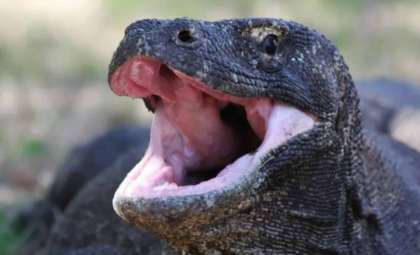
This exposed landscape, abundant in waterways and grasslands, allowed ancient humans and wildlife to traverse the region. Archaeologist Harold Berghuis from Leiden University, the study’s lead, notes that Homo erectus likely inhabited areas near “large perennial rivers, providing drinking water and terrestrial as well as aquatic food sources,” as detailed in Quaternary Environments and Humans. This environment supported diverse fauna, including crocodiles, river sharks, elephants, rhinos, and Komodo dragons.

Insights into Early Hunting and Tool Use
The region’s ecological variety offered Homo erectus a broad spectrum of dietary options. Scientists uncovered bones from river turtles and early bovines showing distinct cut marks and fractures, evidence of deliberate extraction of meat and marrow. These findings suggest advanced hunting and butchering strategies comparable to those used by Denisovans and Neanderthals elsewhere in Asia.
This discovery supports the idea that early humans may have exchanged skills across species, raising the likelihood of genetic interbreeding. Intriguingly, mussel shells recovered at the site bear signs of intentional alteration, implying that early hominins might have employed them as tools. Previous finds of incised shells in Java also point to early artistic or symbolic behavior, among the oldest known hominin engravings.
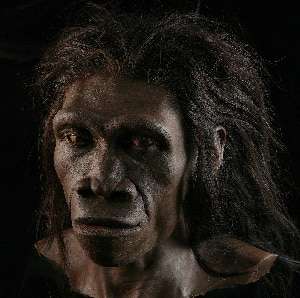
Homo Erectus: A Crucial Chapter in Human Evolution
The newly studied fossils highlight Homo erectus as a key evolutionary milestone. They possessed a more contemporary physique—characterized by larger frames, elongated legs, and shortened arms—which likely improved their mobility and hunting skill. Their brain volume, more than 50% greater than that of Australopithecus, reflects growing intelligence.
Berghuis explains that the Middle Pleistocene period—dating the site—was a time of “remarkable morphological variety and range expansion” among early human groups. The discovery of Homo erectus fossils on the ocean floor highlights their adaptability and extensive distribution during this transformative prehistoric epoch, before the eventual submersion of the land bridge due to rising sea levels.
- Categories:
- News








0 comments
Sign in to Comment