
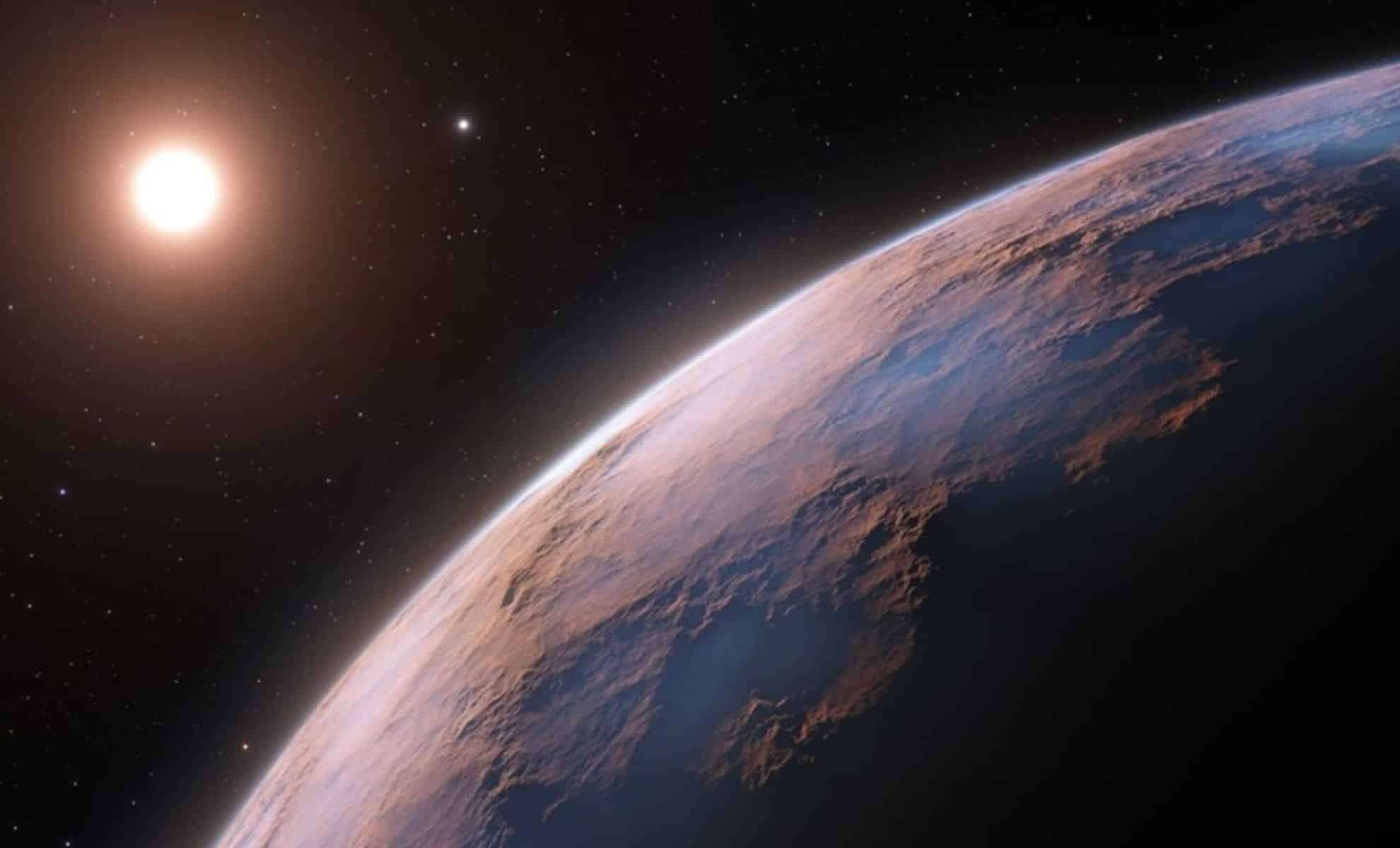
Emerging research points to the existence of a previously unknown planet lurking in the distant reaches of the Oort Cloud, well beyond the solar system’s familiar planets.
This intriguing finding has the potential to reshape our current views on solar system architecture and the mechanisms behind planetary evolution.
Unveiling the Oort Cloud and Its Hidden Planet Hypothesis
The Oort Cloud is an expansive spherical shell surrounding our solar system, populated with icy debris and rocky objects, located thousands of times farther from the Sun than Earth. It marks the furthest edge of the solar system and acts as a source region for many long-period comets. For decades, scientists have speculated about the existence of undiscovered planets residing in this remote zone.

Nathan Kaib, an astronomer affiliated with the Planetary Science Institute and co-author of the published research, has explored the possibility that our solar system might have captured a planet now orbiting within the Oort Cloud. These potential planets present a novel category that could deepen our comprehension of planetary formation.
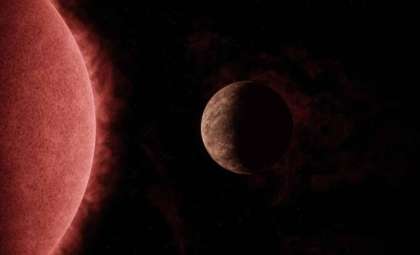
Should such a planet exist in the Oort Cloud, it would probably be an ice giant akin to Uranus or Neptune. Ice giants typically form in systems of multiple significant bodies due to their powerful gravitational effects. The existence of such a planet at this distance suggests it could have been pushed outward by gravitational interactions with massive planets like Jupiter and Saturn.
This idea fits with the notion that strong gravitational forces from giant planets can displace smaller worlds, sending them into distant orbits on the solar system’s fringes. Discovering such a planet would challenge existing theories and provide fresh perspectives on planetary system dynamics.
Attributes and Obstacles in Observation
Sean Raymond, the leading author from the University of Bordeaux’s Astrophysics Laboratory, explains that any planet substantially inside the Oort Cloud would follow a highly elongated orbit, quite unlike Earth’s nearly circular path. This eccentric trajectory reflects a complex history shaped by gravitational interactions with other massive objects in the solar system. The planet’s orbit would carry it extremely far from the Sun at times, making detection from Earth difficult.
Identifying such a remote planet is profoundly challenging because of its immense distance and faint visibility. The enormity of the Oort Cloud and the weak sunlight reflected by its components render direct imaging nearly impossible. MIT astronomer Malena Rice highlights that spotting a Neptune-sized world within the Oort Cloud can sometimes prove harder than finding planets located hundreds of light-years away. These detection hurdles emphasize the urgent need for enhanced observation tools and more sensitive instrumentation.
Scientific Impact and Prospects for Future Study
The potential discovery of a hidden planet in the Oort Cloud paves the way for exciting scientific investigations. Confirming its presence would broaden our understanding of the solar system and illuminate the mechanisms driving planetary formation and migration.
Investigating this planet’s properties could lead to improved theoretical models that describe how planets emerge and transform throughout cosmic time. Moreover, it might yield clues about the early solar system environment and the forces that orchestrated its present-day layout.
Progress in this field will depend on advancing detection methods capable of picking out faint objects within the Oort Cloud. Technological improvements in telescopes and observational strategies are essential for such breakthroughs.
In addition, computer simulations and dynamical modeling will offer deeper insights into the outer solar system’s complex interactions between massive giants and smaller bodies. International collaboration among observatories and space agencies will be critical to verify the existence of this elusive planet and unravel its characteristics in greater detail.
- Categories:
- Astronomy ,
- News ,
- Space




0 comments
Sign in to Comment