
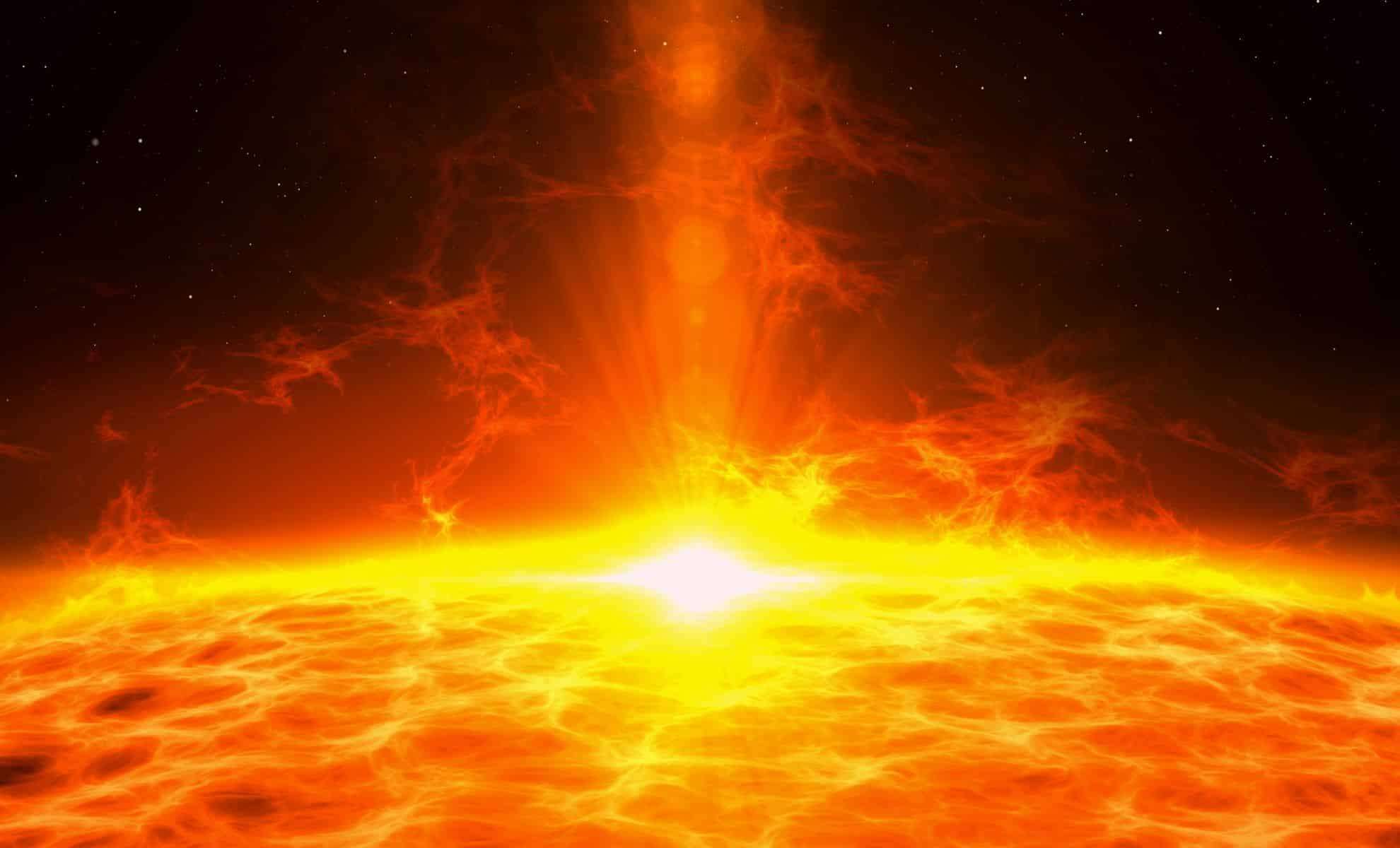
Dark matter remains one of the most perplexing secrets of the cosmos. Although invisible, it reveals its presence through the gravitational pull it exerts on stars and galaxies, yet its fundamental characteristics are still unknown.
Recently, an innovative study published in the Journal of Cosmology and Astroparticle Physics proposes a remarkable hypothesis: dark matter may have existed prior to the origin of the universe and could potentially never decay.
Defining Dark Matter
Dark matter is an enigmatic, unseen form of matter that constitutes roughly 27% of the universe’s total content. Though it cannot be detected through electromagnetic radiation, its effects on visible cosmic structures offer clear evidence of its presence.

Without dark matter, the structure and rotational dynamics of galaxies would differ drastically from what observations indicate. It neither emits nor absorbs light, rendering it entirely invisible to current observational technologies.
While candidates such as weakly interacting massive particles (WIMPs) are often proposed, alternative explanations include exotic particles like axions or sterile neutrinos.
Origins Beyond the Big Bang?
The study by an international team delves into the possibility that dark matter’s origin predates the universe’s known timeline. Published in the Journal of Cosmology and Astroparticle Physics, it suggests that dark matter might have formed in a primordial phase preceding the Big Bang.
This challenges traditional concepts of time and existence, implying that dark matter could be a relic of a previous cosmic epoch.
A crucial aspect of this research is the proposal that dark matter is potentially immortal, maintaining its form without decay unlike conventional matter.
Mechanisms Suggesting Dark Matter’s Primordial Presence
The notion that dark matter predates our universe has intrigued cosmologists for decades. This research adds significant weight by exploring the state of the cosmos before the Big Bang.
One theory describes early universe conditions as a “quantum soup“, from which dark matter could have emerged. This substance may have been instrumental in generating the gravitational forces essential for forming galaxies and stars.
If dark matter indeed existed prior to the Big Bang, it provokes further inquiry into its influence on the universe’s birth and early development.
Dark Matter’s Potential Immortality and Cosmic Significance
The study’s most astonishing insight is the suggestion that dark matter may be fundamentally indestructible. Unlike ordinary matter, which gradually disintegrates through processes like radioactive decay, dark matter could persist indefinitely.
This enduring nature positions dark matter as a key player in long-term cosmic scenarios. If immortal, it may be the last remaining material presence after all stars extinguish and galaxies merge.
Thus, dark matter might become the fundamental element observed in the far future, shaping our understanding of the universe’s ultimate destiny.
- Categories:
- Physics

0 comments
Sign in to Comment