

A recent investigation has explored the prospects of Earth's habitability if all life were absent, revealing unexpected insights. Released on the arXiv platform and covered by Universe Today, the findings suggest that our planet might sustain habitable conditions purely through geological dynamics, even without any living organisms.
Imagining a World Without Life: Is Earth Still Habitable?
We often link Earth's ability to support life with its rich biodiversity and biological activity, from tiny microbes to large mammals, which significantly influence environmental conditions. But if all life vanished, would Earth remain an inviting environment? This new research provides an intriguing answer: geological mechanisms alone could preserve Earth's habitability.
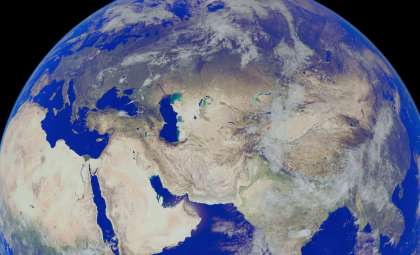
Presented on the arXiv preprint server, this study employed an advanced simulation to depict Earth devoid of life. Remarkably, the model was able to emulate 19 crucial measurements of Earth's pre-industrial state, such as temperature, atmospheric makeup, and oceanic chemistry, without including any biological factors. The work highlights how geological processes like volcanic emissions and carbon cycling can sustain liquid water and stable climates across geological time.

These revelations deeply impact our grasp of habitability on Earth and elsewhere, implying that planets can remain hospitable without active life forms, possibly increasing the count of worlds with life-supporting conditions across the cosmos.
Geological Forces as Guardians of Habitability
This study upends the traditional view that Earth's climate and atmosphere are regulated primarily by living systems. Historically, life has been considered vital in controlling atmospheric carbon and temperatures via biological processes such as photosynthesis. However, this new evidence argues that life might not be essential for a planet's habitability.
Geological activity alone, including the gradual cooling of Earth's interior and volcanic outgassing, can control atmospheric conditions. Volcanic eruptions emit gases like carbon dioxide and water vapor, which sustain the greenhouse effect that keeps surface temperatures suitable for liquid water. Such processes have operated over billions of years prior to life’s existence, suggesting similar geological mechanisms could uphold habitability on lifeless planets as well.
This insight urges a reassessment of how we identify life beyond Earth. Habitability alone might not suffice as evidence of life, a critical consideration for initiatives like NASA’s Habitable Worlds Observatory aiming to detect extraterrestrial biosignatures.
Implications for Exoplanet Exploration
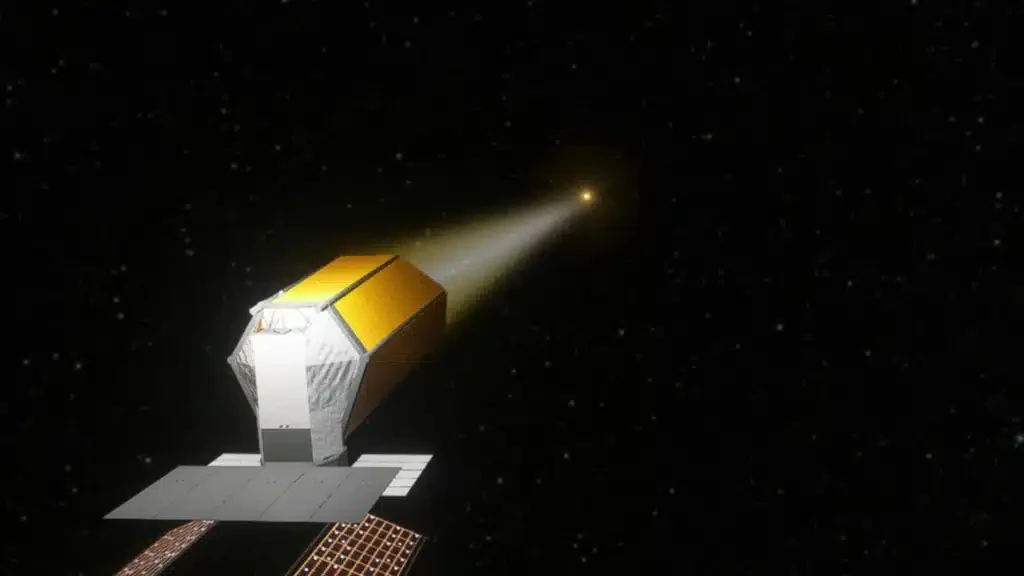
Revealing that planets might remain habitable absent life significantly impacts the search for extraterrestrial organisms. NASA's forthcoming Habitable Worlds Observatory (HWO) will pioneer imaging of Earth-like exoplanets orbiting stars similar to the Sun, focusing on atmospheric analysis for biosignatures. However, differentiating truly inhabited planets from simply habitable ones poses a challenge.
The study provides simulated observations of a lifeless Earth, granting an essential benchmark for interpreting exoplanet atmospheric data. According to the model, a planet could display Earth-like characteristics—stable atmosphere and liquid water indicators—yet lack life.
Consequently, scientists must approach future telescope readings with caution, as Earth-analog worlds might be geologically active but biologically barren.
Redefining What It Means to Be Habitable
Determining planetary habitability has long been central to astrobiology, with life viewed as crucial in stabilizing environmental conditions. This research flips that narrative, suggesting Earth once was, and could remain, habitable before life arose, maintained solely by geological phenomena.
This raises exciting prospects — could planets elsewhere already possess favorable conditions awaiting life's emergence? This conception of planets naturally prepared for life broadens the scope of habitability and challenges previous assumptions.
Scientists might need to revise current estimates, recognizing that water presence, temperature stability, and atmosphere do not necessarily indicate habitation but rather potential suitability for life now or in the future.
Origins of Life: Could It Arise on a Lifeless, Stable Planet?
One provocative question is whether life could develop on a planet that remains environmentally stable without biological processes. If geological activity preserves habitability for billions of years, might that offer a window for life to originate?
While the study doesn’t directly address life’s emergence, it highlights important avenues for origin-of-life research. Earth's experience shows life began once conditions were suitable, but this model implies that life isn’t required to produce those conditions. A stable, life-supporting environment sustained geologically could foster life when circumstances become favorable.
This concept encourages a fresh framework for understanding life’s beginnings, where stable planetary environments may naturally facilitate life’s appearance rather than life fundamentally shaping planetary habitability.
- Categories:
- News






0 comments
Sign in to Comment