
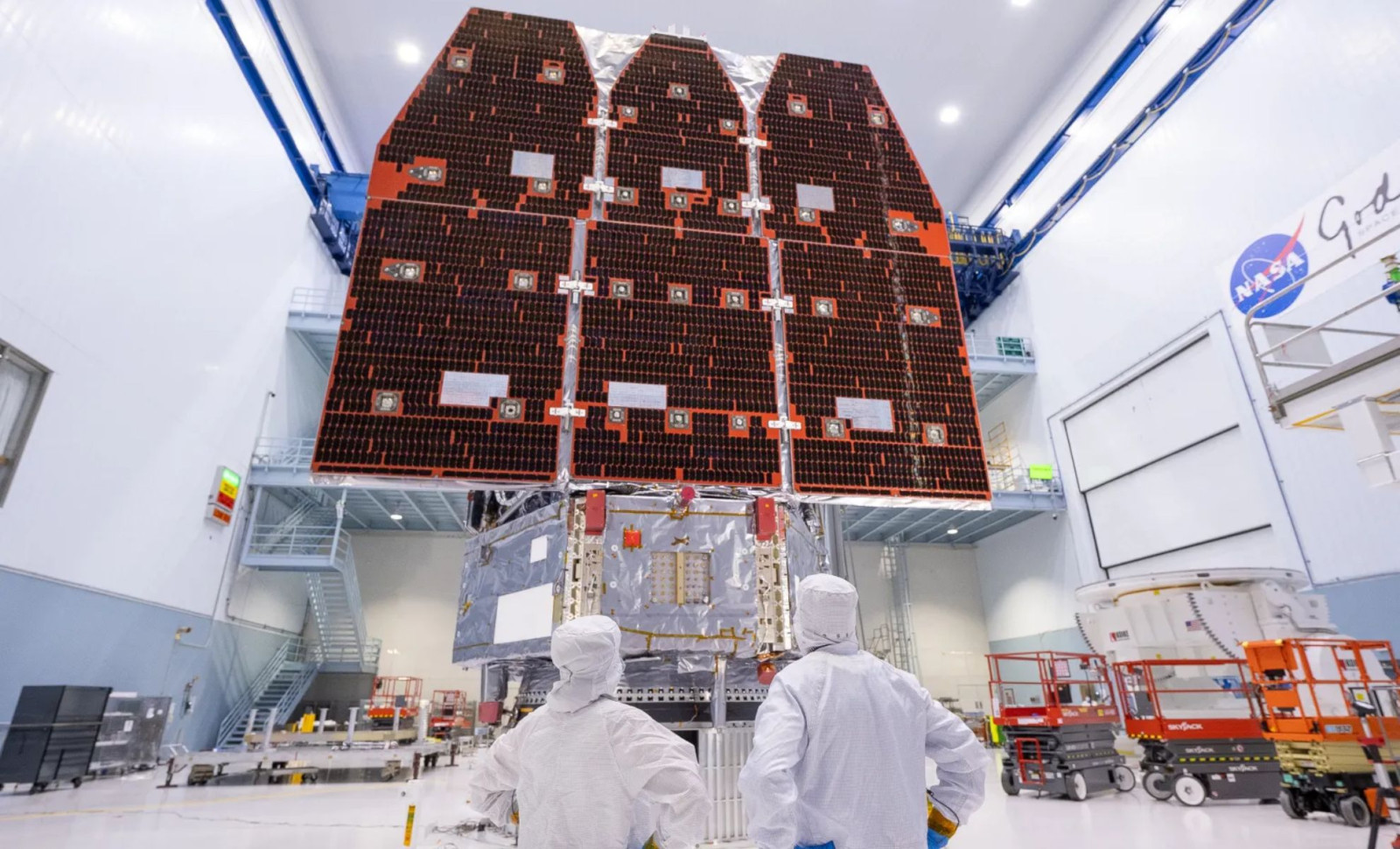
NASA is gearing up for a pivotal chapter in space exploration, as the Nancy Grace Roman Space Telescope approaches its final pre-launch phase alongside the upcoming SpaceX Crew-13 mission. The agency recently revealed media participation opportunities tied to these initiatives, signaling a fresh wave of advancements in both astronomy and human spaceflight. This update underscores NASA's coordinated efforts to finalize preparations for missions set to depart from Earth soon.
NASA Announces Media Access and Launch Readiness
In an official statement from NASA, journalists have been invited to cover the launch events surrounding the Roman Space Telescope and Crew-13. These invitations ensure extensive public engagement as the agency marks key steps in these groundbreaking missions.
The Nancy Grace Roman Space Telescope honors NASA's pioneering chief astronomer who laid the groundwork for modern space-based astronomy. Equipped with a primary mirror similar in scale to that of the Hubble Space Telescope, Roman is engineered to capture an expansive view of the cosmos using state-of-the-art instruments.

NASA's announcement places the telescope within a comprehensive timeline involving rigorous testing, transit logistics, and launch protocols essential for its deployment. Throughout these stages, interdisciplinary teams of experts contribute to ensuring the spacecraft can withstand space's harsh conditions and deliver on its scientific goals.
Public enthusiasm for next-generation space observatories is rising, as highlighted in NASA’s communications. The scientific community anticipates that Roman’s vast sky surveys will complement and extend insights obtained from existing observatories.

Roman Telescope to Probe Deep Cosmic Structures
The Roman Space Telescope is tailored to observe vast stretches of the universe in infrared light, enabling astronomers to investigate celestial phenomena invisible to telescopes that use visible light. Its scientific agenda targets fundamental questions about dark energy and the large-scale organization of matter over cosmic time.
A significant objective is to produce comprehensive cosmic maps. By cataloging immense numbers of galaxies and stellar bodies, Roman will aid in uncovering how cosmic formations originated and transformed throughout billions of years, offering fresh perspectives on the universe’s evolutionary history.
Additionally, the observatory will enhance the search for exoplanets beyond our solar system. Utilizing specialized observation methods, Roman will explore distant planetary systems, broadening our understanding of the diversity of worlds circling other stars.
Distinct from many predecessors, Roman’s ability to conduct large-area surveys enables it to capture extensive cosmic data sets, generating valuable resources for the global astronomical community.
SpaceX Crew-13 Demonstrates Progress in Human Spaceflight
Nasa’s commitment to crewed space missions continues through collaborations with commercial spaceflight providers. The SpaceX Crew-13 flight exemplifies this partnership in supporting transportation to the International Space Station, facilitating ongoing scientific and technological investigations.
These crew flights are critical for conducting experiments, maintaining orbital infrastructure, and testing innovations that will pave the way for future deep space missions. The space station remains a vital environment for studying human and system performance in microgravity.
By working with companies such as SpaceX, NASA has transformed astronaut transport to low Earth orbit, embracing a model where private industry plays a significant role in national space exploration ambitions.
The dual advancement of missions like Roman and Crew-13 illustrates complementary facets of space exploration: robotic probes broadening cosmic knowledge and crewed flights developing capabilities essential for ventures further from Earth.
Initiating a New Era in Cosmic Exploration
The deployment of the Roman Space Telescope represents a milestone for contemporary astronomy. Upon activation, the telescope is poised to deliver an unprecedented volume of cosmic observations likely to influence astronomical research for decades.
NASA’s sustained funding of space science reflects the ongoing quest to address profound unanswered questions, from the expansion rate of the universe to uncovering distant planetary systems, enriching humanity’s understanding of the cosmos.
As final preparations advance, the mission moves closer to revolutionizing large-scale cosmic observation, with Roman’s surveys expected to yield discoveries that will reshape current concepts about galaxies, planets, and the forces driving the universe’s evolution.
- Categories:
- Nasa








0 comments
Sign in to Comment