

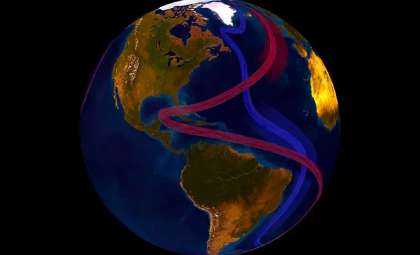
The Atlantic Meridional Overturning Circulation (AMOC), popularly known as the "great ocean conveyor," is essential in managing Earth’s climate systems. This intricate network of currents, including the Gulf Stream, transports warm, saline waters from tropical regions toward the North Atlantic. Upon cooling and increasing in density, this water descends and journeys southward at depth, maintaining a continuous circulation loop.
The AMOC’s importance is immense:
- It moves an enormous amount of heat, comparable to boiling over a trillion kettles
- Accounts for about 25% of the heat transferred to the Northern Hemisphere
- Supports the relatively temperate climate experienced in Northwest Europe
- Limits the expansion of Arctic sea ice past Norway
Beyond regional effects, a slowdown in the AMOC could displace global climate zones, including pushing the equatorial rainfall belt southward. Such a shift would greatly influence worldwide weather patterns, causing changes in tropical precipitation, prolonged droughts, flooding events, and more intense storms across Europe.

Recent research indicates the AMOC might be nearing a tipping point. A failure of this Atlantic circulation could spark dangerous cooling in some regions, while others face accelerated warming and rising sea levels. The broad-reaching ramifications of an AMOC collapse could drastically reshape Earth’s climate in ways we are only beginning to comprehend.
Signs of AMOC slowdown and future outlook
Scientists utilize various techniques to track the strength and changes of the AMOC. Although direct instrumentation began in 2004 with the RAPID monitoring system across the Atlantic, indirect clues reveal alarming trends:
- A roughly 10% decline in AMOC intensity since 2004
- Cooling of sea surface temperatures near southern Greenland
- Increase in salinity levels in the South Atlantic
- Historical climate records showing unprecedented weakening over the last 1,600 years
Climate projections suggest a 30-50% AMOC weakening by century's end assuming current greenhouse emissions persist. Yet some experts warn the system could collapse or drastically weaken within decades, even with moderate warming.
The "salt feedback" mechanism plays a vital role in potential AMOC collapse. As the circulation slows, Atlantic surface waters become less saline, prompting further weakening in a self-reinforcing cycle. This feedback may be intensified by continued melting of the Greenland ice sheet.
Global impacts from AMOC disruption
The fallout from an AMOC breakdown would be felt worldwide, with major effects including:
These transformations would have severe repercussions for farming, water availability, and human settlements, potentially escalating energy use for heating and stressing infrastructures.
The collapse could also worsen other climate challenges. Glaciers in European ranges like the Alps and Pyrenees are at risk of disappearing within years, a process hastened by Atlantic current disruptions. Furthermore, ocean noise pollution worsened by climate change could further endanger marine life already stressed by shifting currents and temperatures.
Addressing threats and strengthening adaptation
The potential for AMOC failure highlights the urgent need for immediate climate mitigation efforts. Essential actions include:
- Swift reductions in greenhouse gas emissions
- Greater investment in sustainable energy technologies
- Developing adaptive measures tailored to vulnerable areas
- Enhancing the accuracy and scope of climate monitoring
- Encouraging global collaboration on climate policies
Building resilience is key to lessening the impact of an AMOC collapse, requiring reinforced infrastructure, diversified food and water supplies, and improved early warning systems for extreme weather.
As humanity confronts the possibility of fundamentally altered climate dynamics, prompt and decisive action remains critical. The fragile balance sustained by the Atlantic’s ocean circulation underscores the profound interconnectedness of Earth’s systems and the pressing risks posed by human-driven climate change. Acting boldly today can protect the environment vital to life on our planet and ensure a more secure future for coming generations.
- Categories:
- Climate change






0 comments
Sign in to Comment