
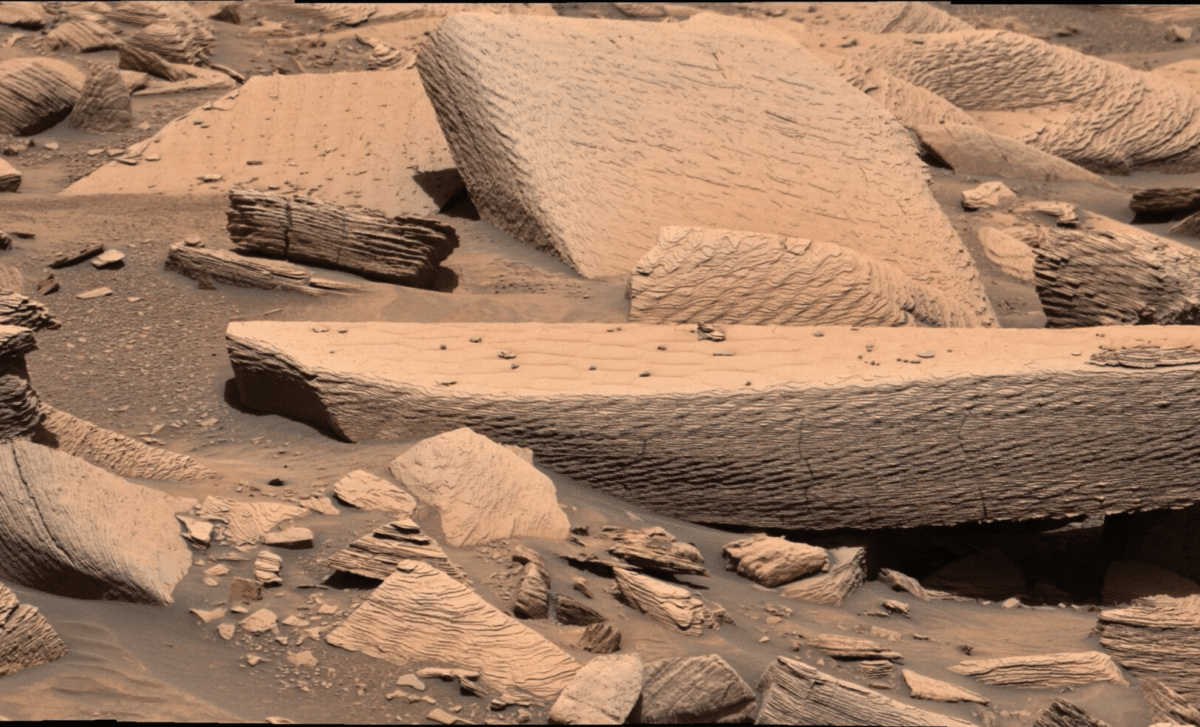
During a routine exploration, NASA’s Curiosity rover has identified the earliest known physical evidence of a prehistoric Martian sandstorm. This discovery offers an exceptional view of Mars’ atmospheric conditions over 3.5 billion years ago. The results, detailed in the journal Geology, indicate that ancient Mars once had a thick enough atmosphere to generate intense winds capable of transforming its surface significantly.
Uncovering Rare Geological Patterns in Gale Crater
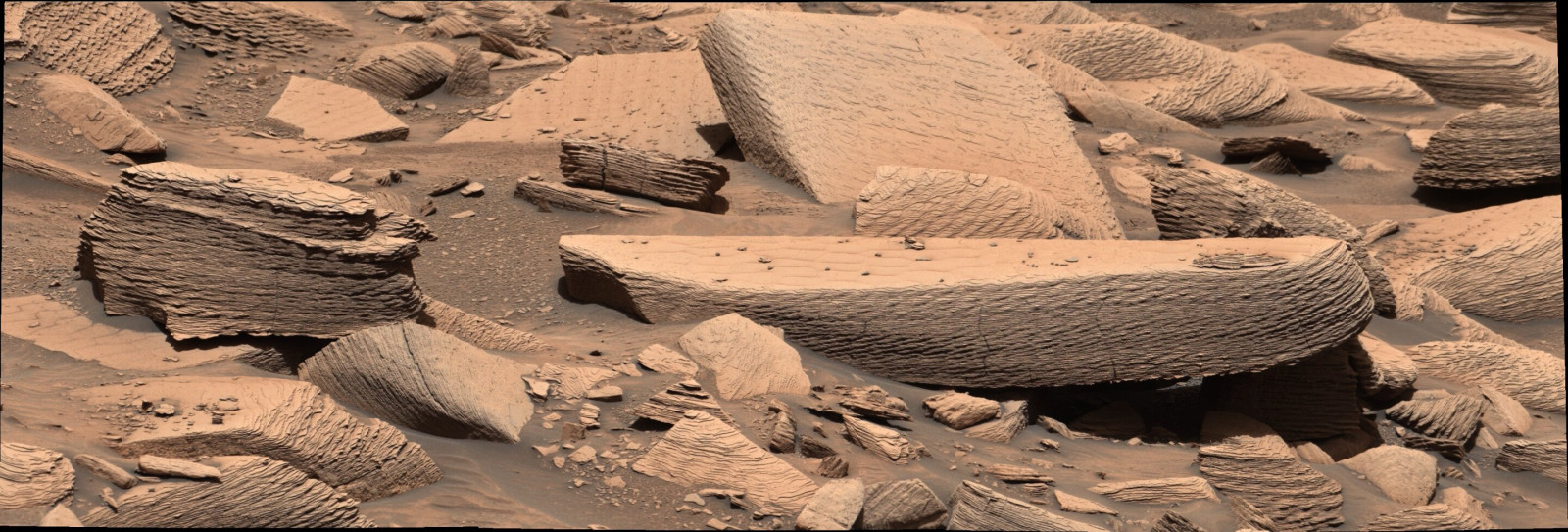
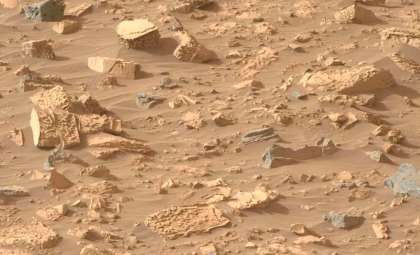
The key finding focuses on distinctive ripple patterns preserved in sedimentary rock within Gale Crater. These features, termed supercritical climbing wind ripples, form only under powerful, high-speed winds that rapidly move large amounts of sand. Such formations are extremely uncommon on Earth and had never before been documented on Mars. Their existence offers a unique window into a short-lived but fierce weather event from billions of years ago, capturing the storm's dynamics in remarkable clarity.
“Everybody knows that the wind blew on Mars. There was an atmosphere, so it must have moved, forming breezes and gusts, and so there must have been storms, too. But this is the first definitive evidence that we’ve found of such a sandstorm,” says Steven Banham, a planetary geologist at Imperial College London and lead author of the new study. “While it does not contribute to proving the existence of life on Mars, it helps paint a rich picture of the ancient surface environment.”
Add Cosmo Herald as a Preferred Source

These formations appear as delicate, finely wrinkled layers mere millimeters thick, yet they reveal a powerful story about past environmental conditions. They point to a sudden, high-energy event occurring over minutes to hours rather than long-lasting climate changes. The evidence suggests Mars was once a dynamic world, shaped by robust and occasionally violent atmospheric phenomena.
An Unexpected Find Amidst Routine Exploration
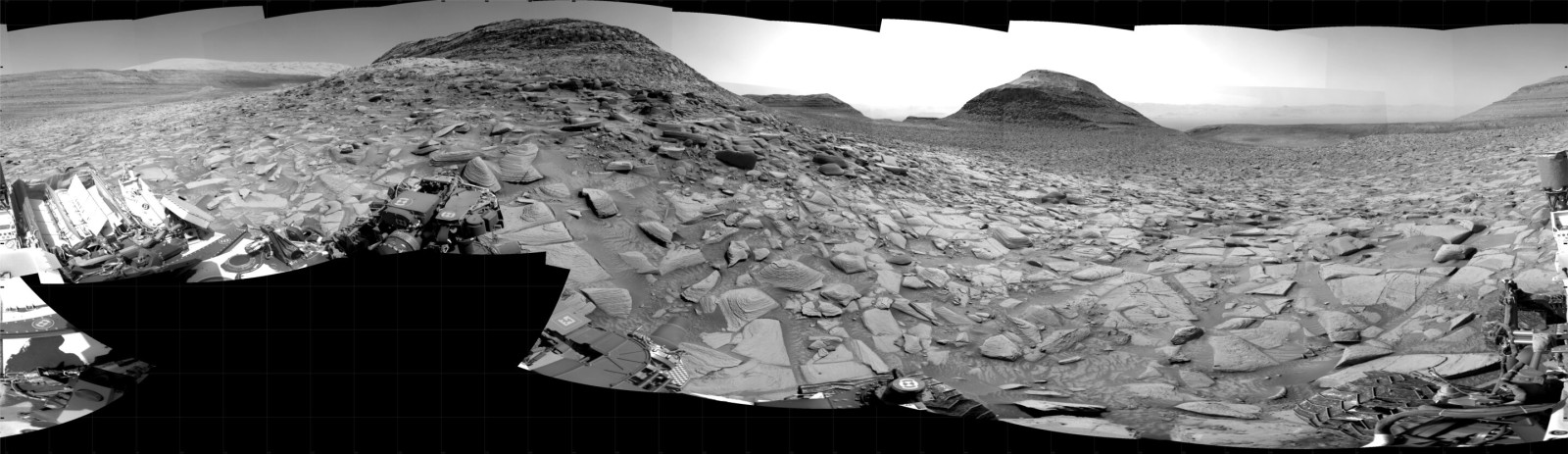
This insight was not the product of a deliberate search but emerged from careful examination of rover data during everyday operations. While Curiosity navigates the Martian surface, scientists scrutinize panoramic images collected after each drive. In one such set, subtle textural irregularities caught their attention, prompting further investigation using the rover’s MASTCAM system. This high-resolution imaging revealed the distinctive ripples for the first time.
“This was very serendipitous. We weren’t really looking for these deposits, and then, lo and behold, we drove around the corner and found them,” says Banham. “We were lucky that we had just the right people on shift that recognized them.”
Such discoveries highlight the critical role of human insight combined with robotic technology. Detecting these rare geological features demanded not only sophisticated equipment but also expert interpretation. This finding underscores how serendipity often plays a key role in exploration, advancing our comprehension of Mars even years after the rover’s arrival.
Insights into Mars’ Former Denser Atmosphere
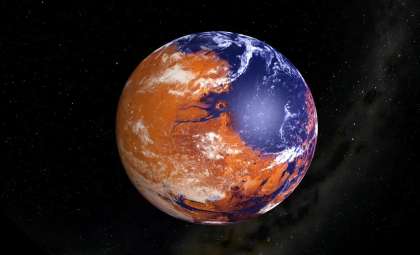
These ripple formations carry significant clues about the composition of Mars’ ancient atmosphere. Today, Mars’ thin layer of mostly carbon dioxide exerts insufficient pressure to mobilize sand grains in a similar manner. The newly detected patterns imply that atmospheric conditions in the distant past were far denser and more dynamic.
“These deposits in themselves indicate that the atmosphere was denser at the time than it is now, to form these structures,” says Banham.
A thicker atmosphere would have allowed stronger winds and possibly contributed to more stable surface water bodies, supporting prior theories that early Mars resembled Earth’s environment more closely. This interpretation fits with other geological evidence from Gale Crater, such as traces of ancient river systems and lake sediments. The study, featured in Geology, offers a vital event-scale insight, complementing longer-term climatic data.
Pursuing Signs of Ancient Rainfall
Although the presence of wind-driven features is now confirmed, the search continues for clear signs of another critical element in Mars’ climate history: direct evidence of rainfall. While rover and orbiter missions have identified valleys and sediment deposits indicating flowing water, physical proof of raindrop impacts remains elusive. Such findings would decisively demonstrate precipitation and deepen understanding of Mars’ ancient water cycle.
“People have been looking for those since Pathfinder and the MER rovers, and nobody’s seen them,” says Banham, referring to early Mars missions. “It must have rained, as we’ve seen evidence of rivers and lake deposits. But we’ve not got that definitive evidence of rain until we see rain impacts. That would be magic if we found those.”
The recent ripple discovery raises hopes that other rare geological records are still waiting to be uncovered. Ongoing investigations by Curiosity and forthcoming missions may continue to reveal fleeting moments encoded in rock, illustrating Mars as a once vibrant and actively changing world. The Red Planet’s surprises lie in both its sweeping landscapes and in delicate features that chronicle vanished ancient events.
- Categories:
- Nasa




0 comments
Sign in to Comment