
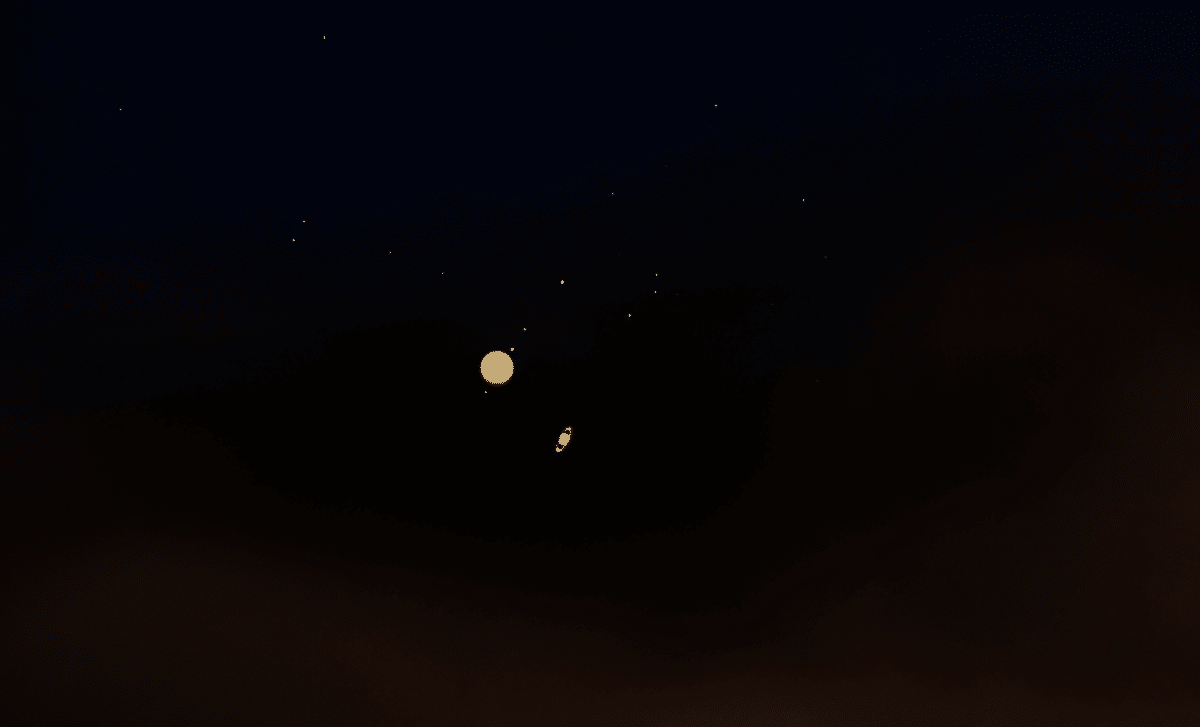
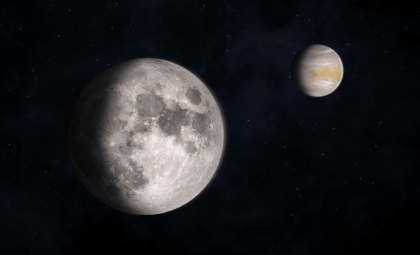
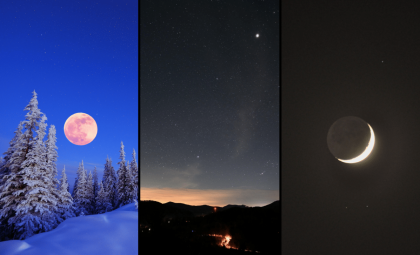
On January 18, 2026, the new moon promises a particularly dark and pristine sky, ideal for stargazers aiming to glimpse Jupiter, Saturn, and prominent winter constellations. As noted by Space.com, the moon's absence during this time enhances visibility for both casual viewers and astronomy aficionados to explore star clusters, distant galaxies, and our galaxy’s luminous spiral arms.
The Perfect Night for Planet Observation
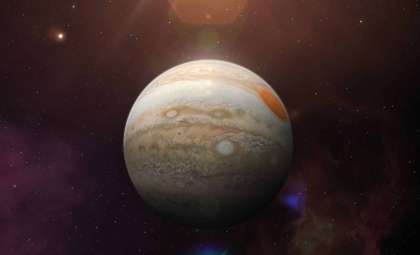
At 2:52 p.m. EST, the moon aligns precisely with the sun, creating exceptionally dark skies. On this evening, Jupiter and Saturn will appear prominently near opposite horizons. Saturn will present itself low in the southwestern sky shortly after dusk, while Jupiter will rise in the east around the same time. Jupiter's brightness ensures it remains visible throughout the night, peaking near 11:23 p.m. EST, and will set close to daybreak.
From locations across North America, including cities like New York and Denver, viewers can expect similar viewing experiences, albeit with minor timing variations due to longitude differences. Meanwhile, for observers in the Southern Hemisphere such as Santiago, Chile, the longer daylight hours during austral summer delay the planets’ appearance until later at night. Jupiter will become visible in the northeast by approximately 10 p.m. local time, shining brightly amid southern star formations.

Detailed timing and positional information from Space.com helps enthusiasts prepare to make the most of this exceptionally clear and dark astronomical event.
Winter’s Star Patterns Shine Bright
The lack of lunar illumination allows winter star patterns to appear in sharp contrast. Early evening skies will showcase constellations such as Orion, Gemini, Taurus, Canis Major, and Auriga, each telling tales through their glittering stars. The brilliant Sirius, the night sky’s most luminous star in Canis Major, gleams low in the southeast.
Positioned above Orion’s iconic three-star belt are the bright, contrasting stars Betelgeuse and Rigel, marking the hunter’s shoulder and foot. Nearby lies the Orion Nebula, a faintly glowing stellar nursery visible under dark skies away from urban light pollution. Upward, Taurus’s red star Aldebaran and the delicate Pleiades cluster contribute to a rich celestial display.
Northern Hemisphere observers enjoy this vivid winter vista, while those in the Southern Hemisphere can admire constellations like Carina, Vela, and Puppis, remnants of the legendary ship Argo, alongside the ever-visible Southern Cross (Crux), which remains above the horizon near the latitude of Santiago.
Exploring Deep Sky Phenomena
The new moon’s darkness doesn’t just enhance planet viewing but also reveals faint celestial wonders. In areas away from city lights, observers can distinguish nebulas, star clusters, and the Milky Way’s intricate dust structures. Even with simple binoculars, details within the Pleiades cluster, the Hyades star grouping, and the glowing gas of the Orion Nebula become accessible.
Such ideal viewing windows are uncommon. With inner planets Mercury, Venus, and Mars positioned too close to the sun this month, astronomy enthusiasts should focus on Jupiter, Saturn, and the surrounding constellations. Novices can take advantage of this time to identify patterns in the night sky before moonlight returns and diminishes visibility.
A Worldwide Celebration of the Night Sky
Whether under the chilly New York skies or the warm evenings of Santiago, the January 18 new moon offers a unifying celestial event across both hemispheres. The seasonal contrast enhances the experience, as viewers from north and south witness Jupiter and Saturn lighting up distinct regional nightscapes.
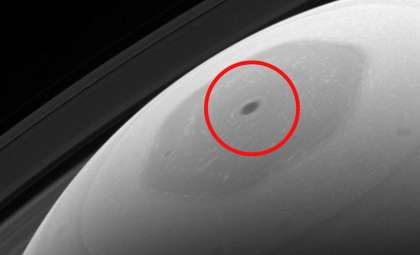
For telescope owners, the night yields spectacular views. Saturn’s rings remain observable, and Jupiter’s four Galilean moons can be seen orbiting vividly. Astrophotographers will enjoy near-ideal conditions for long exposures, capturing the rich colors of the Milky Way stretching across the pitch-black sky.
- Categories:
- News





0 comments
Sign in to Comment