
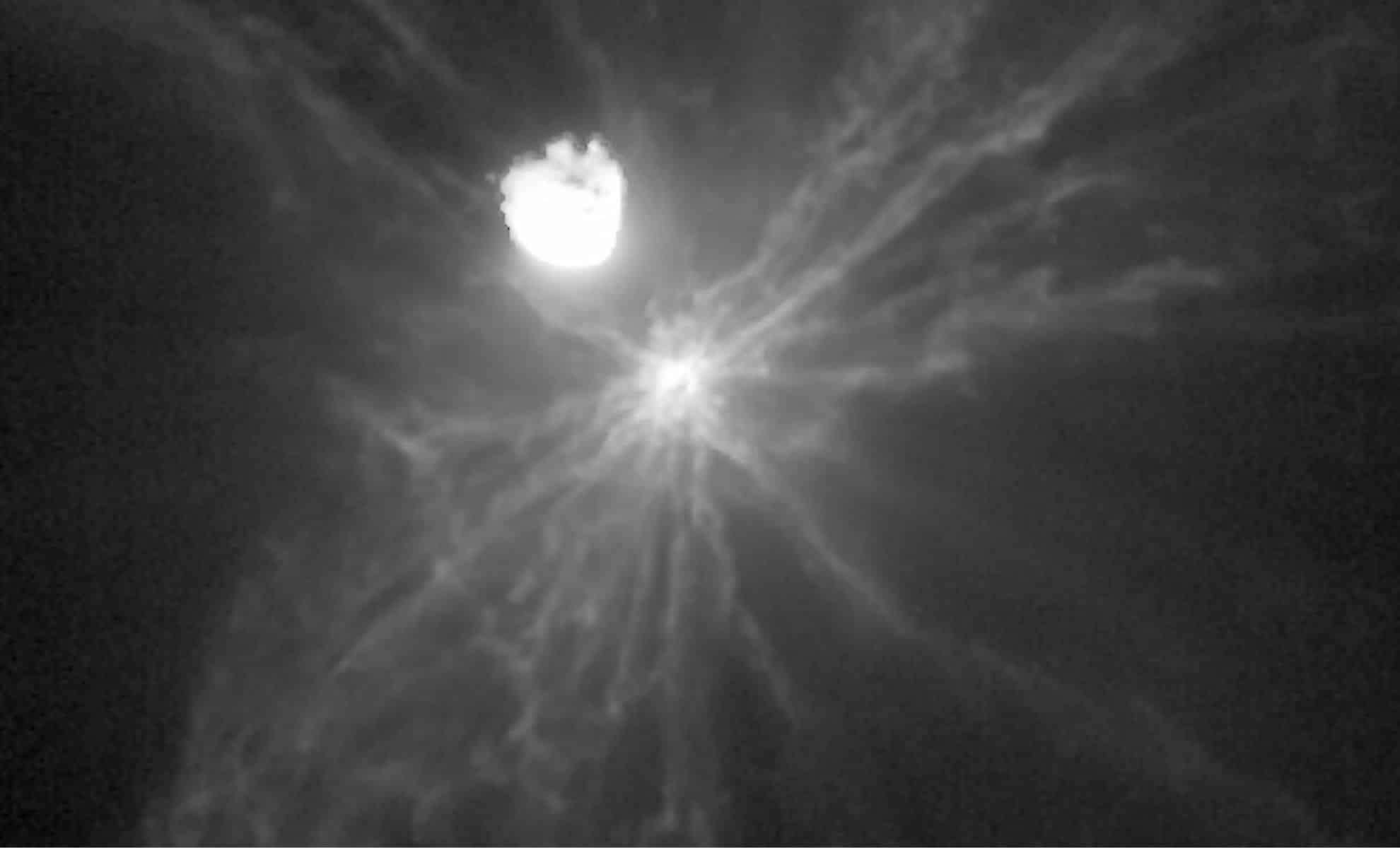
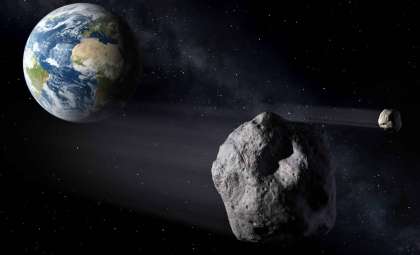
NASA’s DART mission, which deliberately struck the asteroid moon Dimorphos in September 2022, did more than just shift the asteroid’s trajectory. The collision sent a surprising flood of boulders hurtling away at unexpected velocities, carrying momentum exceeding that of the spacecraft itself. This new debris pattern from the kinetic impact introduces potential challenges for upcoming planetary defense initiatives, as revealed by a recent study led by scientists at the University of Maryland. Published on July 4, 2025, in the Planetary Science Journal, the research emphasizes that asteroid deflection missions must factor in complexities beyond just the spacecraft’s direct hit.
Unexpected Boulder Ejections: Clusters and Velocity Characteristics
The investigation found that the expelled boulders were not dispersed randomly but instead concentrated into two distinct groups. This pattern introduces new questions about how impacts reshape an asteroid’s surface and its surrounding debris. Farnham explained, “The boulders couldn’t be mapped as random; rather, they grouped into two clear clusters with gaps in-between, indicating unknown mechanisms at work.” This pattern implies that the impact triggered localized ejection zones on the asteroid.
Tracked speeds of these ejected rocks reached as much as 52 meters per second (116 miles per hour), with sizes ranging from 0.2 to 3.6 meters in radius. As they propelled away from Dimorphos, they generated a complicated debris field, making future impact behaviors harder to forecast. Co-author Jessica Sunshine noted, “DART’s solar panels probably struck two large boulders, named Atabaque and Bodhran, on the asteroid. The evidence points to the southern cluster of expelled debris being fragments from Atabaque, a boulder 3.3 meters in radius.” This insight could assist future missions in predicting how specific regions respond to impacts.

Varied Responses of Asteroids to Impact Events
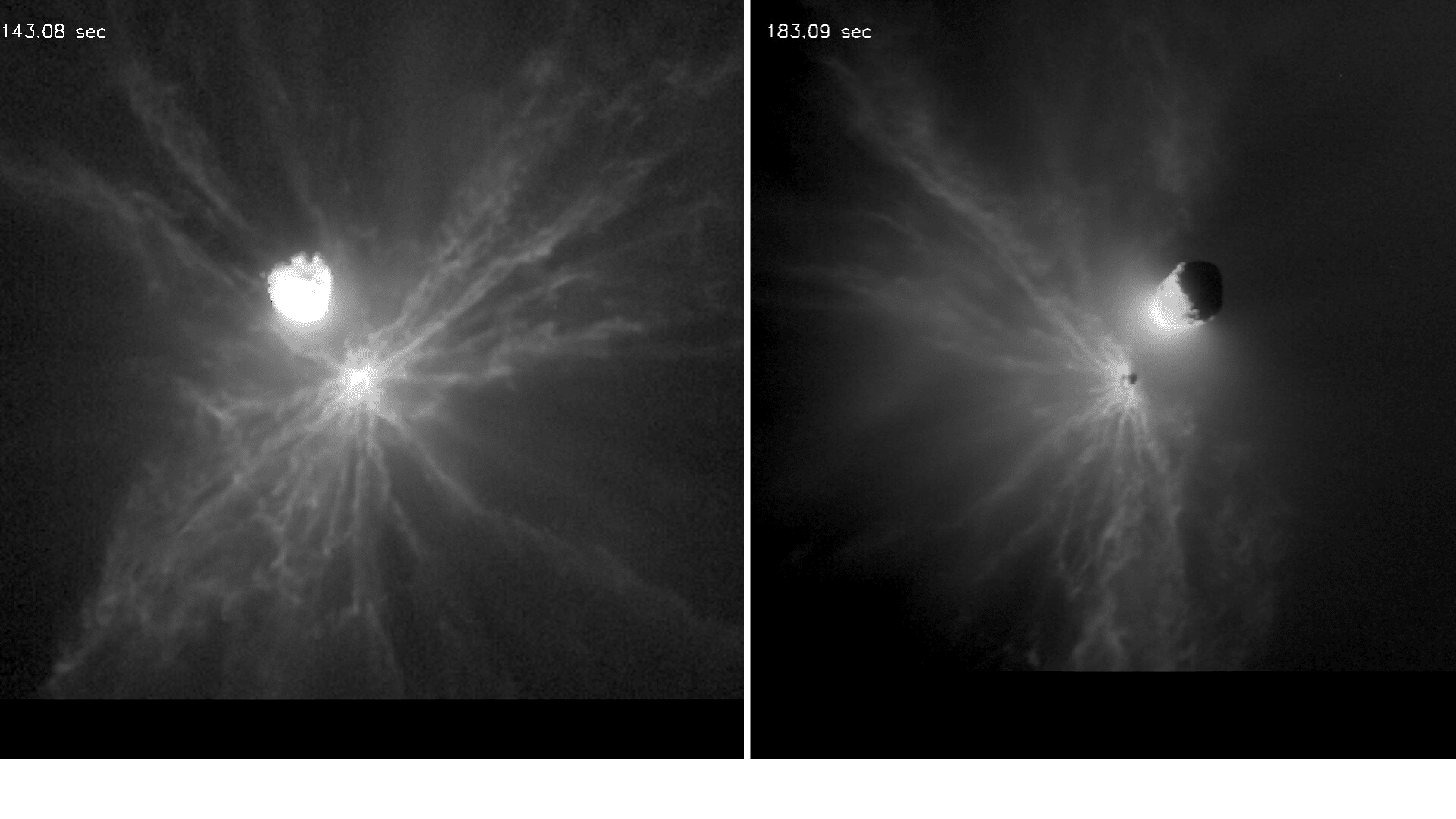
This study also contrasts the DART mission with NASA’s Deep Impact project, which targeted a smaller target. Sunshine highlighted the differences: “Deep Impact collided with a surface mostly composed of tiny, uniform particles, resulting in a smooth ejecta plume. By contrast, DART impacted a rocky terrain rich in large boulders, producing chaotic, filament-like ejecta patterns.” This underscores how an asteroid’s surface makeup can drastically change the effects of deflection efforts.
Comparing DART and Deep Impact is essential to improving future planetary defense missions. Sunshine added, “Looking at both missions side-by-side reveals how different asteroid surfaces react to collisions, which is vital to ensuring the success of any planetary defense attempt.” Effective deflection will require understanding how surface structures—whether boulders or dust—affect impact outcomes.
Advancing Planetary Defense: Lessons for Upcoming Missions
The research carries notable consequences for upcoming planetary defense strategies. ESA’s Hera spacecraft, poised to arrive at the Didymos-Dimorphos binary asteroid duo in 2026, will provide further insights into the debris and its effects on asteroid dynamics. Farnham emphasized LICIACube’s crucial role: “The data from LICIACube adds valuable vantage points on the impact, supplementing DART’s originally Earth-centric observation design. Hera will continue this by directly observing the post-impact environment, building on predictions shaped by DART’s data.”
As analyses from Hera unfold, our grasp of asteroid deflection physics will sharpen—critical knowledge if Earth ever faces a genuine asteroid threat. Sunshine cautioned, “If a threatening asteroid were barreling toward Earth and we needed to nudge it precisely, every detail matters. It’s like playing cosmic billiards: without accounting for all variables, the deflection could fail to hit its mark.”
- Categories:
- News








0 comments
Sign in to Comment