
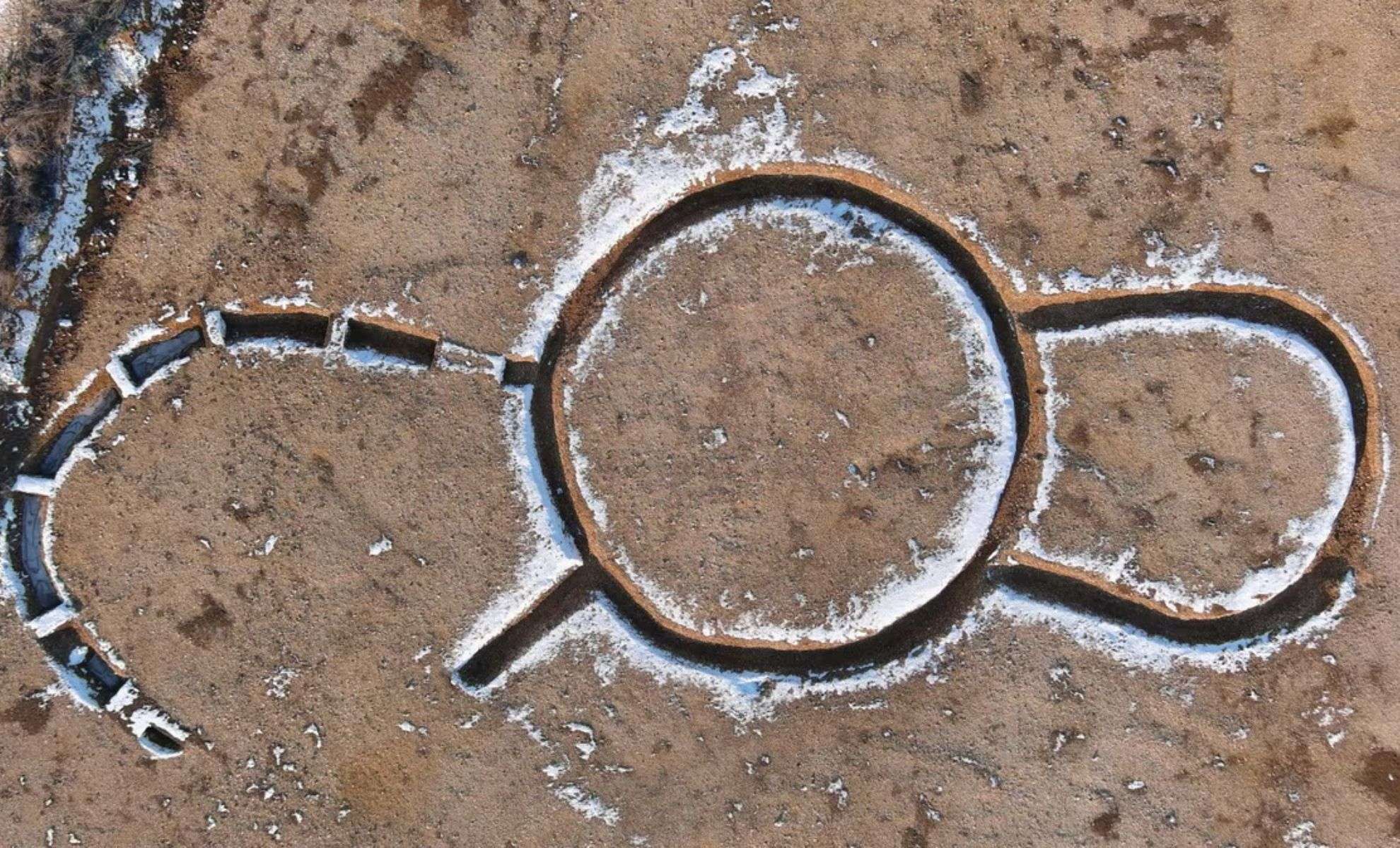
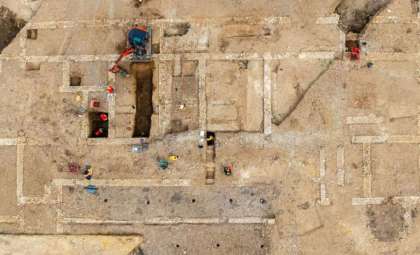
Near the village of Marliens, located east of Dijon in France, archaeologists have uncovered an extensive and sophisticated monument spanning multiple prehistoric eras. This remarkable find by the French National Institute for Preventive Archaeological Research (INRAP) may redefine how experts view early European settlements. Their team described the site as “unprecedented” due to its complex network of enclosures that served various purposes over millennia.
Unique Network of Three Connected Enclosures
The earliest section of the site consists of three distinct but linked enclosures, each with its own shape and dimensions. Central to these is a circular enclosure roughly 36 feet across. Attached to the north is a smaller horseshoe-shaped area measuring about 26 feet, while to the south lies a partially open circular structure integrated with the main enclosure.
What stands out is that these three structures appear to have been planned and built at the same time. Studies of gravel layers around the peripheral enclosures suggest they were once enclosed by a fence. The excavation team noted, “This type of monument seems unprecedented, and currently no comparison has been possible.” Its innovation sets it apart from known Neolithic constructions.

Artifacts Pointing to Neolithic Origins
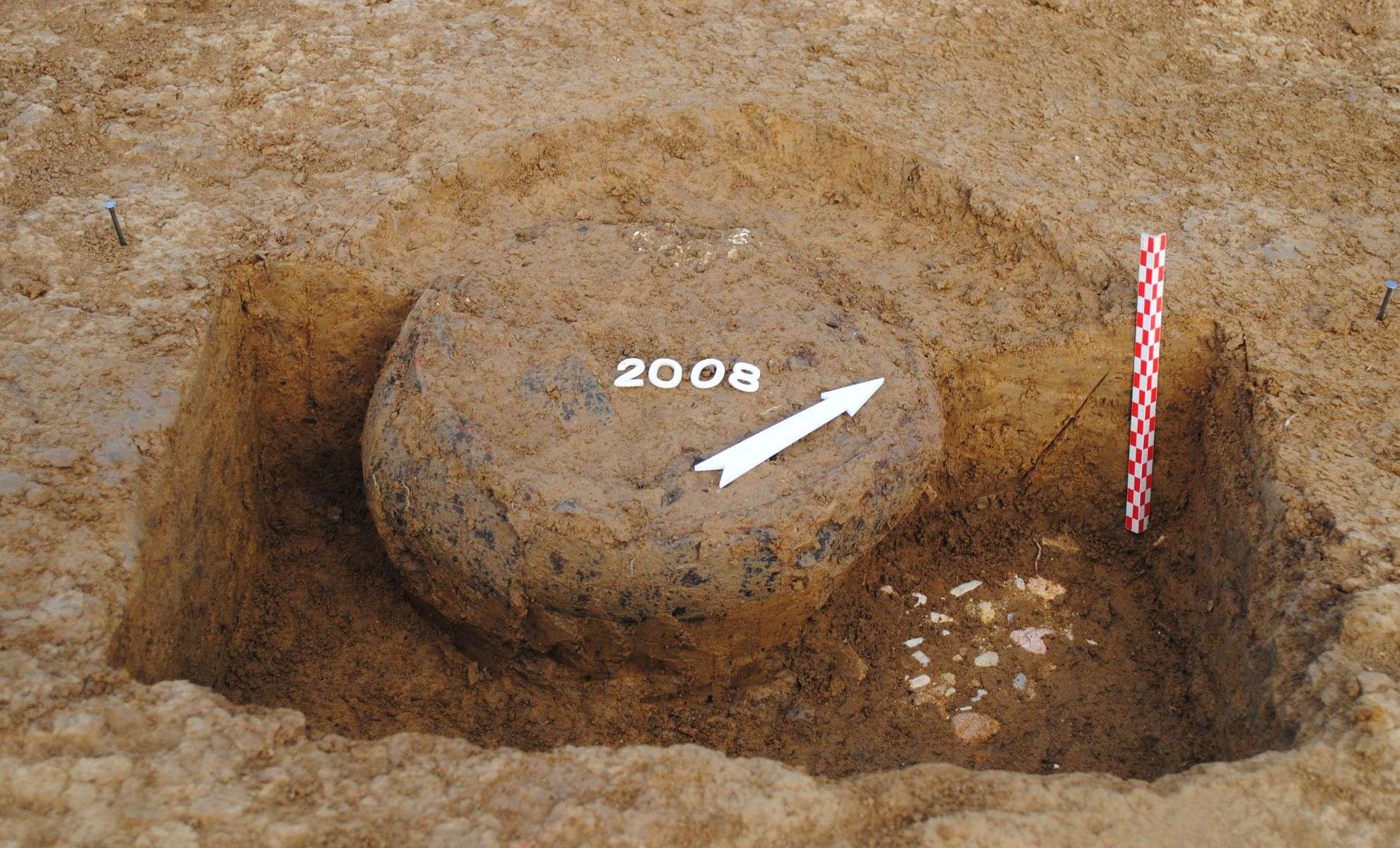
Within the ditches, researchers discovered several implements that provide insight into the site's age and function. These include seven flint arrowheads, two protective archer bracers, a flint striker, and a copper alloy dagger. The crafting marks on these objects correspond with techniques used during the Neolithic period, which dates roughly from 10,000 BC to 2,200 BC.
Among the noteworthy finds is an armband bearing traces of iron oxide related to pyrite, potentially used as a fire-starting device. Though such artifacts are frequently linked to burial rituals, the team remains cautious since definitive burial evidence has yet to surface. Radiocarbon dating and metallurgical analysis of the copper dagger are planned to refine the chronology and trace possible ancient trade connections.
Continuity of Use Across Millennia
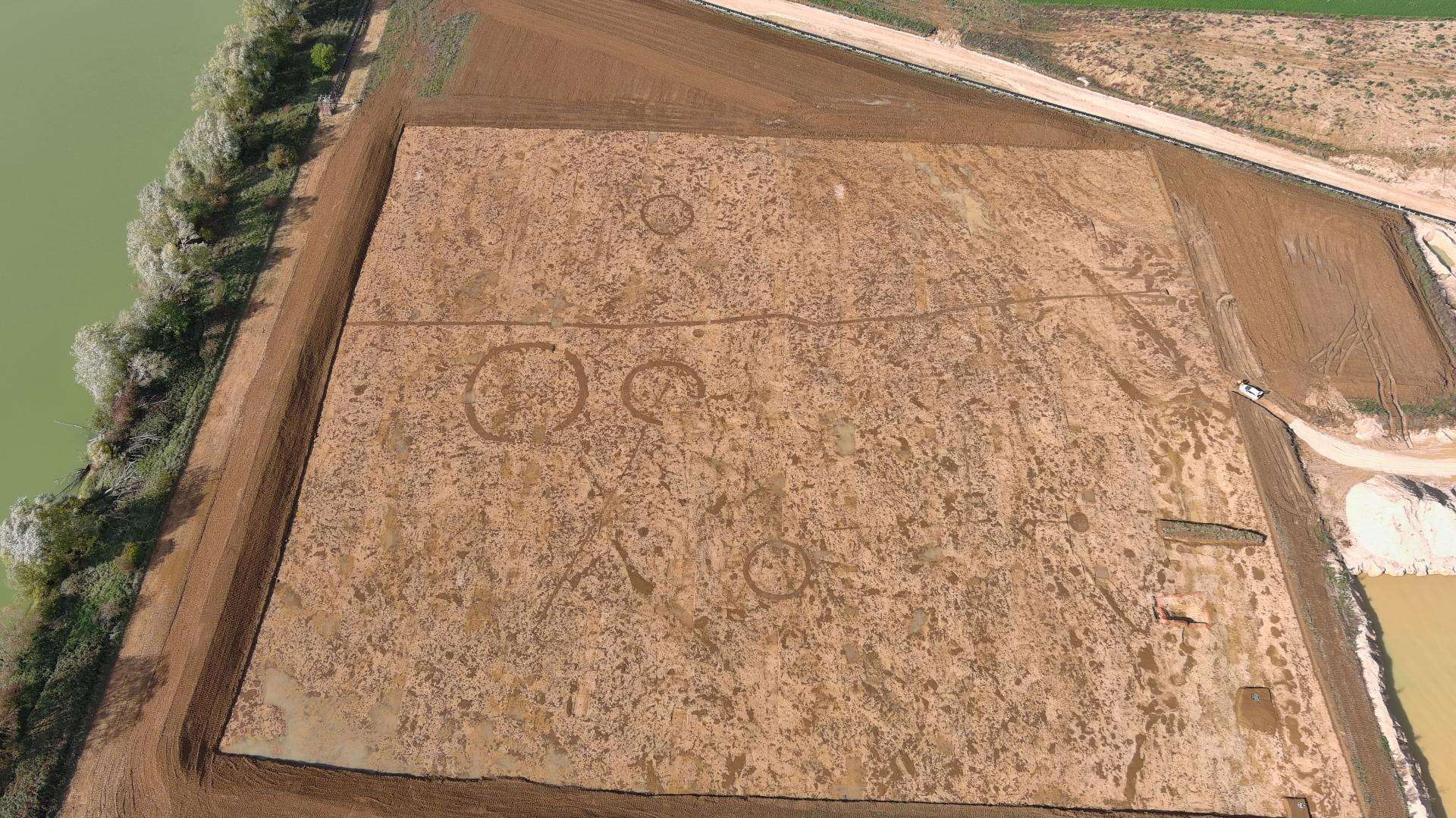
The Marliens location chronicles a long, continuous history. Not far from the oldest monument, archaeologists uncovered a separate area with five additional circular enclosures spanning a sprawling 64,000 square feet. These structures date back to between 1500 BC and 1300 BC. Four are open enclosures, while one remains closed. Excavations in the largest enclosure revealed burial sites and signs of a funeral pyre.
The acidic soil in the region has degraded unburned bones; however, other artifacts like five copper alloy pins, fragments of rare pottery, and a necklace featuring 40 amber beads provide clear evidence of Bronze Age funerary practices.
Layers of Trade, Ceremony, and Environmental Change
Approximately 1,300 feet from the Bronze Age area, signs of occupation from the Early Iron Age have emerged, including urns and decorated funerary objects. Additional Early Bronze Age wells in the vicinity add to the site’s extensive timeline. Investigating the clay deposits found at the bottom of these wells may reveal how the local environment transformed over time, providing context on how humans adapted to changing conditions.
The research team is actively analyzing the artifacts and environmental samples, aiming to develop a comprehensive model of how life and land use evolved in this region through the ages.
- Categories:
- News








0 comments
Sign in to Comment