

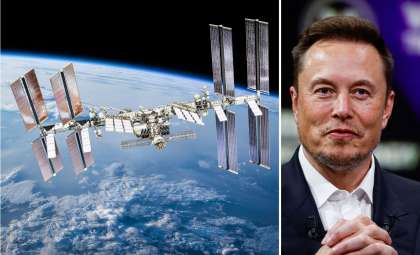
The International Space Station (ISS) might be decommissioned sooner than anticipated if billionaire visionary Elon Musk has his way. Musk recently declared on X (formerly Twitter) that preparations should begin to bring down the ISS well ahead of schedule—a move that highlights Musk’s growing sway over NASA’s strategies.
Musk’s daring proposal
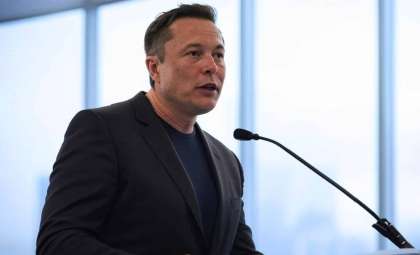
On a recent Thursday afternoon, Musk boldly announced on X:
“It’s time to start preparing for the deorbiting of the International Space Station. It has fulfilled its mission. Its incremental usefulness is minimal. Let’s go to Mars.”
Add Cosmo Herald as a Preferred Source

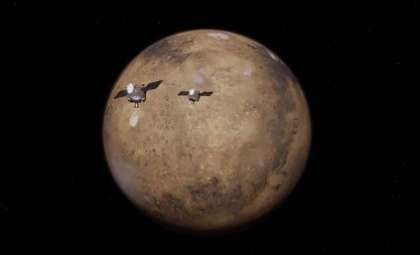
For Musk and SpaceX, the future of humanity lies beyond Earth orbit—specifically on Mars. Central to this vision is the development of the colossal Starship rocket. In his view, the ISS now diverts valuable resources that could otherwise push forward interplanetary exploration.
Regarding the schedule, Musk was unambiguous:
“The decision is up to the President, but my recommendation is as soon as possible. I recommend 2 years from now.”
This implies Musk envisions the ISS mission concluding by 2027, which is a full three years prior to NASA’s official sunset date of 2030.
The ISS’s aging infrastructure
Now marking over 25 years in orbit, the ISS is showing significant wear. Escalating maintenance costs, structural fatigue concerns, and rising space debris hazards represent growing challenges.
NASA and its global partners have outlined a careful retirement plan for the station that involves safely guiding it into a remote part of the Pacific Ocean.
If Musk’s accelerated timeline is adopted, it would necessitate swift crew evacuation logistics and could temporarily end continuous U.S. and allied presence in low Earth orbit.
During that gap, China’s Tiangong Station may stand as the sole permanently crewed orbital outpost.
Will Trump influence an early shutdown?
While Musk’s voice is influential, he does not have sole authority over the ISS’s fate. The station is managed through cooperation among five space agencies:
- NASA (United States)
- Roscosmos (Russia)
- ESA (Europe)
- JAXA (Japan)
- CSA (Canada)
The key modules mainly belong to the U.S. and Russia. Given Russia’s past threats to withdraw, there is speculation that former President Donald Trump—who shares a vision close to Musk’s—might advocate for an expedited U.S. exit.
Pulling the plug suddenly could disrupt scheduled missions and impact astronauts like Spain’s Pablo Álvarez slated for upcoming flights; European, Japanese, and Canadian research projects would likely face significant interruptions as well.
The recent astronaut safety dispute
Musk’s announcement followed a tense confrontation with former ISS commander Andreas Mogensen. Mogensen accused Musk of spreading misinformation regarding NASA astronauts Butch Wilmore and Suni Williams, who have been delayed due to issues with Boeing’s Starliner vehicle.
Musk and Donald Trump claimed the astronauts were “abandoned” by the Biden administration; however, NASA had planned their return with SpaceX’s Crew-9 mission, scheduled for a safe landing by late March.
When Mogensen challenged Musk on X, Musk fired back:
“You are completely retarded. SpaceX could have brought them back months ago. I directly proposed this to the Biden administration, and they refused. Their return was delayed for political reasons. It’s stupid.”
Future prospects for orbit
If Musk’s accelerated deorbit plan comes to pass, questions about the transition period loom large. NASA intends to shift focus to commercial space stations, but none are expected to be operational before 2027. For a time, China’s Tiangong might be humanity’s only continuously crewed station.
Musk’s resolve to overhaul NASA’s agenda and the broader space trajectory is clear. The ultimate test will be whether Washington and a potential new Trump administration support his vision for a profound transformation in space exploration’s next phase.
- Categories:
- News









0 comments
Sign in to Comment