
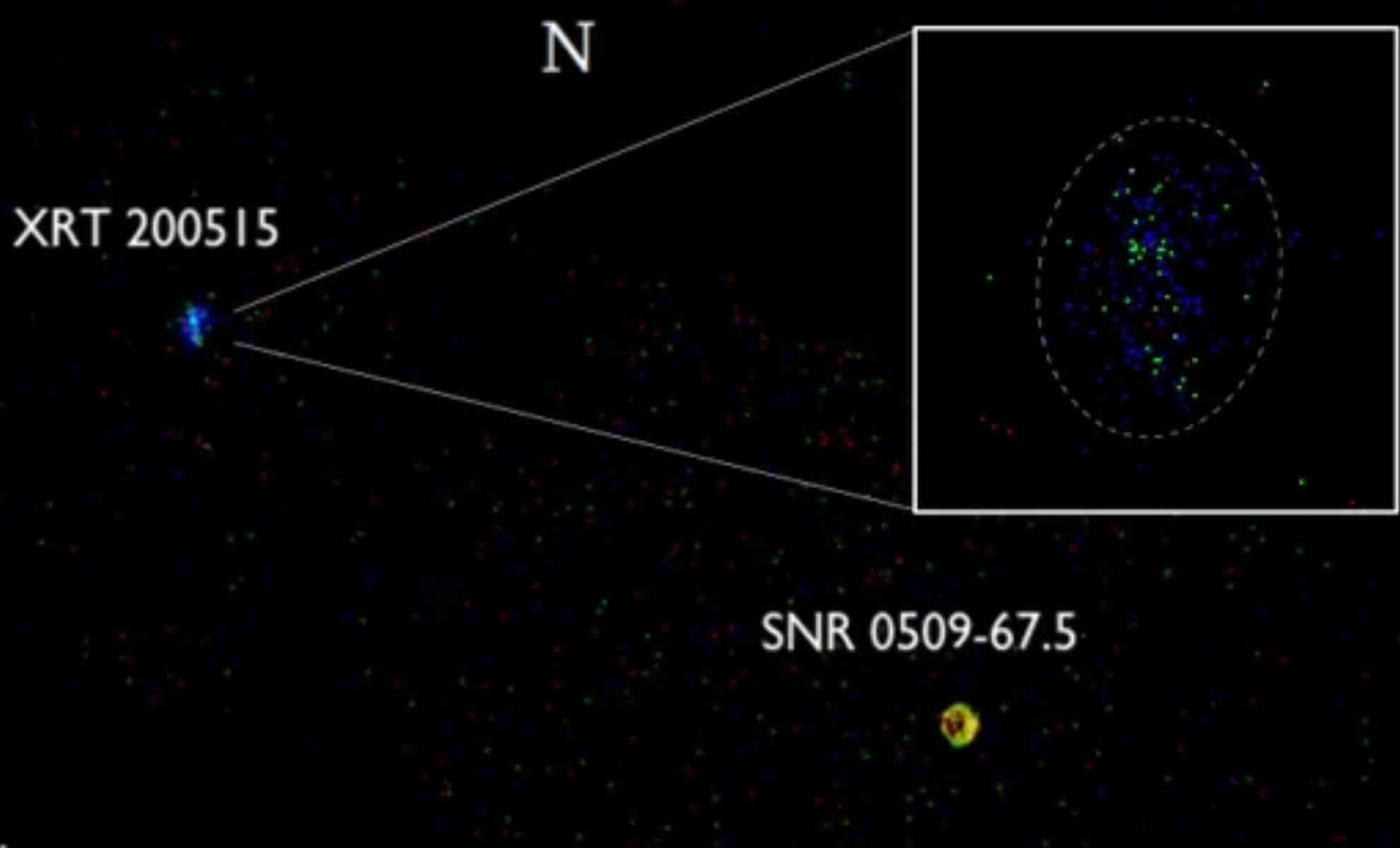
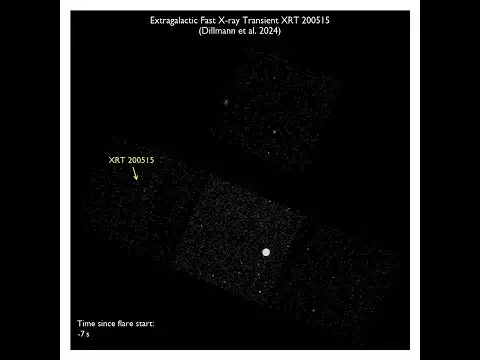
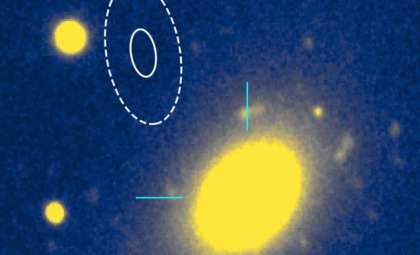
Researchers reviewing NASA’s archived data have identified a fleeting yet powerful X-ray burst originating from well beyond our Milky Way. This event, termed XRT 200515, flashed briefly for before disappearing, baffling experts as it doesn't correspond neatly with any known cosmic occurrences.
The observation was made using the Chandra X-ray Observatory, a highly sensitive space telescope in operation since 1999. The data dates back to May 2020, collected during a survey of supernova remnants in the Large Magellanic Cloud (LMC)—a neighboring galaxy approximately 160,000 light-years away. The discovery was uncovered upon detailed reexamination of past data, highlighting the value of archival research in astrophysics.
“Discovering XRT 200515 was like spotting an intriguing detail hidden in an old photograph that no one saw before,” explained Steven Dillmann, principal investigator at Stanford University. “But this time, it’s a cosmic snapshot.”

What sets this X-ray event apart from others in extragalactic space is its unusual signature, which diverges from typical X-ray bursts, suggesting the possibility it might represent a phenomenon not previously documented.
Examining Potential Origins
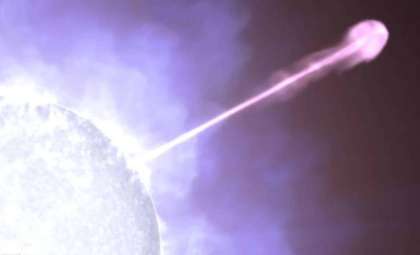
In an article published in the Monthly Notices of the Royal Astronomical Society, Dillmann and colleagues assessed multiple hypotheses for this brief X-ray flare. The most familiar explanation involves a neutron star pulling gas from a companion star, leading to a thermonuclear explosion and a rapid burst of X-rays. Such interactions typically produce detectable flashes, but XRT 200515 exhibits characteristics that don’t entirely conform to known neutron star bursts.
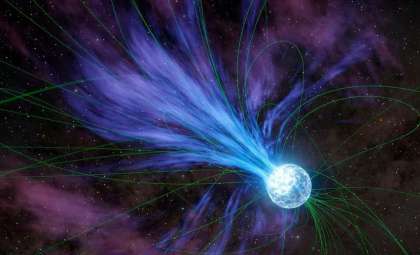
Another possible source is a magnetar—an extraordinary neutron star with an intense magnetic field billions of times stronger than Earth’s. Magnetars can generate massive energy flares swiftly, releasing as much energy in seconds as our Sun does in a year. Yet, the specific traits of XRT 200515 don’t completely align with documented magnetar outbursts, leaving doubts about this interpretation.
Most intriguingly, XRT 200515 might represent a previously unrecognized class of cosmic phenomena. Though speculative, its exceptional profile hints at an exotic astrophysical event awaiting further investigation. With the help of NASA’s James Webb Space Telescope (JWST) and forthcoming advanced instruments, astronomers aim to capture similar bursts, clarifying whether this was an isolated event or part of a broader phenomenon.
Space Continues to Surprise and Inspire
The identification of XRT 200515 underscores the vast and often unpredictable nature of the universe. Even with decades of data from state-of-the-art telescopes, scientists keep unveiling unexpected cosmic events hidden within archival records. As more sensitive observatories come online, the potential for discovering new and curious phenomena grows significantly.
“Findings like this remind us that the cosmos is ever-evolving, filled with surprises,” Dillmann emphasized.
Currently, XRT 200515 remains an intriguing enigma, provoking ongoing discussion and research in the astrophysical community. It might be the first glimpse of a novel cosmic mechanism or an extremely rare case of a known process observed under unique conditions. Until further evidence emerges, this transient X-ray flash stands as one of the universe's most captivating mysteries, illustrating that countless secrets are yet to be uncovered beyond our current understanding.
- Categories:
- News






0 comments
Sign in to Comment