
Unlike Earth’s serene seasonal changes, springtime on Mars ignites a dramatic display of natural events as the planet starts its new year after completing an orbit around the Sun on November 12, 2024. These explosive occurrences dramatically alter Mars' surface, showcasing an alien world in constant flux.
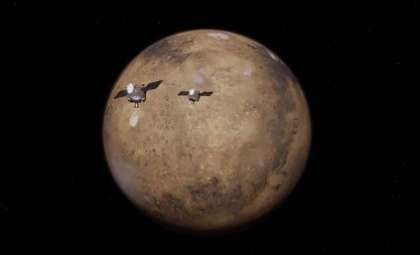
From flowing avalanches composed of frozen carbon dioxide to violent gas eruptions, the Red Planet’s spring phenomena are powered by its sparse atmosphere and thawing icy layers. NASA’s Mars Reconnaissance Orbiter (MRO), observing Mars for nearly twenty years, has captured these intense changes that announce spring with remarkable force.
Towering Avalanches Kick Off the Season
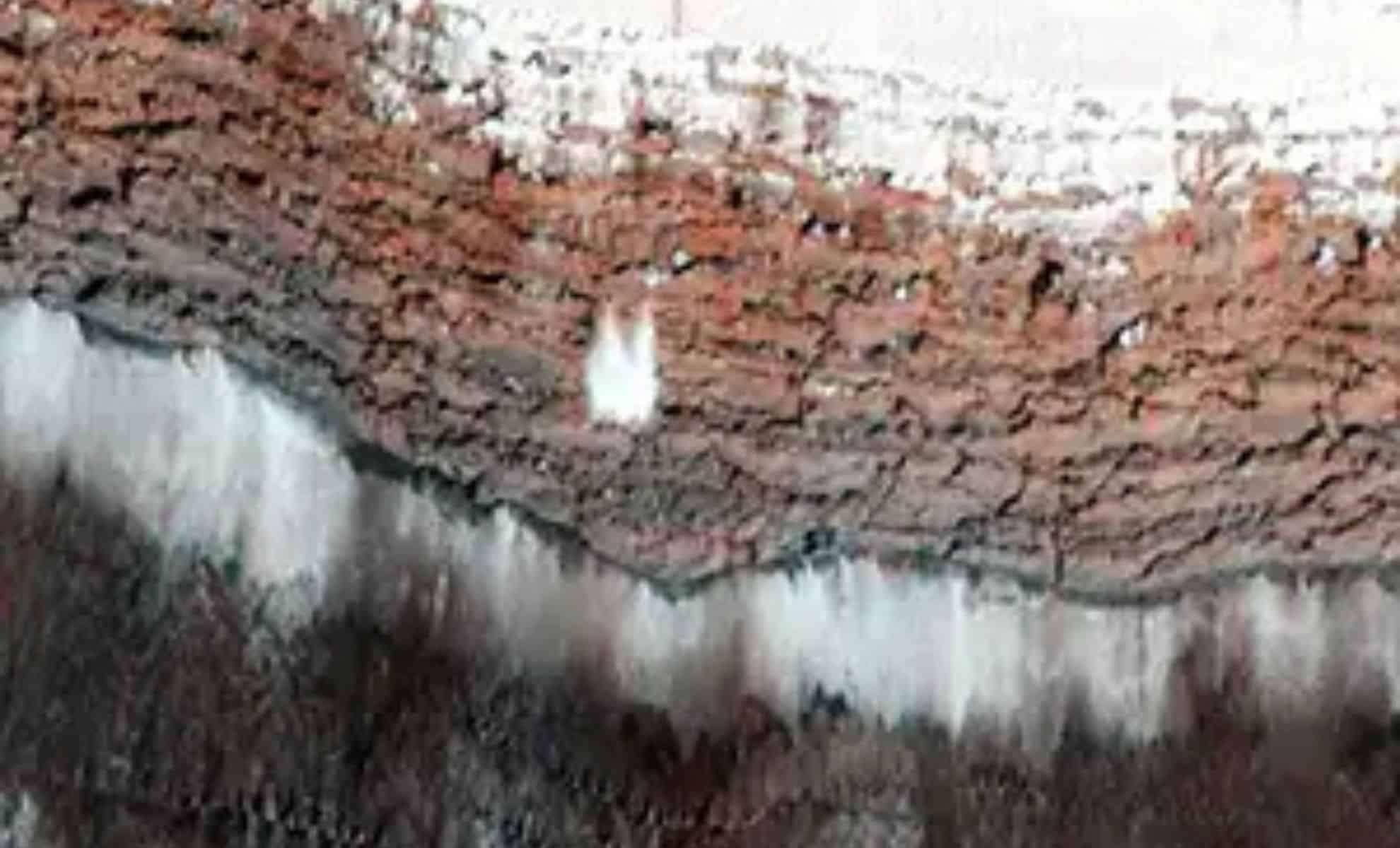
Spring on Mars is often marked by spectacular avalanches, but rather than snow and rock like on Earth, these slides involve blocks of dry ice—solid carbon dioxide. Rising temperatures cause this dry ice to transform from solid to gas, triggering powerful material shifts down steep cliffs.

In 2015, the HiRISE (High-Resolution Imaging Science Experiment) camera aboard the MRO snapped a stunning image of a 66-foot-wide chunk of freezing carbon dioxide plummeting from a cliff face. Serina Diniega, a researcher from NASA’s Jet Propulsion Laboratory (JPL), said, “Having a spacecraft like MRO monitoring Mars has allowed us to witness awe-inspiring events such as these avalanches over nearly two decades.”
These dramatic events offer scientists a window into how Mars’ feeble atmosphere interacts with icy deposits, constantly reshaping the planet’s rugged terrain each spring.
Powerful Geysers and Distinctive 'Spider' Patterns
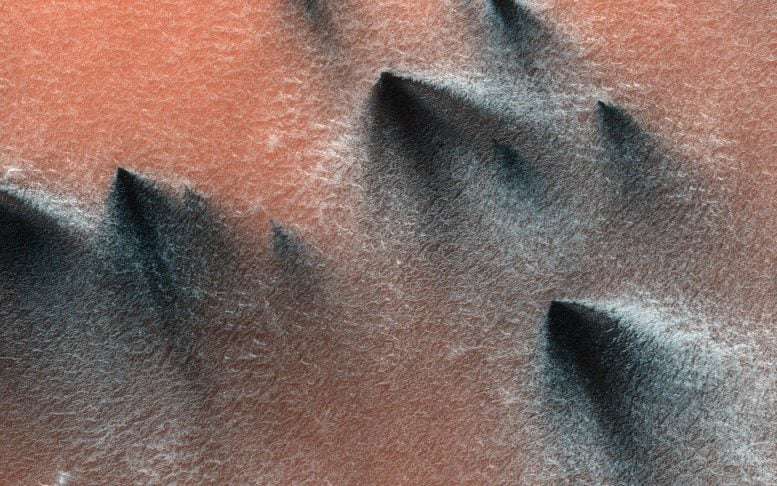
Spring also triggers gas geysers on Mars — a phenomenon not found on Earth. As sunlight warms transparent frozen carbon dioxide, the ice sublimates from below, creating pressurized pockets of gas that erupt violently, sending plumes of dust and sand skyward.
Diniega explains, “Instead of melting, you see widespread cracking and explosive bursts, which likely sounds intense.” These eruptions leave behind dark fan-shaped deposits across the surface where debris settles.
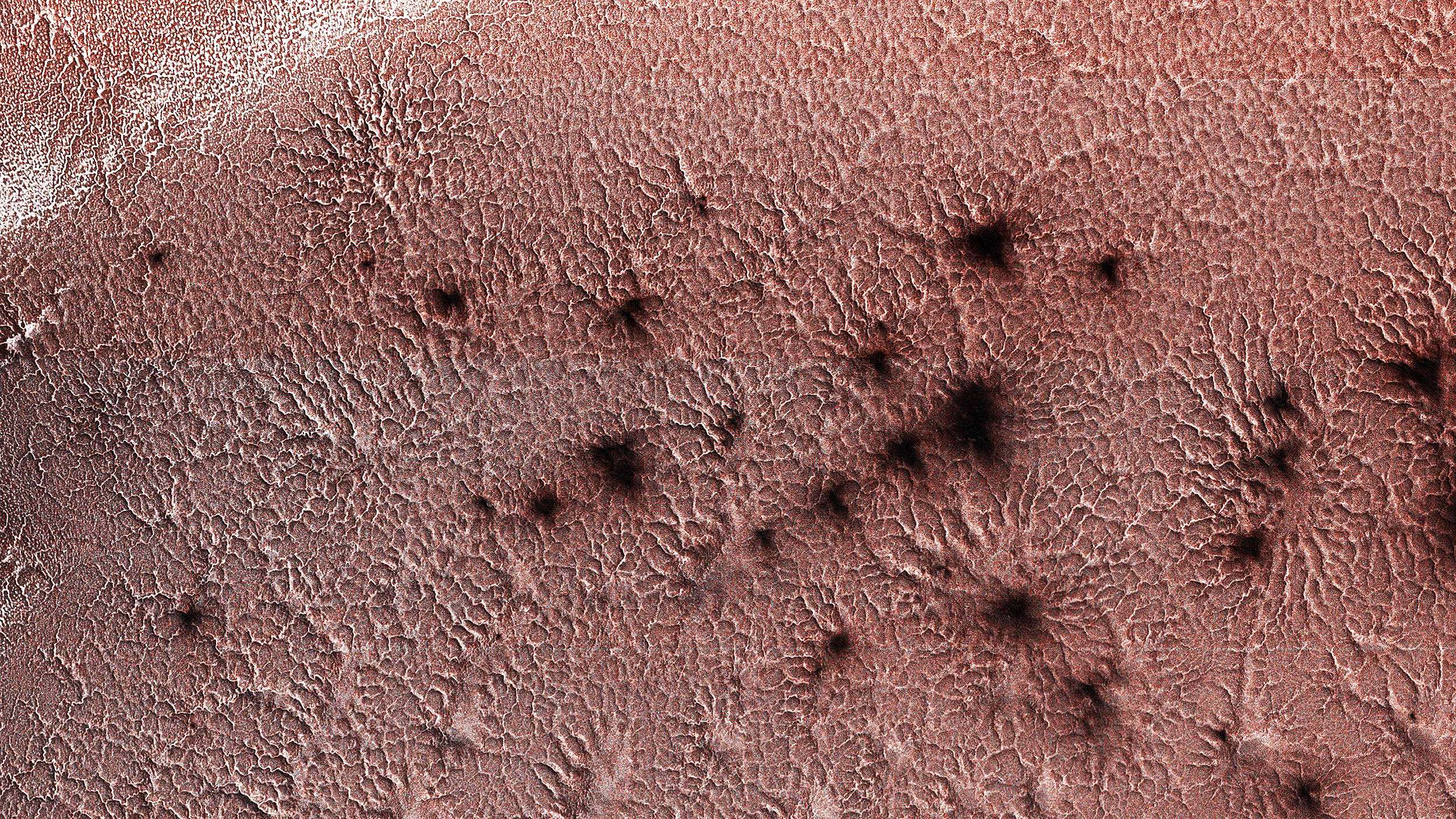
In the southern hemisphere, the gas activity carves elaborate “araneiform” features—spider-like branching channels etched into the soil. JPL scientists have replicated this process in labs to better understand how these unique Martian structures develop.
Spiraling Polar Winds Sculpt the Ice
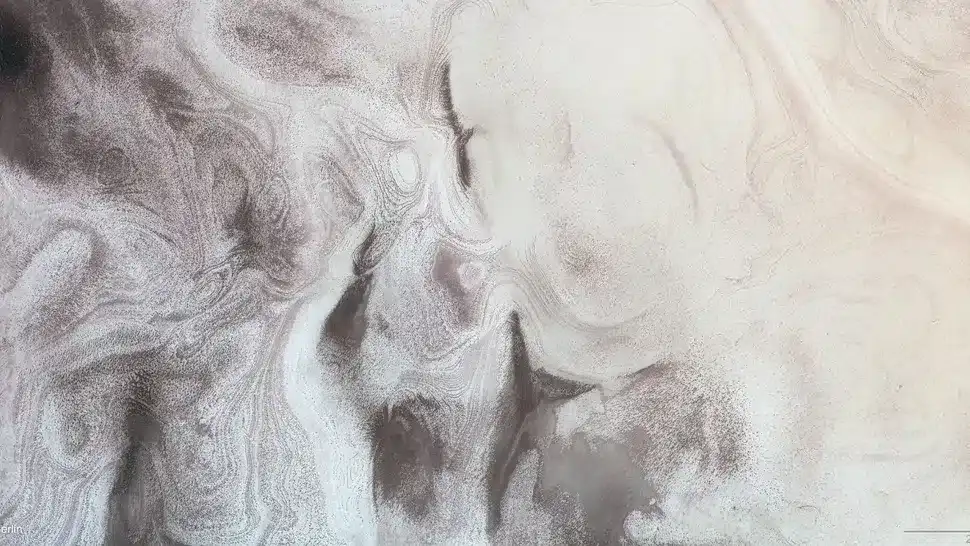
Mars’ north polar ice cap, spanning an area the size of Texas, undergoes transformational springtime wind activity. These gusts carve immense spiral troughs into the ice, exposing red soil beneath. Isaac Smith, a planetary expert at York University in Toronto, remarks, “While similar formations exist in Antarctica, these Martian troughs are on an unprecedented scale.”
As temperatures climb, these winds intensify through a process called adiabatic warming — similar to the Santa Ana winds on Earth — gradually shaping the swirling ice formations visible from orbit over thousands of years.
The Slow March of Mobilized Sand Dunes
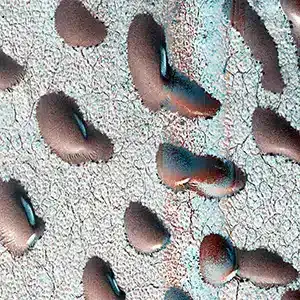
Mars’ strong springtime winds set sand dunes into motion after winter’s carbon dioxide frost melts away. Throughout the colder months, dry ice locks dunes in place, but once it sublimates, winds gradually move the sand across the surface, slowly reshaping Martian landscapes much like dune movements on Earth.
Studies show that a thin carbon dioxide frost coats polar dunes during winter, which melts during spring, freeing the dunes to migrate again. These insights deepen our understanding of Mars’ evolving surface and the seasonal forces at play.
Mars’ Ever-Changing Seasonal Drama
Each Martian spring brings its own set of variations depending on temperature and sublimation rates, controlling how intense and fast these dynamic shifts occur. Diniega observes, “While Earth’s spring unfolds slowly with melting ice, Mars experiences explosive, high-energy transformations.”
Nearly twenty years of continual MRO observations, equipped with high-tech tools like HiRISE, have been essential in capturing these dramatic shifts and helping decode Mars’ ever-moving surface.
Unlocking Mars’ Secrets Through Seasonal Change
These seasonal phenomena highlight Mars as a world of constant change and offer clues about its geological and environmental history. From powerful avalanches and gas eruptions to slowly migrating dunes and gusty polar winds, understanding these processes provides critical knowledge for future exploration and potential colonization.
As preparations progress for upcoming missions, the wealth of data from the MRO and other devices will guide humanity’s next steps on the Red Planet. With each spring, Mars reveals its restless nature—a planet where even the melting of ice turns into an awe-inspiring cosmic event.
- Categories:
- News




0 comments
Sign in to Comment