
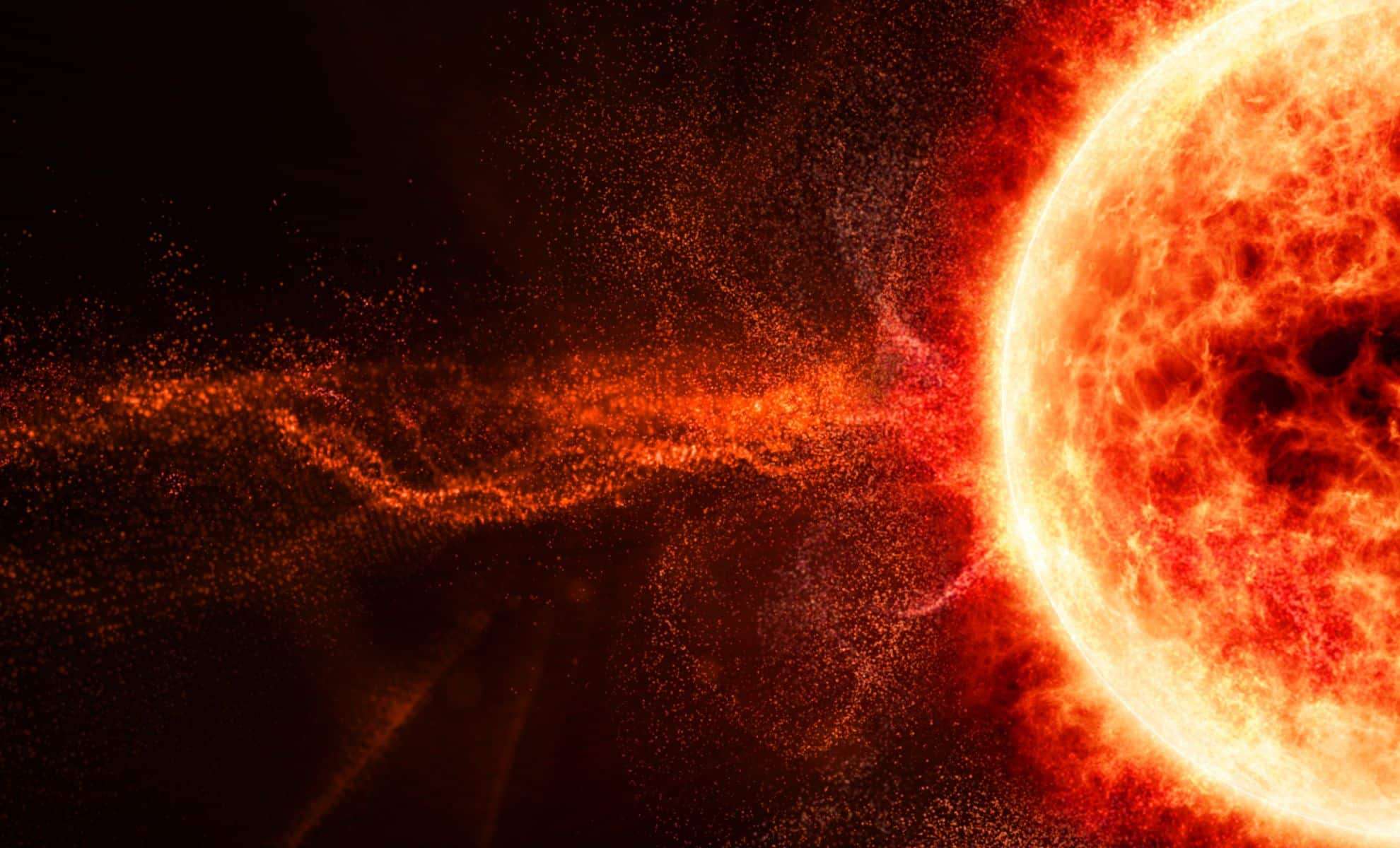
A remarkable solar event unfolded this week as an enormous solar filament erupted, sending a vast stream of plasma sweeping across the Sun’s Northern Hemisphere. NASA and solar weather specialists first reported the phenomenon, which has captivated attention due to its vast scale and striking visuals.
Details of the Solar Filament Eruption
Between May 12 and 13, a towering solar filament suddenly destabilized, unleashing a spectacular surge of solar energy. This filament, essentially a thick and cooler plasma structure held aloft by magnetic forces above the Sun’s surface, erupted in an impressive and visually captivating manner.
The expelled material stretched over a staggering distance of 600,000 miles, far exceeding the span between Earth and its Moon. Aurora enthusiast Vincent Ledvina described this dramatic outburst as “a truly awe-inspiring sight,” likening its shape to “bird wings” or “angel wings.”

Understanding the Solar Filaments
Solar filaments are elongated features composed of denser, cooler plasma compared to their surroundings, appearing as dark bands against the Sun’s bright disk. Magnetic fields suspend these structures in the Sun’s outer atmosphere, but when these magnetic supports become unstable, they can trigger explosive releases of plasma and energetic particles into space.
This particular eruption generated a Coronal Mass Ejection (CME), a powerful expulsion of solar plasma and magnetic fields from the Sun’s corona. These CMEs can significantly affect space weather and have the potential to cause geomagnetic disturbances on Earth if they travel in our direction.
Will Earth Be Impacted?
Experts studying the event confirm that the ejected material is moving away from Earth’s path. Though the eruption was massive, current predictive models indicate the CME will not intersect with our planet. Nevertheless, such events underscore the potential dangers of CMEs, which, upon direct contact, can produce intense geomagnetic storms classified as G4 or G5. These storms may disrupt satellites, electrical grids, and navigation systems.
Solar scientists continue to monitor solar activity closely to anticipate future eruptions that might affect Earth.
Not sure what to call this eruption, maybe the “bird-wing” or “angel-wing” event? Either way, it is truly something to witness! Look at how large the blast is off the Sun’s northern hemisphere. I could watch this animation loop for hours! pic.twitter.com/QZjcDPnFyE
— Vincent Ledvina (@Vincent_Ledvina) May 13, 2025
The Splendor and Might of Solar Phenomena
This filament eruption not only demonstrates the immense power of solar activity but also its breathtaking beauty. It has captivated both scientists and aurora watchers alike. Aurora hunter Jure Atanackov noted on social platforms, “It surpasses all recent filament eruptions in scale.”
While solar storms can threaten technological systems on Earth, they also offer opportunities to witness natural spectacles like auroras. The ongoing solar maximum phase promises more such eruptions, providing ample chances to observe the Sun’s energetic display from our planet.
What a spectacular CME from the huge filament eruption earlier today! Unfortunately it is directed north and will miss us. A direct hit from a CME like this can be high-end G4 storm material, maybe even G5. https://t.co/StNvwdYyqp pic.twitter.com/nFHPc5F8ap
— Jure Atanackov (@JAtanackov) May 13, 2025
Impacts of Solar Outbursts on Earth’s Infrastructure
Solar flares and CMEs can significantly influence Earth’s technology. Although this eruption is expected to pass harmlessly by, others have caused geomagnetic disturbances that interfere with satellites, power networks, and GPS systems.
An intense CME striking Earth could disrupt communications, air traffic management, and economic activities worldwide due to widespread technological interruptions.
- Categories:
- News






0 comments
Sign in to Comment